April 20 21 22 23 24 25 26 27 28 29 30
May 1 2 3 4 5 6 7 8 9 10 11 12 13 14 15 16 17 18 19 20 21 22 23 24 25 26 27 28 29 30 31
June 1 2 3 4 5 6 7 8 9 10 11 12 13 14 15 16 17 18 19 20 21 22 23 24 25 26 27 28 29 30
July 1 2 3 4 5 6 7 8 9 10 11 12 13 14 15 16 17 18 19 20 21 22 23 24 25 26 27 28 29 30 31
August 1 2 3 4 5 6 7 8 9 10 11 12 13 14 15 16 17 18 19 20 21 22 23 24 25 26 27 28 29 30 31
September 1 2 3 4 5 6 7 8 9 10 11 12 13 14 15 16 17 18 19 20 21 22 23 24 25 26 27 28 29 30
October 1 2 3 4 5 6 7 8 9 10 11 12 13 14 15 16 17 18 19 20 21 22 23 24 25 26 27 28 29 30 31
November 1 2 3 4 5 6 7 8 9 10 11 12 13 14 15 16 17 18 19 20 21 22 23 24 25 26 27 28 29 30
December 1 2 3 4 5 6 7 8 9 10 11 12 13 14 15 16 17 18 19 20 21 22 23 24 25 26 27 28 29 30 31
January 1 2 3 4 5 6 7 8 9 10 11 12 13 14 15 16 17 18 19 20 21 22 23 24 25 26 27 28 29 30 31
February 1 2 3 4 5 6 7 8 9 10 11 12 13 14 15 16 17 18 19 20 21 22 23 24 25 26 27 28 29
March 1 2 3 4 5 6 7 8 9 10 11 12 13 14 15 16 17 18 19 20 21 22 23 24 25 26 27 28 29 30 31
April 1 2 3 4 5 6 7 8 9 10 11 12 13 14 15 16 17 18 19
a 'sight and sound' edition of Duchamp After Unbekannt is available @451.rhawn.gallery
2026.04.02
announcement
451 Rhawn Gallery is proud to announce its henceforth representation of the short-lived Philadelphia Art Museum, which, in turn, will now be the official museum of all things COSMODADA.
Gallery Zebra
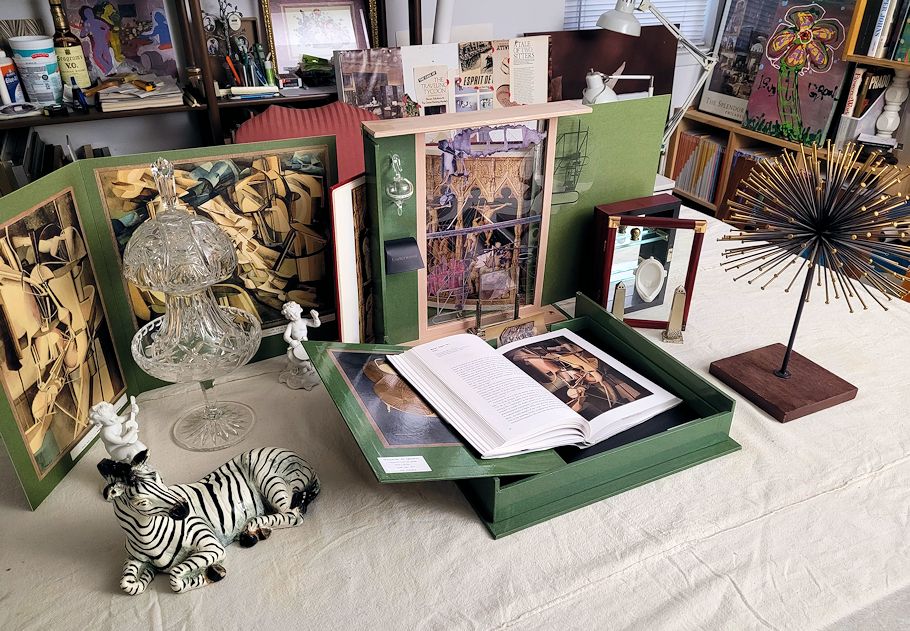
14" = 9' scale PAM Gallery Z installation mock-up, subject to sudden changes, for sure.
2026.04.19
read the following almost a month ago
The first lineaments of an institutional theory of art appeared in 1969 in an article by the philosopher George Dickie titled 'Defining Art', which he later expanded into a book, Art and the Aesthetic: An Institutional Analysis, published in 1974. Claiming to refute both theories of taste and theories of the aesthetic attitude, Dickie gives the following definitions of a work of art:
A work of art in the classificatory sense is: (1) an artifact (2) a set of the aspects of which has had conferred upon it the status of candidate for appreciation by some person or persons acting on behalf of a certain social institution (the artworld).
This definition is circular and boils down to this: art is whatever the artworld calls art. All power to the institution! More precisely: whoever wields power because he or she enjoys a prominent position in the artworld possesses the art-naming power by the same token. Imagine Broodthaers reading Dickie's tautology (he didn't). Don't you think he would reason as follows? 'Artists are powerless in imposing that what they make be called art. My dealer and the few collectors who have faith in me have a lot more power than I. The relevant question is, who has the ultimate power, who has the authority that outpowers the temporary might of dealers and collectors, the power that settles the art-naming issue for good? Museum directors! Once in the museum, aren't works of art there forever, eternal and priceless? If this is so, why not let the idea of inventing something insincere cross my mind again? Why not proclaim myself a museum director?' Which is exactly what Broodthaers did on 27 September 1968, when he inaugurated the Musèe d'art moderne, Département des aigles, Section 19è siècle at his house address, 30 rue de la Pépinière in Brussels.
Of course, things didn't happen that way.
Thierry de Duve, Duchamp's Telegram: From Beaux-Arts to Art-in-General (2023), p. 315.
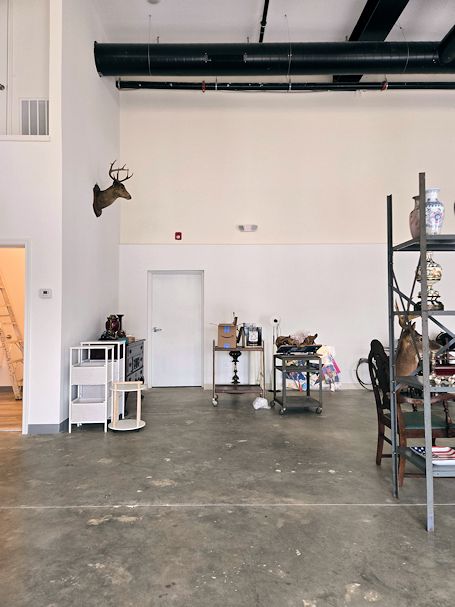
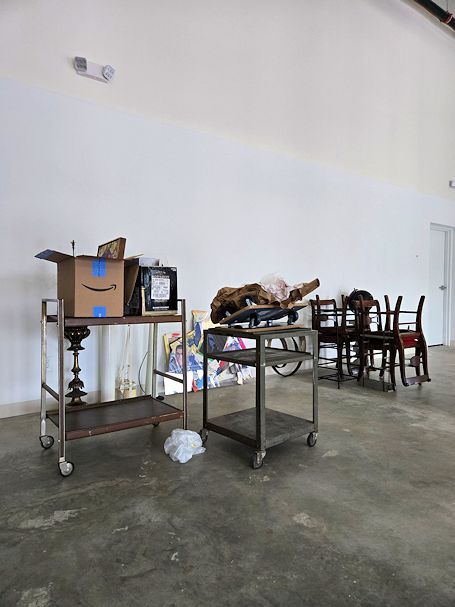
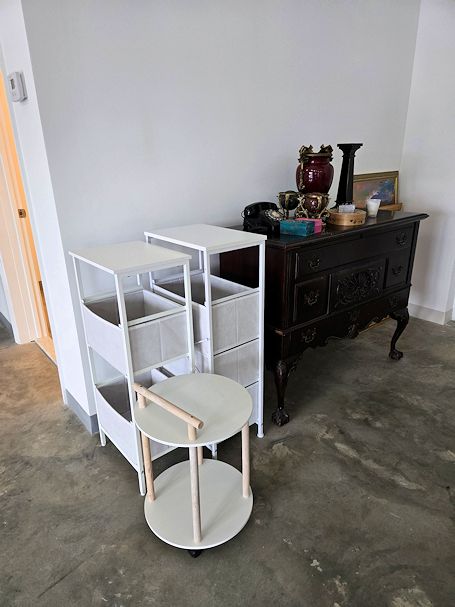
2025.09.27
last pictures taken at 451 Rhawn Gallery
 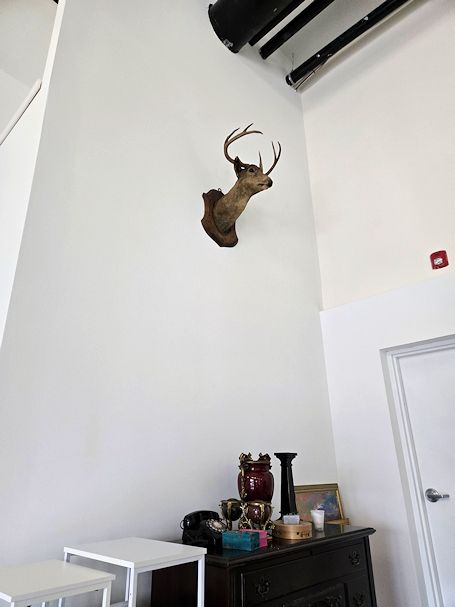
2024.10.01
first pictures taken at 451 Rhawn Gallery
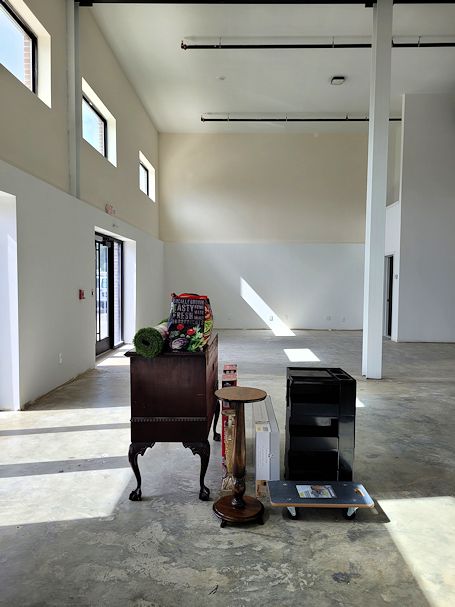 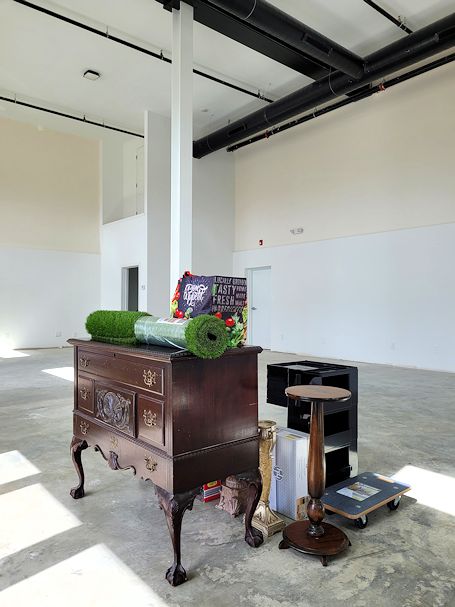
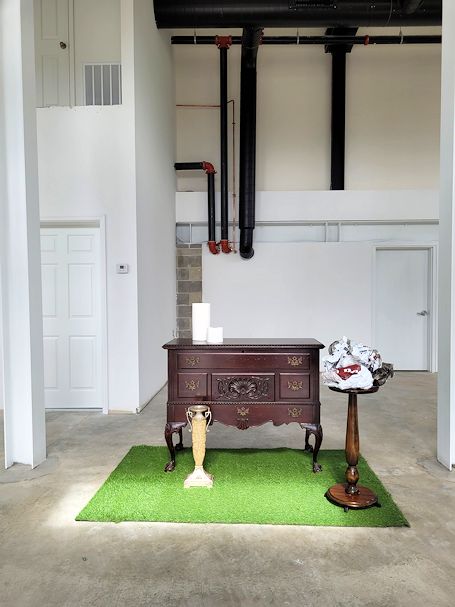 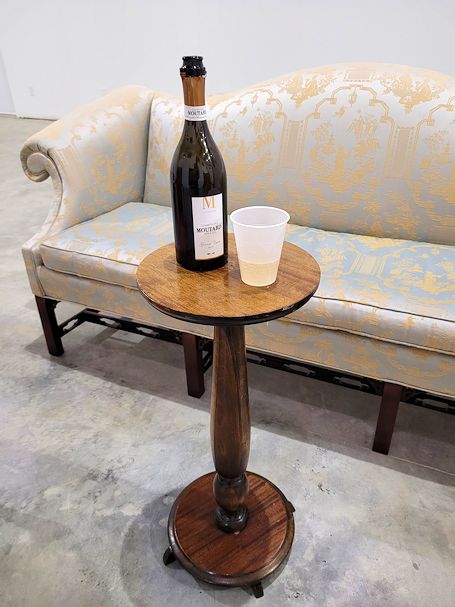
2024.04.02
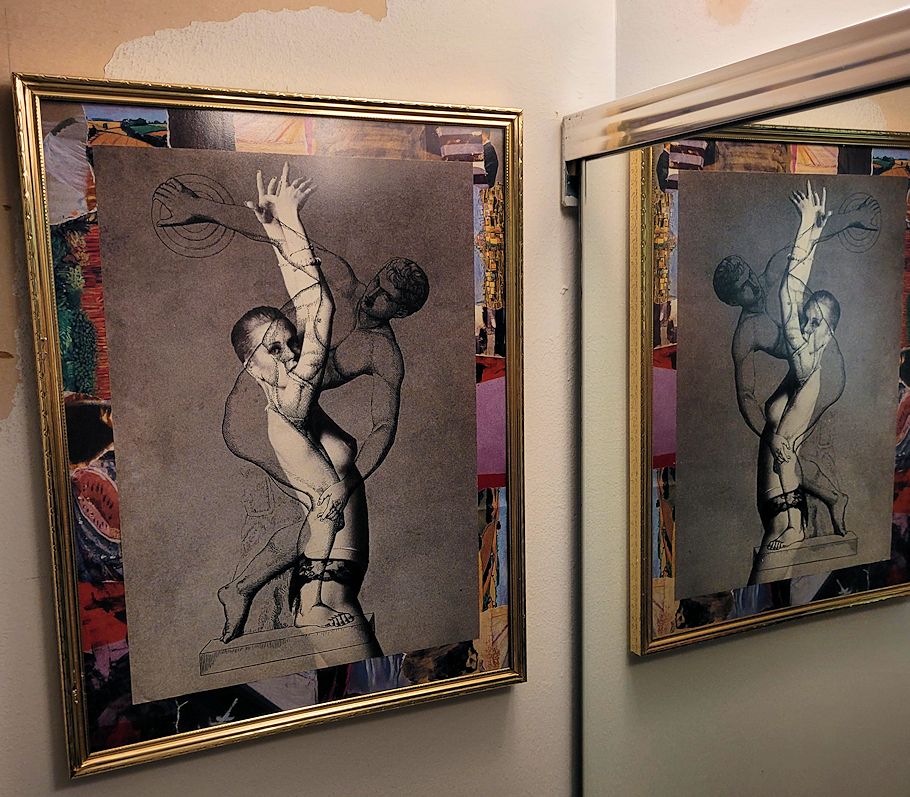
Everything Has Its Price 001
2024.03.17

I read Julia Bryan-Wilson's "Impermanent Collections" (Artforum International, September 2021) this morning, soon after waking up but before getting out of bed. I'm pretty sure I haven't read the essay before, although, as a subscriber to Artforum, I've owned this issue of the magazine since September 2021, but September 2021 was also a uniquely critical month in my life as full-time caregiver for my then stroke-effected brother. I'm absolutely sure I paged through the magazine the day I received it, which is what I do every time I receive the magazine, but it seems I haven't paged through the magazine again till last night when I randomly chose to browse through the magazine to help me fall asleep. Anyway, I now feel a strong connection to "Impermanent Collections," and the last two paragraphs of Julia Bryan-Wilson's essay are especially worth repeating.
"In a moment ringing with clarion calls to reevaluate the entire premise of museums, or, more radically, to abandon them altogether, it is worth noting how many queer and trans artists have in the past few decades proposed new kinds of (temporary, unrealized, experimental, minoritarian) institutions. Each of these examples animates a different conception of the queer/trans museum: For Wilson, a recontextualization of clinical material uncovers lesbian erotics; for Khaled, a real act of homophobic injustice is refracted through the prism of an invented person; for Vargas, physical objects are conjured into relation; for Campuzano, mobile displays that imbricate fact and fiction put pressure on how nations construct their own histories. All these projects mobilize, and destabilize, what André Malraux described as the leveling inherent in a "museum without walls" by using acts of queer fabulation. In so doing, they recognize that the museum organizes history not only through objects but through the eloquent space between objects--the gaps within which interpretation takes place. When those gaps are penetrated and held open, other stories creep in.
Critically, such insurgent museums require much less money to run than brick-and-mortar outfits and therefore have no need to pander to funding agencies or to supplicate wealthy board members. For subjects whose identities have been forcibly removed from national histories, surveilled with hostility by the state, and strategically concealed as a means of survival, what, if anything, might the museum offer as a conceptual tool for thinking memory differently? Artists like Campuzano, Khaled, Vargas, and Wilson recruit the language of the museum precisely because they grasp the immense power that word holds. The museum is a regulating apparatus, one that enforces family structures, polices cultural norms, and confers privilege. Significantly, it also possesses the capacity to make worlds out of fragments--a tactic queer and trans people have become adept at. Hence there is something especially fitting about a museum that is inhabited, and exploded, by queer and trans artists. The colonial ideologies that led to the encyclopedic collecting museum are impossible to rally behind, as are the blood monies of trustees that prop up workplace hierarchies. In the end, the queer, transient, artist-imagined, speculative museum might be the only one worth saving."
Art that can be construed as supporting LGBTQ+ rights
|
|