2026.10.16
perfect stranger
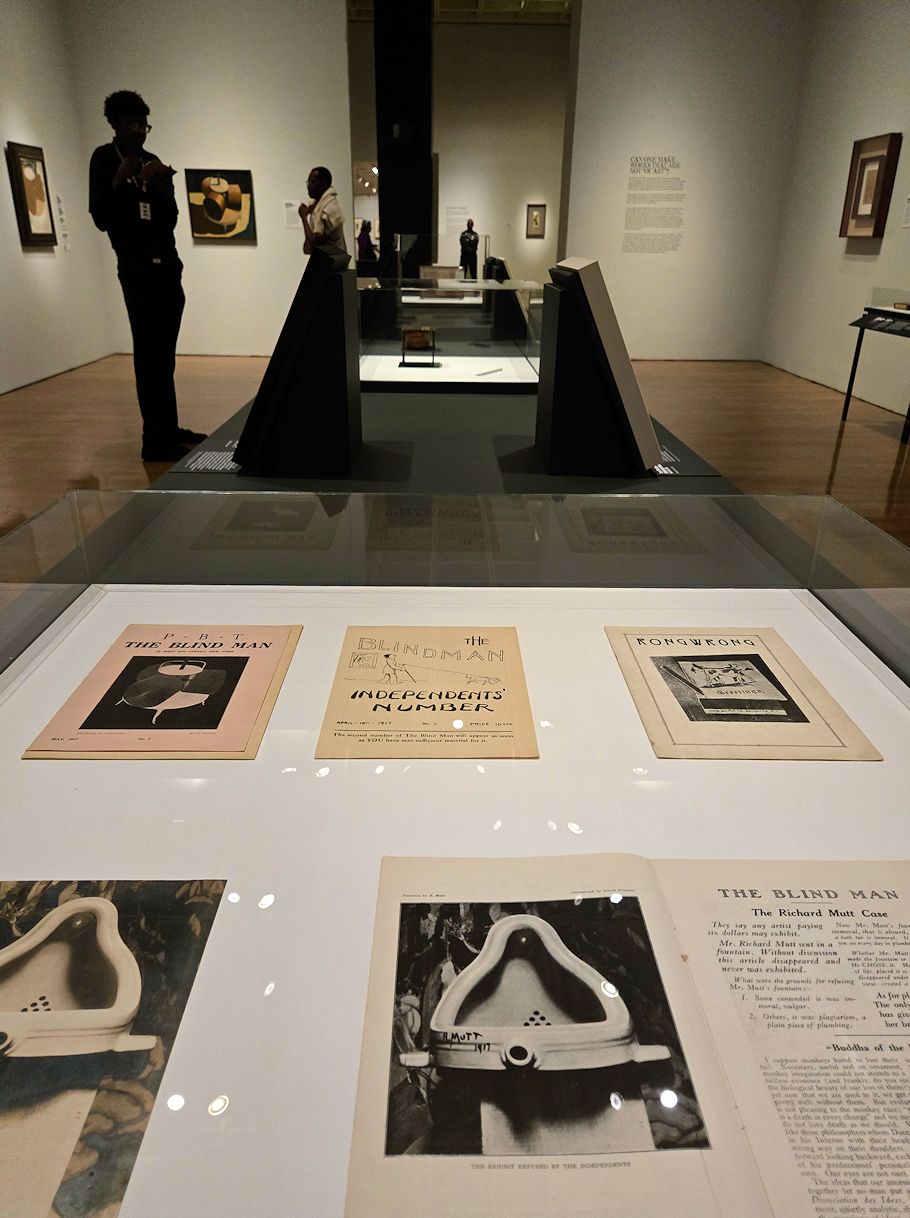
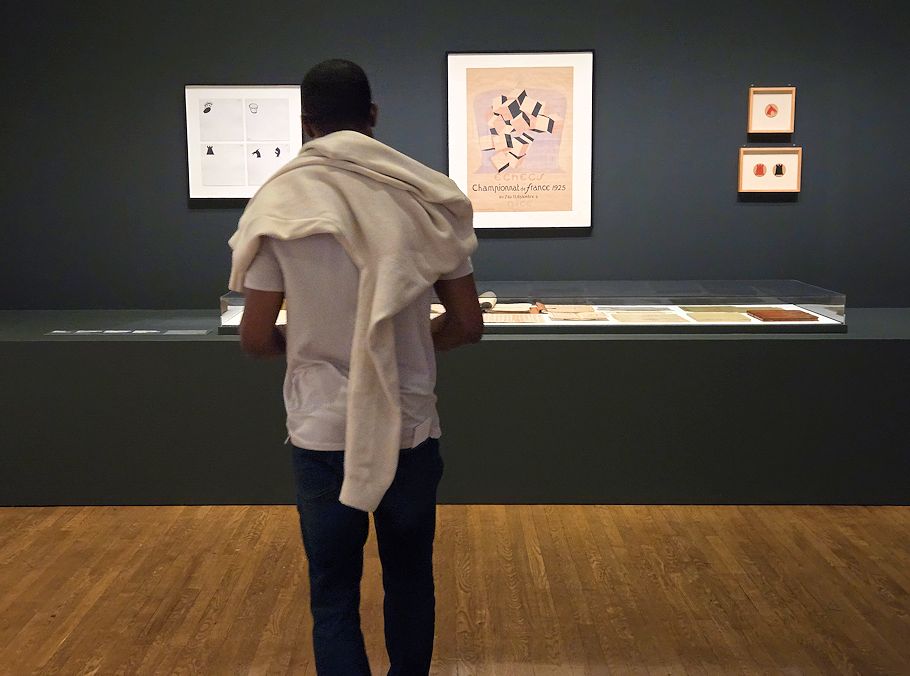
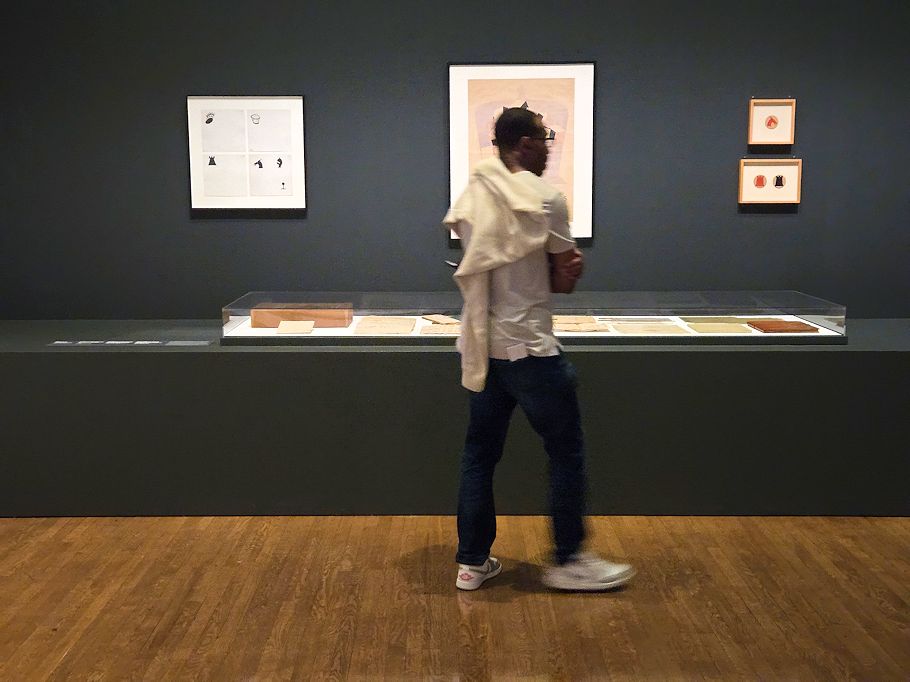
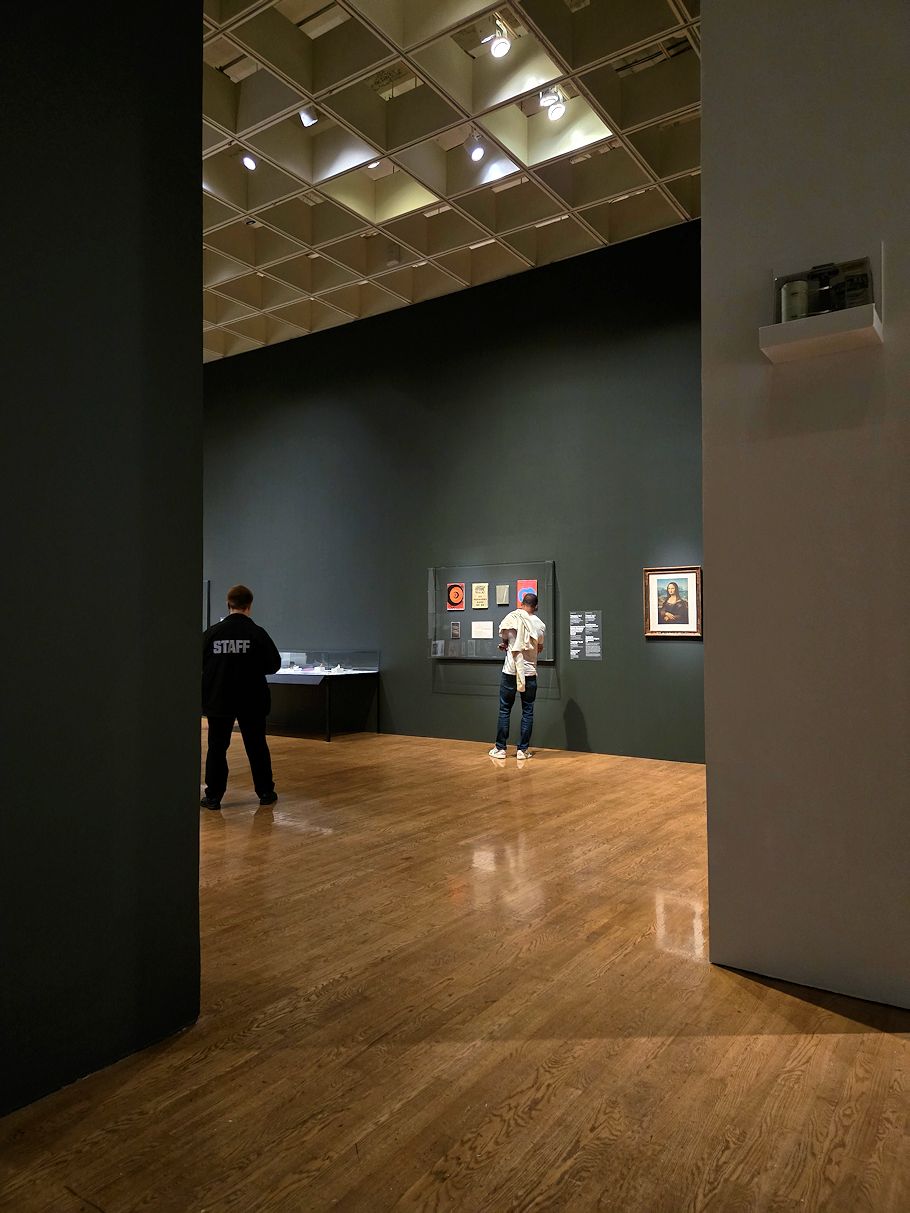
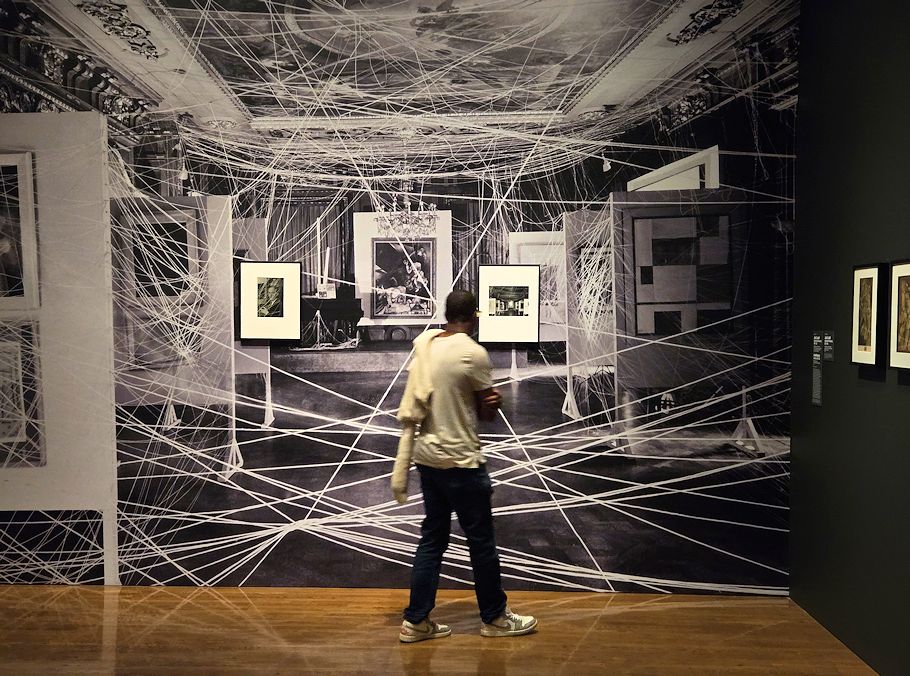
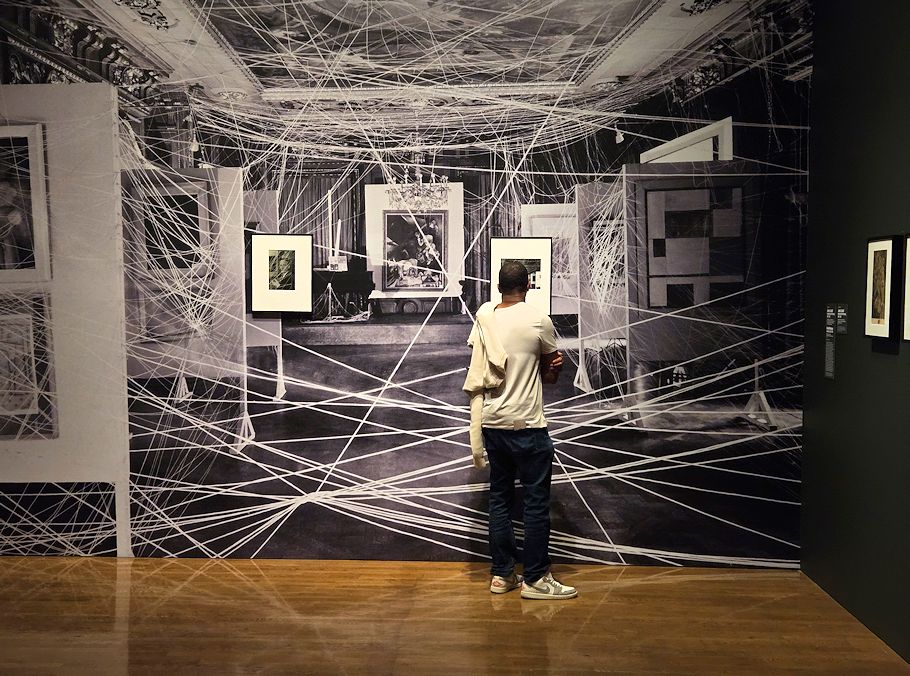
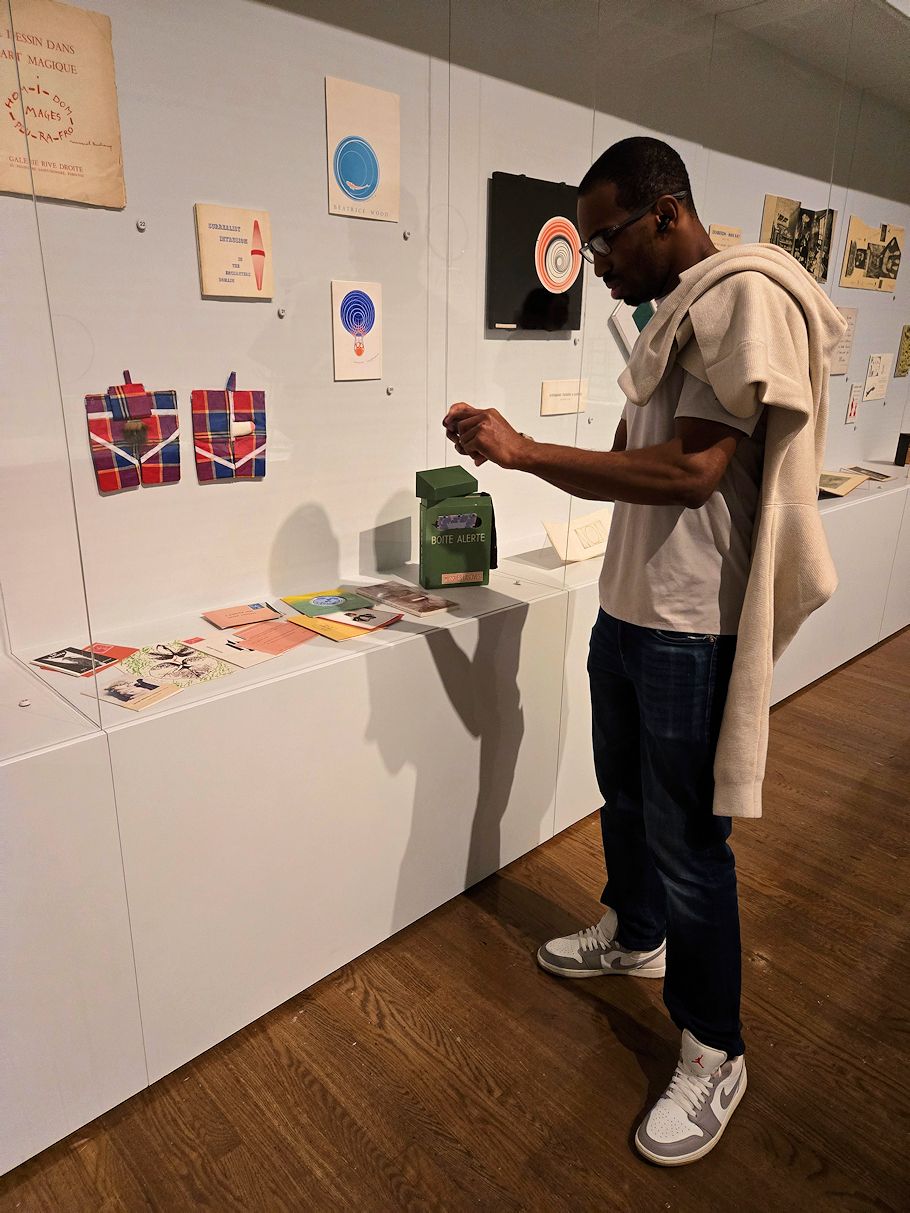
Philadelphia Museum of Art 2026.10.15
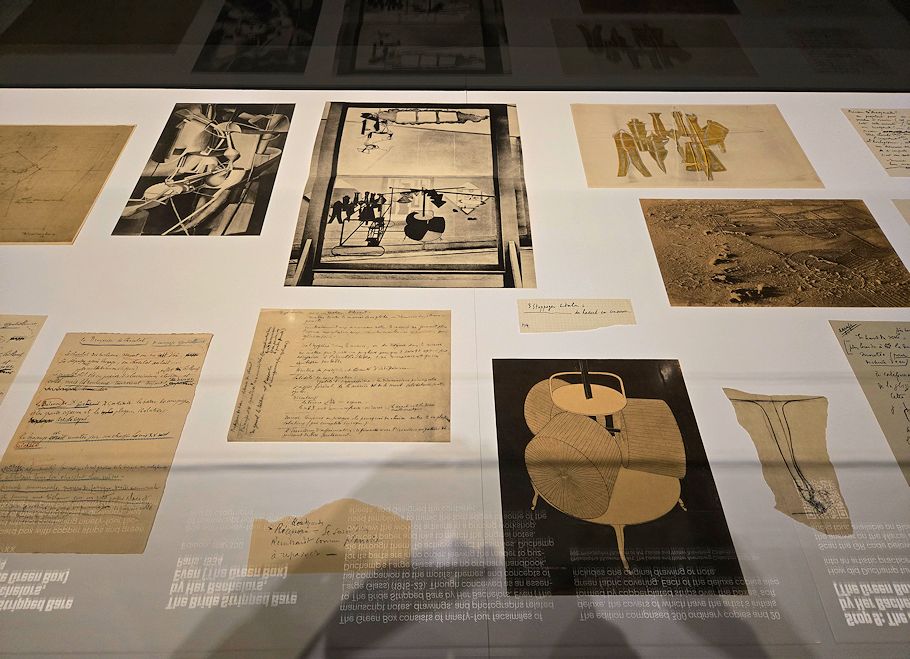
"It is not the time to finish anything," he said. "It's the time of fragments."
2025.10.16
...photography, which would become increasingly important in Duchamp's work from then on. Photography was also involved in the Box of 1914, the first collection of his manuscript notes. Duchamp selected sixteen notes and one drawing, Avoir l'apprenti dans le soleil (To Have the Apprentice in the Sun)--the one that shows a man on a bicycle riding up an inclined plane--and had them mounted on matboard; at least four photographs were made of each item, and the sets were then placed in cardboard boxes that had originally contained Kodak photographic plates. His reasons for "publishing" this extremely limited edition and for choosing these particular notes out of so many others on hand are thoroughly obscure. Three of the notes concern the Standard Stoppages, but the rest seem to have little or no relationship to The Large Glass or to one another; several are incomplete, and the drawing is a complete mystery.
Calvin Tomkins, Marcel Duchamp: A Biography (1996), p. 138.
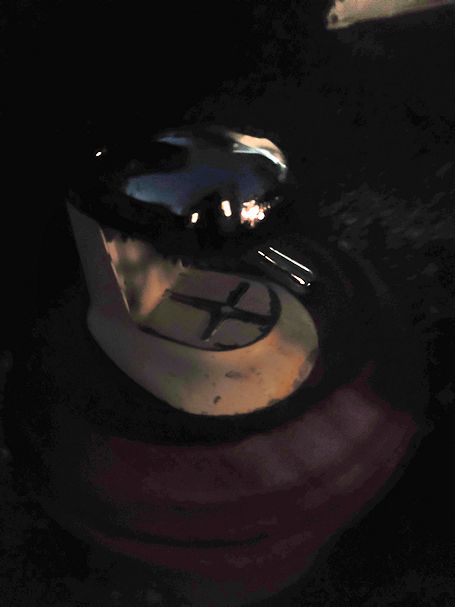
Unbekannt Readymade at Night, Twice 2025.10.16
2024.10.16
451 Rhawn Gallery
    Collage Restraint
The phone/camera is resting on the kitchen table facing the ceiling.


This is what is between the tabletop and the ceiling.
2023.10.16
From The Discovery of Piranesi's Final Project:
16 October 2023 Monday
After spending the better part of two hours this morning having tea with Ro and Steve at their place, I now know why the notion of "having tea" is easily one of the best of pleasurable rituals. There wasn't even a moment when one of us wasn't saying something. Maybe there was something extra in the tea, because it was all music to my ears...LOL Plus, I got to see Steve's latest man cave. As far as I'm concerned, Steve is one of the guys that actually invented man caves since he already had one in his parent's basement 50 years ago. That one embodied the whole Warhol Factory vibe, where as the latest embodies a pure golden memories vibe.
2015.10.16
A good example of art about architecture

Vice Grip House 1998
A good example of art about architecture

Room with a View 2001
2013.10.16
2D CAD databases
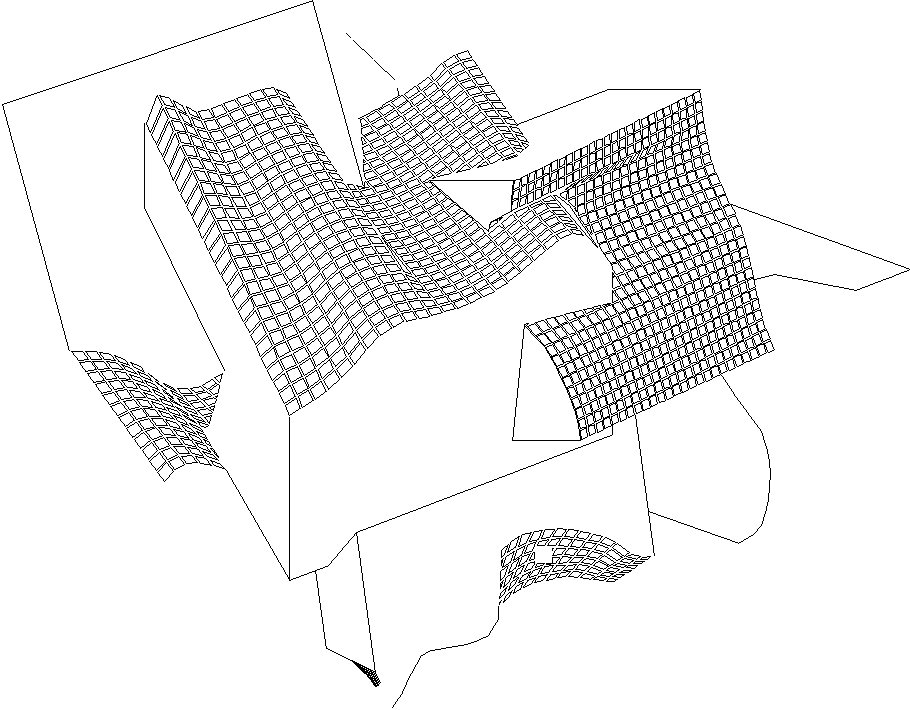
13101601.db New Not There City grid plans
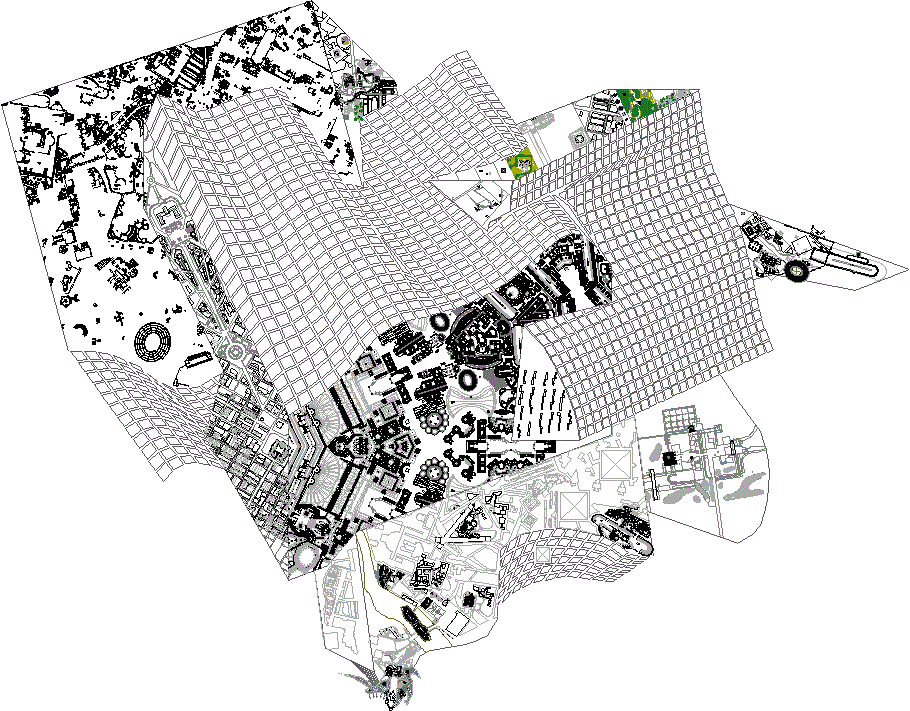
13101602.db New Not There City master plan
2007.10.16
Differentiation between the outside and the inside
"trying to mix the two gently"
osmosis
1a. the tendency of a fluid, usually water, to pass through a semipermeable membrane into a solution where the solvent concentration is higher, thus equalizing the concentrations of materials on either side of the membrane.
1b. the diffusion of fluids through membranes or porous partitions.
2. a subtle or gradual absorption or mingling
working title: The Semipermeable Membrane of Architecture
2002
Denis Diderot "Encyclopedia"
Diderot, Denis. "Encyclopedia." The Encyclopedia of Diderot & d'Alembert Collaborative Translation Project. Translated by Philip Stewart. Ann Arbor: Michigan Publishing, University of Michigan Library, 2002. http://hdl.handle.net/2027/spo.did2222.0000.004 (accessed 16 October 2026). Originally published as "Encyclopédie," Encyclopédie ou Dictionnaire raisonné des sciences, des arts et des métiers, 5:635–648A (Paris, 1755).
51/192
But what is singular is that they all admire equally the harmony of this beginning: there is the same enthusiasm, even though there is almost no sound in common. Among the French the pronunciation of Greek varies so much that it is not rare to find two scholars who understand that language very well, and do not understand each other; they are in agreement only on quantity. But quantity, being merely the law of movement of pronunciation, simply accelerating or suspending it, does nothing either for the softness or sharpness of the sounds. One can always ask how it happens that letters, syllables, and words either isolated or in combination should be agreeable to several people who pronounce them diversely. Is it a consequence of the prejudice that favors everything that comes to us from far away, the usual prestige of distance of time or place, the effect of a long tradition? How did it come about that amidst so much Greek and Latin verse, there should not be a single syllable so opposed to the pronunciation of the Swedes or the Polish that they should find it impossible to read it? Is our answer that dead languages have been so polished, that they are composed of such simple, easy, elementary combinations of sounds that in all the living languages where they are employed those sounds constitute the most pleasant and melodious part? That these living languages, undergoing constant improvement, just continually correct their harmony and bring it closer to that of dead languages? In a word, that the harmony of the latter, artificial and corrupted by the particular pronunciation of each nation, is still superior to the real, intrinsic harmony of their own languages?
52/192
I shall answer in the first instance, that this last consideration will be the more convincing as the reader is better informed of the extraordinary care the Greeks had taken to render their language harmonious: I shall not go into details, but only remark in general that there is hardly a single vowel, a single diphthong, a single consonant, whose value is so constant that euphony cannot affect it, either by altering the sound, or by suppressing it; secondly, that although the Ancients took some precautions for communicating to us the values of their letters, they were not nearly as precise or as meticulous as they ought to have been; thirdly, that the scholar who has thorough knowledge of what they have left us, will nonetheless imagine he can bring any reasonable and logical person around to a pronunciation very similar to his own; fourth, that we can perfectly prove to the Englishman that in pronouncing mi, nine, a, i, dé, zi, é , he makes six mistakes in pronunciation in seven syllables. He renders the syllable µ? by mi ; but an ancient author tells us that sheep when they bleat produce the sound of the ? . Are we to say that Greek sheep bleated differently from ours, and said bi, bi , rather than bé, bé ? We read moreover in Dionysius of Halicarnassus, ? infrá basim linguF allidit sonum consequentem, non suprá, ore moderaté aperto , movements in no way executed by the person who renders ? by i . He renders e? which is a diphthong, by an i , a vowel and single sound. He renders the ? by a z or a gutteral s , whereas it is nothing but an ordinary, aspirate t ; he renders ?e by zi , in other words instead of channeling the air strongly toward the center of the tongue to produce the short, closed é , allidit spiritum circá dentes, ore parjm adaperto, nec labris sonitum illustrantibus , or he pronounces the letter i . He renders á by é , in other words allidit sonum infrá basim linguF, ore moderaté aperto ; whereas for the correct pronunciation of this letter á he prescribes spiritum extendere, ore aperto, et spiritu ad palatum vel suprá elato .
53/192
Contrariwise, whoever pronounced these Greek words µñ???, ?e?de, ?e? as mé, nine, a, ei, ye, dé, thé, a , follows all the rules broken by the English pronunciation. Of this one can become convinced by comparing the Greek letters with the sounds I attach to them, and the movements which Dionysius of Halicarnassus prescribes for each of those letters, in his admirable opus De collocatione verborum . To give an idea of the usefulness of his definitions, I will simply record those of the r and the s . The ? is produced, he says, lingua extremo spiritum repercutiente, et ad palatum propé dentes sublato ; and the s, linguâ adductâ suprá ad palatum, spiritu per mediam longitudinem labente, et circá dentes cum tenui quodam et angusto sibilo exeunte . I ask you whether it is possible to satisfy these movements, and give the r and the s other values than those we attach to them. He is not less precise with respect to the other letters.
54/192
But, you may insist, if people today who read Greek comply with Dionysius of Halicarnassus's rules, they will all pronounce that language in the same manner, and just as did the ancient Greeks.
55/192
My answer to this question is a supposition that one cannot reject, however extraordinary it may be in this country: it is that a Spaniard or an Italian eagerly desiring to possess a portrait of his mistress, whom he could not produce before any painter, made the only decision he could: to write down the most extensive and precise description of her he could; he first determined the correct proportion of the entire head; then he went on to the dimensions of the forehead, eyes, nose, mouth, chin, neck; then he went back over each of these parts, and spared nothing so that his words would engrave in the painter's mind the true image he had before his eyes; he neglected neither colors, nor forms, nor anything that characterized her: the more he compared his description with his mistress's face, the better likeness he found it to be; he believed above all that the more tiny details he could pack into it, the less freedom he would leave the painter; he neglected nothing that seemed to him likely to constrain the brush. When he deemed the description complete, he made a hundred copies, which he sent to a hundred painters, instructing each to execute exactly on the canvas what they read on the paper. The painters went to work, and after a while our lover received a hundred portraits, all of which were perfect likenesses of his description, and none of which resembled any other or his mistress. The application of this parable is that, however scrupulous a writer may be in describing the movements of the organ when it produces different sounds, there will always be a latitude, slight in itself, but enormous in relation to the real divisions of which it is capable, and to the perceptible but unmeasurable varieties which will result from these divisions. Nevertheless one cannot infer from this either that such descriptions are utterly useless, because they will never produce more than an approximate pronunciation, nor that euphony, that law to which an ancient language has owed all its harmony, if it exerts a constant pressure, will not tend at least as much to bring us closer to it as to distance us from it. These were two propositions that I needed to establish.
56/192
I will say just one thing about punctuation. There is little difference between the art of reading well and that of punctuating well. The pause of a voice in discourse, and the signs of punctuation in writing, always correspond, indicate equally well the connection or separation of ideas, and complement countless expressions. Therefore it will be useful to determine their number according to the rules of logic, and fix their value through examples.
57/192
Next we need only determine accent and quantity. What little accent we have, more oratorical than syllabic, is unmeasurable; and our quantities can be reduced to longs, shorts, and some less short; in which it seems to allow fewer variations than that of the Ancients who distinguished as many as four kinds of shorts, if not in versification, at least in prose, which obviously exceeds poetry for the variety of its numbers. Thus they said that in "?dó?, ?ód??, t?óp??, ??óf?? , the fact that the first vowels are short did not prevent their having perceptibly unequal quantities. But this is another case where we can trust a trained voice to make up for any oversights.
58/192
Here then are the practical and necessary conditions for the language, without which knowledge is not communicated, to be fixed as much as its nature permits us to fix it, and for which it is important to fix it for the principal object of a universal and analytical dictionary. One must possess a descriptive alphabet, accompanied by the meticulous detail of the movements of the speech organs and the change of air in the production of sounds attached to the elementary letter, and to each syllabic combination of such characters; first write the word using the customary alphabet, and then using the analytical alphabet, each syllable separated and marked according to quantity; add the Greek or Latin word that renders the French word, only when it is a radical, along with the citation of the location where the Greek or Latin word is used by the ancient author; and if there are different meanings, and among these the word sometimes becomes a radical, fix it the same number of times by the corresponding radical in the dead language; in other words, define it when it is not a radical, for this is always possible, and then the Greek or Latin synonym becomes superfluous. It is apparent how slow, difficult, and thorny this labor is. What experience is required in two or three languages, in order to compare the simple ideas represented by different signs which could have among them a sort of identity, or, still more delicately, clusters of ideas represented by signs that must have the same relation; and in the frequent situations where the semblance of identity cannot be established, what subtlety and taste it takes to distinguish which of the signs can take on proximate meanings; and among the accessory ideas, those to be retained or dropped. But one must not give up. The academy of La Crusca dispelled some of the difficulties in its dictionary. The French Academy, its membership combining all varieties of knowledge, poets, orators, mathematicians, physicists, naturalists, men of the world, philosophers, military officers, and being quite determined in its elections to consult only its own need for one talent rather than another, for the greater quality of its work, it is unimaginable that it would not follow this general plan, and not make its work indispensably useful to those whose job it will be to improve upon the feeble outline we are publishing.
59/192
The Academy will doubtless not fail to call attention to our gallicisms, or to the different instances where our language happens to violate the laws of general analytical grammar; for an idiomatic expression and a violation of this nature are the same thing. Whence one can see once more that in everything there is but one invariable and common measure, without which we know, can appreciate, or define nothing; that general descriptive grammar is in this case that measure; and that without such grammar, a dictionary of the language lacks a foundation, because there is nothing fixed to which one can refer the problematic instances which come up; nothing that can indicate what the difficulty is; nothing to specify what decision to make; nothing to indicate the reason for choosing among several dissimilar solutions; nothing to interpret usage, to combat or justify it, which are often possible. For it would be a prejudice to believe that the language being the basis of intercourse among men, major flaws can long remain in it, without being perceived and corrected by those whose mind is sharp and whose heart is right. It is therefore likely that violations of the general rule which remain, will be abbreviations, vigorous or euphonic expressions, and other inconsequential ornaments, rather than major corruptions. We speak constantly and write constantly; we combine ideas and signs in countless different ways; we refer all these combinations to the yoke of general syntax; sooner or later we subordinate them to it, however minor may be the consequence of making exceptions; and when this subordination does not occur, it is because we have found an advantage in doing otherwise which it is sometimes difficult to analyze, but it would be impossible to do so without descriptive grammar, analogy, and etymology which I shall call the wings of the art of speaking, as it is said of chronology and geography that they are the eyes of history.
60/192
We will not end our remarks on the language without speaking of synonyms. They could be endlessly multiplied, if we did not begin by seeking some rule to limit their number. In all languages there are expressions that differ only by quite subtle shadings. These nuances are not lost on the orator or the poet who know their language; but they constantly ignore them, the one under the difficult constraints of his art, the other carried along by the harmony of his own. It is this consideration which permits deduction of the general rule we require. One must consider as synonymous only the terms that are so treated in poetry, so as to avoid the confusion that would be introduced into the language by the indulgence we have for the rigor of the rules of versification. One must consider as synonymous only the terms that oratorical art substitutes indiscriminately for each other, so as to avoid the confusion that would be introduced into the language by the charm of the oratorical harmony which sometimes chooses and sometimes eschews the correct word, dispensing with the judgment of good sense and reason, in order to submit to that of the ear: a dispensation which at first appears a most manifest extravagance and most contrary to accuracy and truth; but which becomes, when we think about it, the basis of discrimination, of good taste, of the melody of the style, its unity, and the other qualities of elocution, which alone can assure immortality to literary productions. As the sacrifice of the correct word is never made except on occasions when the mind is not thrown too far off track by the melodious expression, the understanding then compensates for it; the discourse corrects itself, the phrase becomes harmonious; I see the thing as it is; I see in addition the character of the writer, the value he himself puts on the objects of which he speaks, the passion that moves him; the vision becomes more complex, more developed, and the enchantment grows proportionately in my mind; the ear is content, and truth is not offended. When these advantages cannot be conjured, the most harmonious writer, if he possesses exactness and taste, will never allow himself to dispense with the correct word in favor of its synonym. He will use it to strengthen or dampen the melody using some meliorative device; he will vary the tempo, or fool the ear with some other trick. Independently of harmony, the correct word must also be sacrificed to another, whenever the former evokes small, base, or obscene notions, or recalls disagreeable sensations. But in the other circumstances, would it not be more appropriate, it will be said, to leave to the reader the task of supplying the harmonious word rather than the correct one? No, even were it as easy for the ear, after the correct word has been given, to hear the harmonious one, as it is for the mind, after the harmonious word has been given, to find the correct one. If the musical effect is to be produced, then the music must be heard: it cannot be imagined; it is nothing if the ear is not actually affected by it.
2002.10.16
from Life magazine 1972


art and architecture 30 years ago

The world's largest painting--Franklin's Footpath--by Gene Davis on the parking lot in front of the Philadelphia Museum of Art--31464 square feet, 12 miles of masking tape used, 400 gallons of special paint. As predicted, it lasted about 5 years. I fondly remember walking over it often. Oh boy, now I'm dreaming reenactment.
2000.10.16
baroque (cyber?) theater
"At the end of the play, the two braggarts reappeared on the stage together to reaffirm the "reality" of the illusion. Having asked each other how they fared, the impresario of the fictitious performance answered nonchalantly that he had not really shown anything but the audience getting up to leave "with their carriages and horses accompanied by a great number of lights and torches." Then, drawing the curtain, he displayed the scene he had just said he had shown to his audience, thus rendering complete the incredible reversal of reality and illusion to the confused amazement of the real spectators, who were now finding themselves ready to leave and caught in the enchanting act of feigning the feigned spectators."
1991.10.16
Palais des Congrès: Roof/Architectural Promenade

The architectural promenade reaches its goal in the roof garden/solarium--the path has ascended to the sky. The bridges and ramps of the Villa Stein de Monzie, the Villa Savoye, and the Palais des Congrès all culminate in a 'room' that is open to the sun and the stars.
Although the route through the Wallraf-Richartz Museum does not end in a roof garden, it is nonetheless noteworthy that the path ends on a large balcony platform in the shape of a cloud.
1954.10.16
1954. Saturday, Philadelphia
Almost four years after the bequest was made by the trustees of the Francis Bacon Foundation [27.12.1950], twenty-two galleries at the Philadelphia Museum of Art containing the Louise and Walter Arensberg Collection are opened to the public.
Sadly, neither of the Arensbergs have lived to see their collection exhibited in the museum (Louise died on 25 November 1953 and Walter on 29 January 1954), but Duchamp has supervised the installation of the collection in the museum according to the terms of the bequest.
In the heart of this extraordinarily fine collection of modern art is the very important group of works by Duchamp himself. Fulfilling the wishes of Miss Dreier, as one of her executors [29.3.1952], Duchamp arranged for the Large Glass [5.2.1923] to be bequeathed to Philadelphia [6.5.1952]. It now stands in the midst of the collection where it originally belonged.
Ephemerides
1946.10.16
1946. Wednesday, New York City
The miniature version which Duchamp made for Carried Stettheimer [23.7.1918] stands in for the original Nu descendant un Escalier, No.2 [18.3.1912] in the exhibition "1910-12. The Climactic Years in Cubism" held at Jacques Seligman's gallery at 5 East 57th Street.
Ephemerides
1934.10.16
1934. Tuesday, Paris
Since his return to Paris on 21 September, Duchamp has finally launched Rrose Sélavy as a publisher at 18 Rue de la Paix, address of the Travelers Bank.
"Well dear your amazing book has arrived!!!!" exclaims Miss Dreier. "It is one of the most perfect expressions of Dadaism which has come my way. I was terribly amused at myself," she admits, "how annoyed I was when I saw all those torn scraps--and of course the glass was broken!!!!! At first it
seemed to me that I just could not bear all those torn pieces of paper - and then I woke up to the fact--how right Dada is to jolt us out of our ruts..."
When Anaïs Nin visited Rue Hallé recently, Duchamp showed her the publication and told her that this form should hereafter replace finished books. "It is not the time to finish anything," he said. "It's the time of fragments."
Ephemerides
|