2026.10.18
silhouettes and shadows
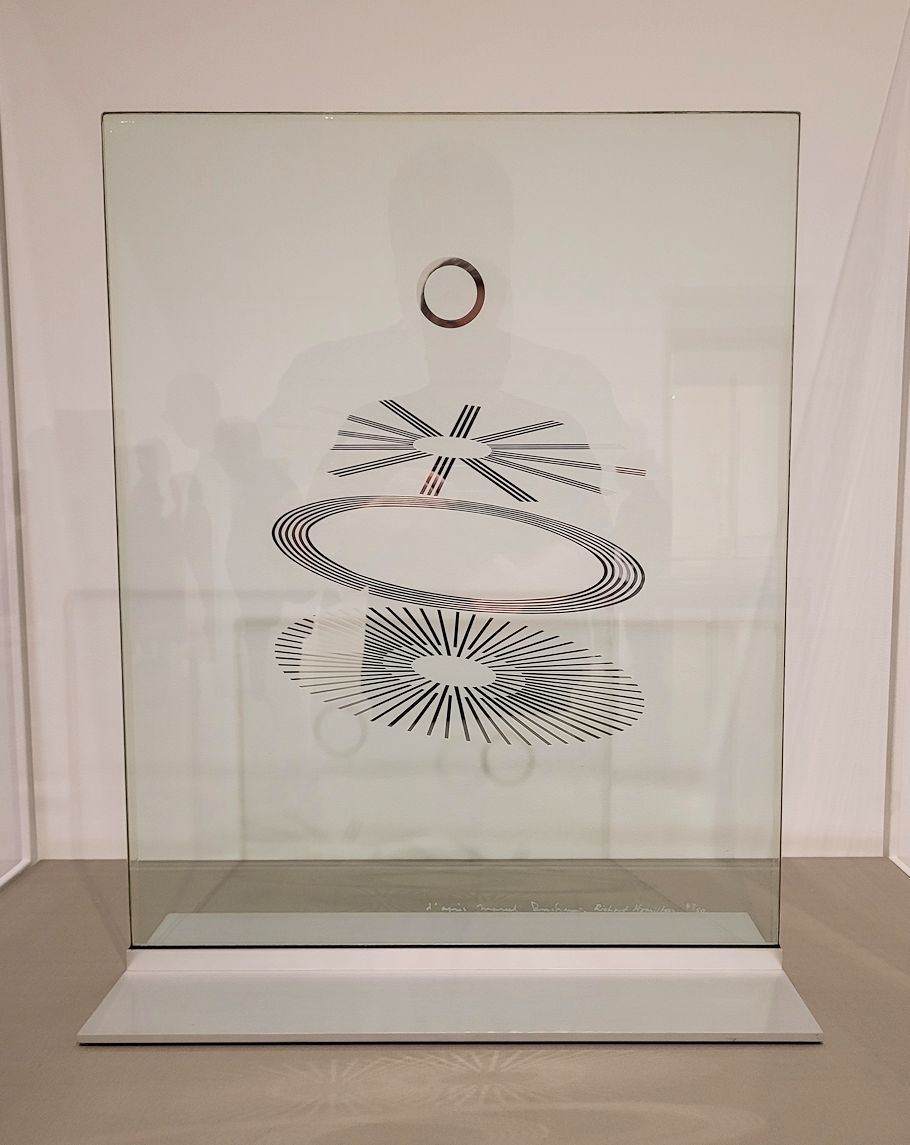
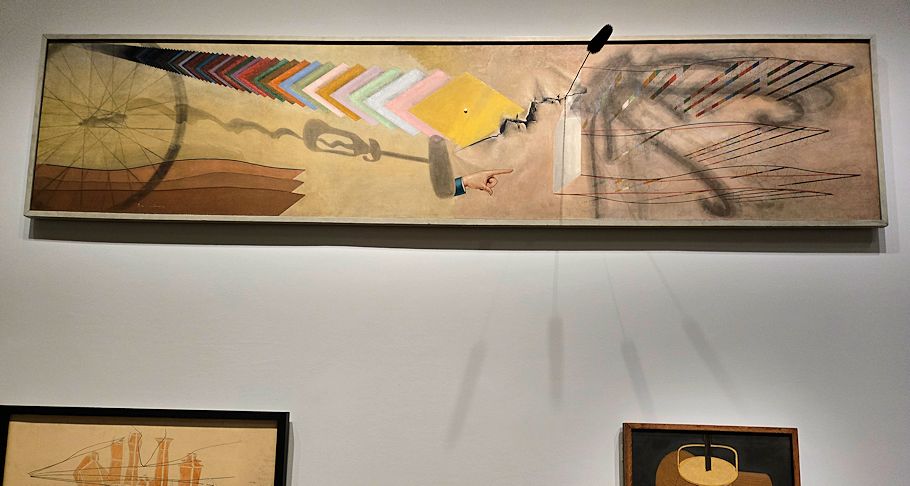
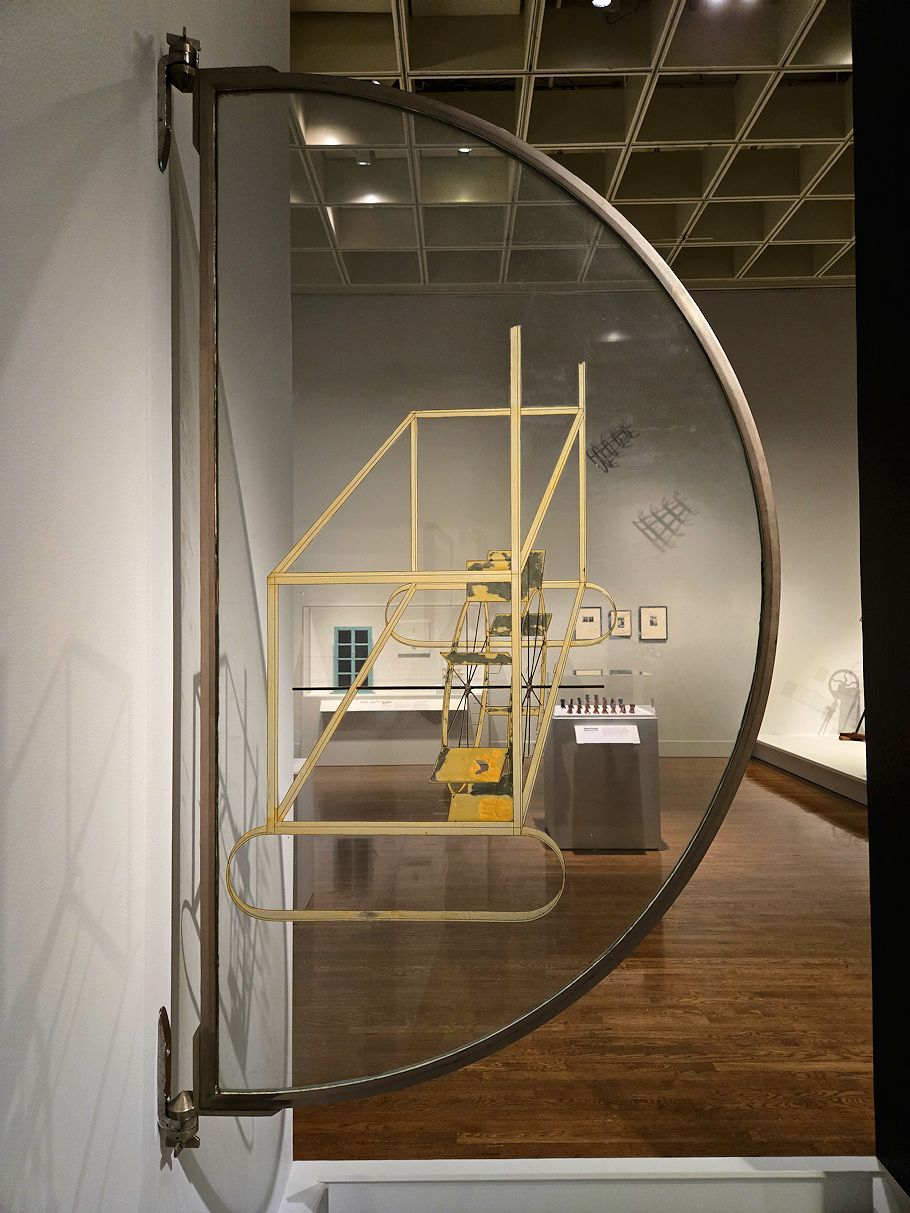
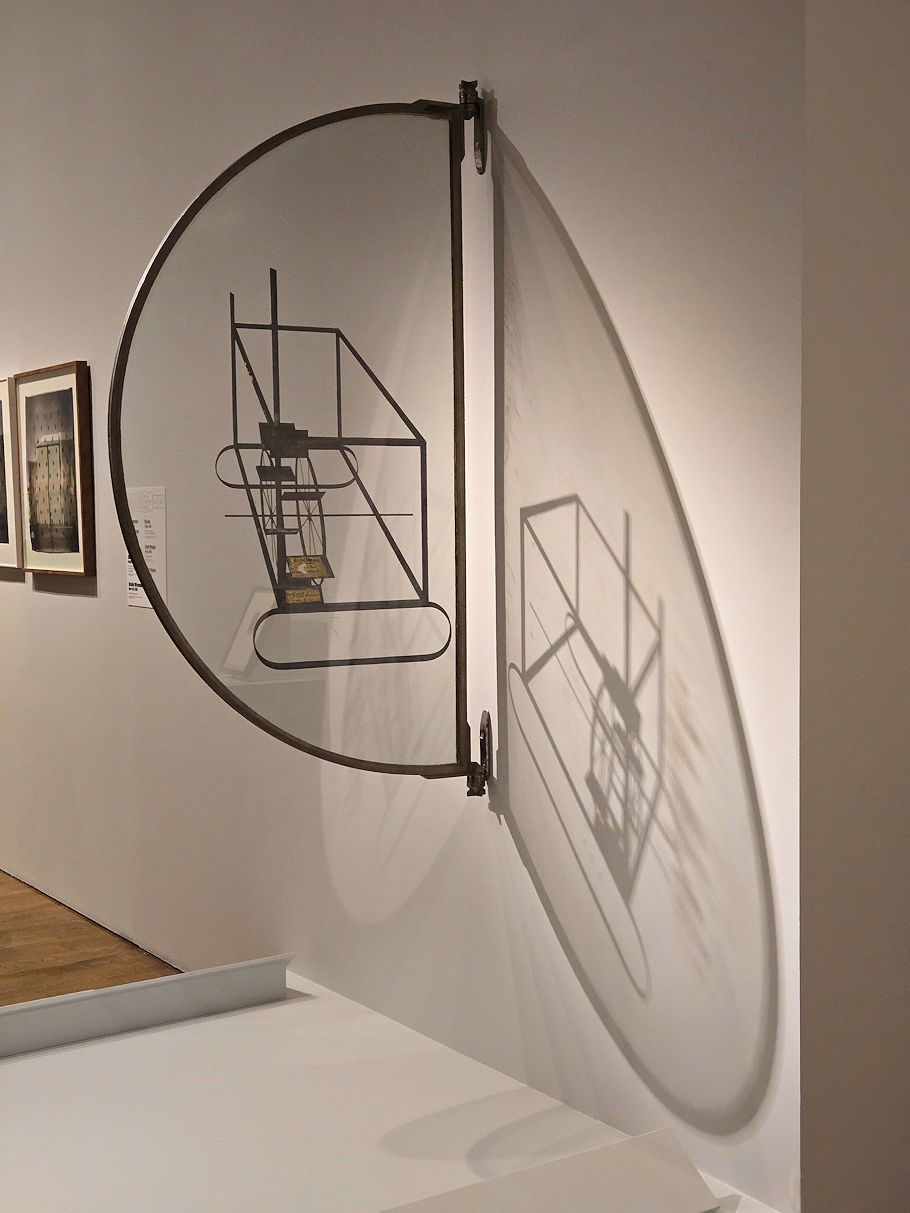
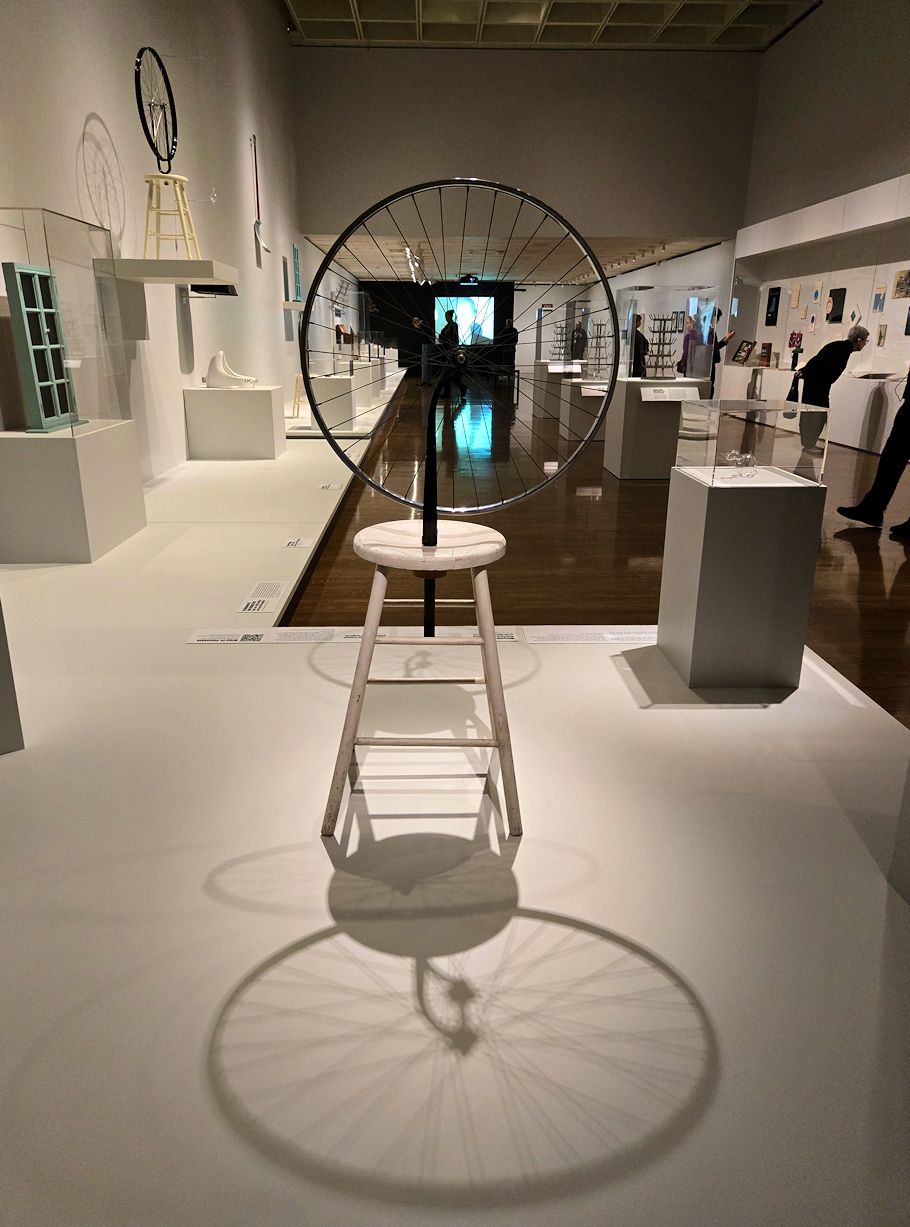
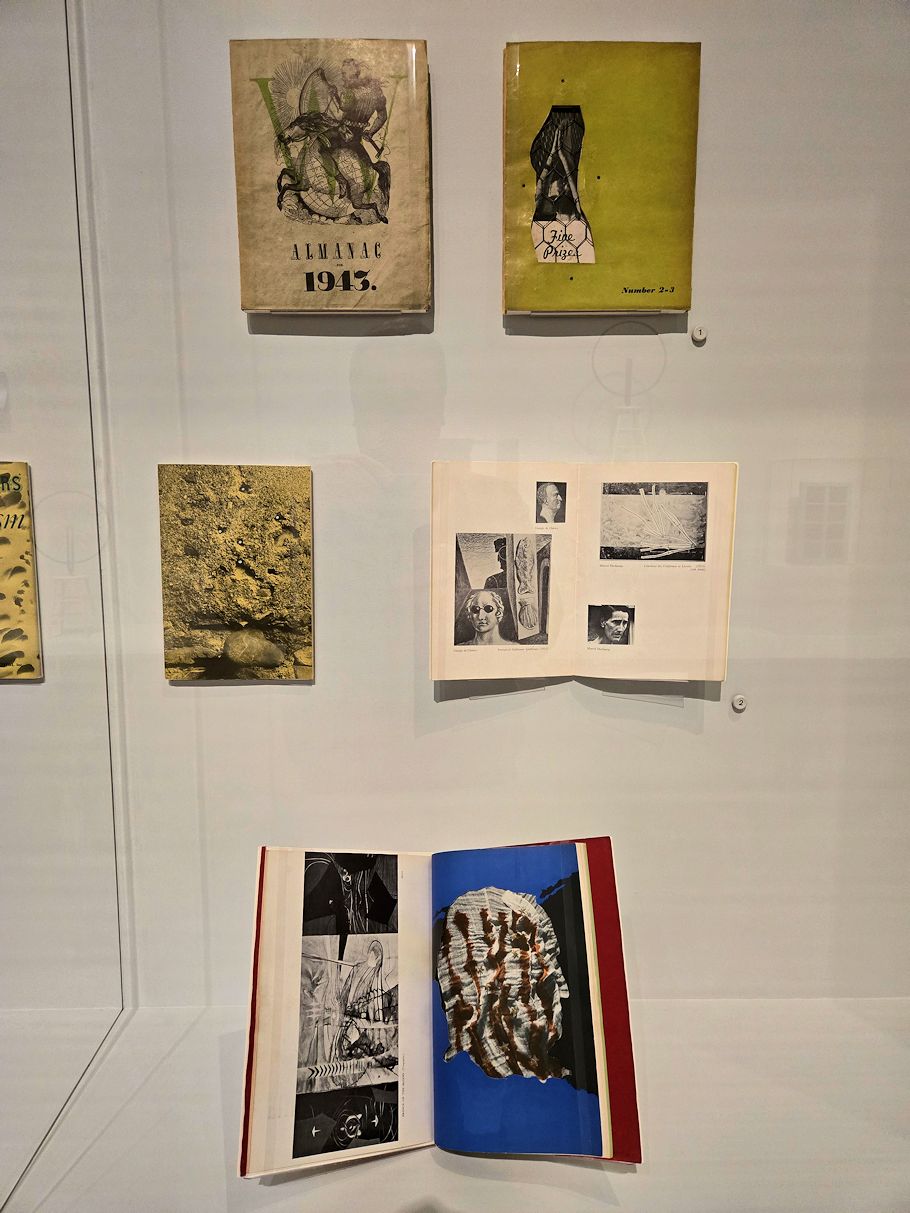
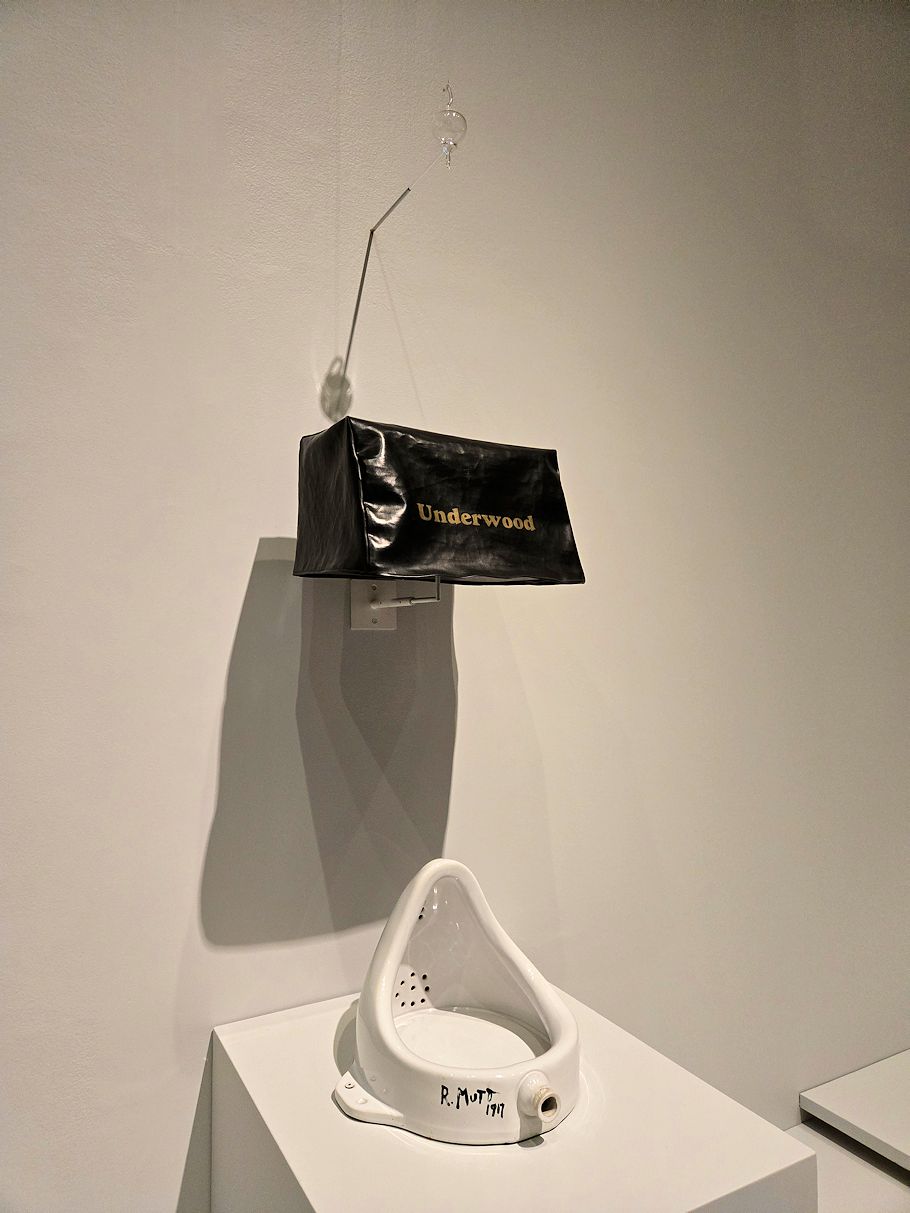
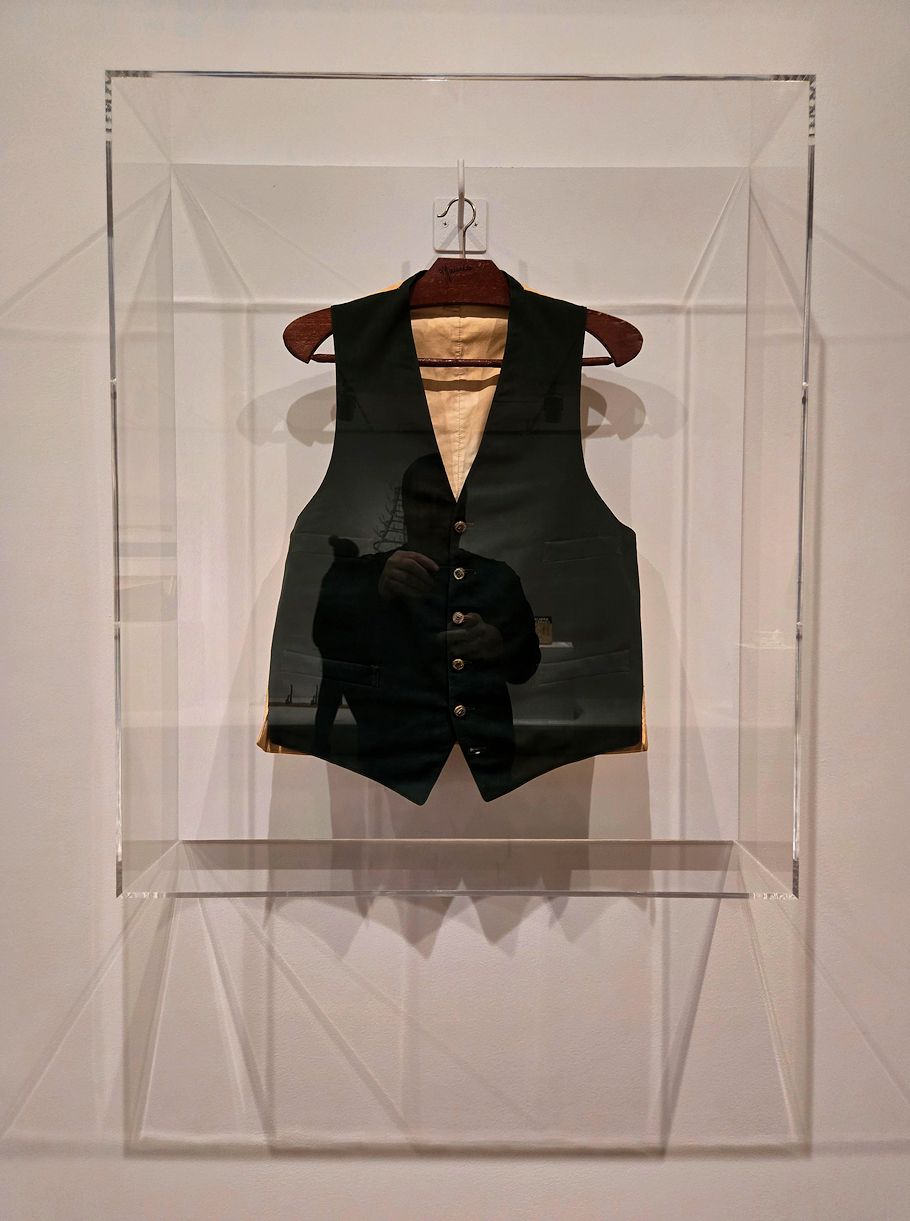
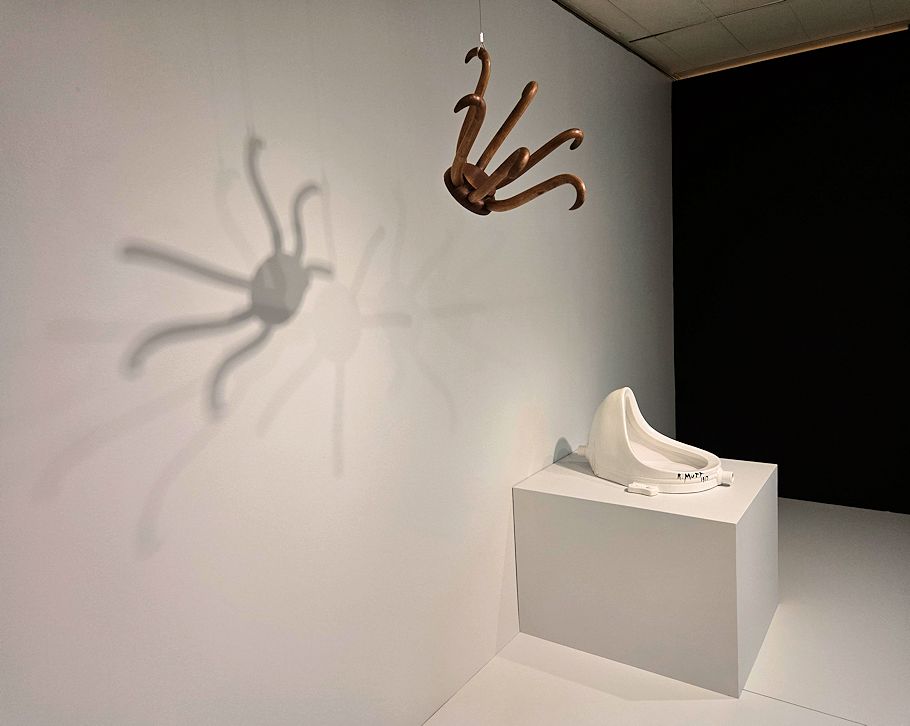
Philadelphia Museum of Art 2026.10.15
2024.10.18
451 Rhawn Gallery
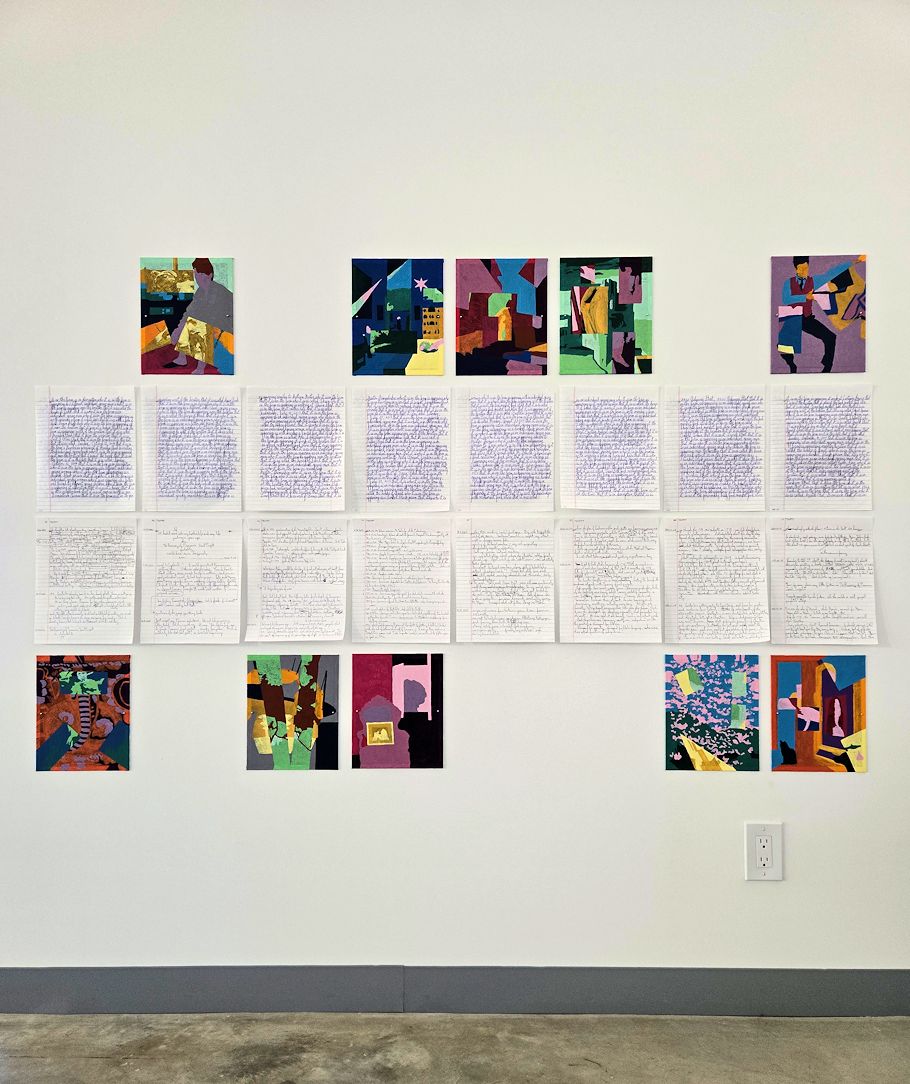
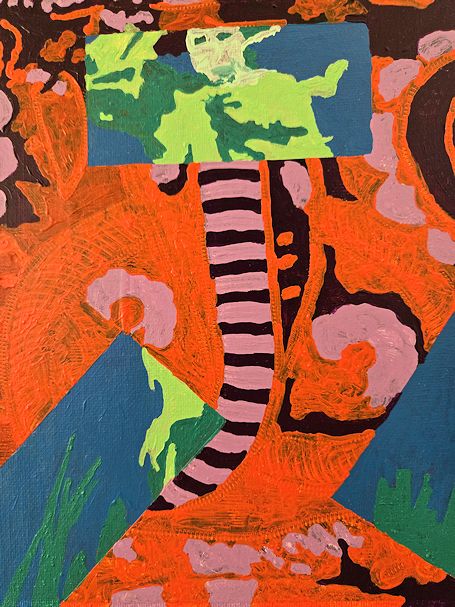 
2017.10.18

POPICA 002
Fox Chase Farm
2007.10.18
why you should feel badass as an architect!
We here at Barberini Faun Innuen. are at the final programming draft for a series of architect stud farms--Nuts-n-Bolts.
More creative before or after sex?
There is no before or after; it's always sex for me.
2004.10.18
Artifacts of Ottopia/The Driver's Seat

Vanessa wo bist du?

real and virtual

playing a Lord

remember it's 1975

"This movie really sucks, doesn't it?"
2002
Denis Diderot "Encyclopedia"
Diderot, Denis. "Encyclopedia." The Encyclopedia of Diderot & d'Alembert Collaborative Translation Project. Translated by Philip Stewart. Ann Arbor: Michigan Publishing, University of Michigan Library, 2002. http://hdl.handle.net/2027/spo.did2222.0000.004 (accessed 18 October 2026). Originally published as "Encyclopédie," Encyclopédie ou Dictionnaire raisonné des sciences, des arts et des métiers, 5:635–648A (Paris, 1755).
71/192
A second order not less essential than the previous one, is that which will determine the relative length of the different sections of the work. I admit that there arises at this point one of those difficulties which it is impossible to overcome at the outset and difficult to overcome no matter what the ultimate form of the publication. How does one establish a proper proportion between the different sections of a such a great whole? Even if it the whole thing were the work of a single man, that task would not be easy; what does it then become, when the whole is the work of a numerous society? If we compare a Universal and analytical dictionary of human knowledge to a colossal statue, it does not help, since we know neither how to determine the absolute height of the colossus, nor by what sciences or what arts its different members should be represented. What material shall serve as its standard unit? Shall it be the noblest, the most useful, the most important, or the most extensive? Shall we choose morality over mathematics, mathematics over theology, theology over jurisprudence, jurisprudence over natural history, etc.? If we hold to certain generic expressions which no two people understand in the same manner, although everyone uses them without contradiction, because one is never explicit about it; and if we ask of each contributor either elements, or a complete, general treatise, we shall soon discover how vague and indeterminate that nominal measure is. And he who thinks he has taken sufficient precautions with his various colleagues so that the materials he will get from them more or less fit in with his plan, is a man who has no idea of his object, nor of the colleagues he had enrolled. Each has his manner of feeling and seeing. I remember how an artist to whom I thought I had laid out quite exactly what he needed to do for his art, brought me in accordance with my instructions, or so he claimed, on the manner of hanging wallpaper, which required about two pages of writing and a half-plate illustration, ten or twelve enormous plates covered with drawings, and three thick folio copybooks written in a very small hand, enough to fill one or two volumes in-12º. Contrariwise, another, to whom I had prescribed exactly the same rules as to the first, brought me, on one of the most extensive manufactures in terms of the variety of products it turns out, the materials it uses, the machines it employs, and the operations performed, a small catalogue of words undefined, unexplained, unillustrated, assuring me quite firmly that his art contained nothing more: he assumed that the rest either was not unfamiliar, or could not be written. We had hoped to get from one of our most talked-about connoisseurs the article Composition (Painting) (M. Watelet had not yet offered us his assistance). We received from him two lines of definition short on precision, style, and ideas, with the humiliating admission that that was all he knew ; and it was I who had to do the article Composition (Painting), I who am neither a connoisseur nor a painter. These phenomena hardly astonished me. Nor was I more surprised at the same diversity between the labors of scientists and men of letters. The proof can be found in a hundred places in this work. Here we are bloated and exorbitantly fat; there we are lean, petty, pathetic, dry, and scrawny. In one place, we are skeletal, in another we rather seem dropsical; we are by turns dwarves and giants, colossuses and pygmies; standing straight, nicely built and well proportioned; hunchbacked, lame and deformed. Add to all these quirks that of a text which is sometimes abstract, recondite or mannered, more often careless, drawn-out, and diffuse; and you will compare the work to a monster of the poetic art, or even to something more hideous yet. But these defects are inseparable from a first attempt, and it is clear to me that only time and centuries to come can correct them. If our descendants attend to the Encyclopedia without interruption, they will be able to bring the organization of its material to some degree of perfection. But without a common and constant measure, there is no middle ground: one must at first allow without exception for everything a science embraces, leave each topic to itself, and prescribe no limits other than those of its object. Each thing thus being in the Encyclopedia what it is in itself, it will have its true proportion, especially when time has compressed knowledge, and reduced each subject to its proper length. Should it happen that after a large number of successive revised editions, some important topic remains in the same state, as among us could easily be the case of mineralogy and metallurgy, it will not be the fault of the work, but of the human race in general, or of the nation in particular, whose attention has not yet turned toward those objects.
72/192
I have frequently made one observation, which is that the emulation which is necessarily kindled among colleagues produces dissertations instead of articles. In such cases, the whole art of referencing cannot counter the effect of diffusion; and instead of reading an article of the Encyclopedia , you find yourself reading a report for an academy. This defect will lessen with subsequent editions; knowledge will necessarily converge; the bombastic, oratorical tone will abate; some discoveries having become more common and less interesting will occupy less space; then only the new materials, the discoveries of the day will be inflated. It is a sort of deference that will always be shown for the object, the author, the public, etc. Once the moment has passed, that article will be subject like the others to circumcision. But as in general new inventions and ideas introduce inevitable disproportion, and the first edition is, of all, the one containing the most things if not recently invented, as least as little known as if they were, it is evident from this reason as well as the previous one, that it is the edition in which the greatest disorder will prevail; but which on the other hand will manifest through its irregularities an appearance of originality that is not likely to pass into later editions.
73/192
Why is the encyclopedic order so perfect and regular in the English author? Because since he limited himself to compilation from our dictionaries and the analysis of a small number of works, invented nothing, and stuck strictly to what was known, everything being equally interesting or indifferent to him, having neither a preference for any topic, nor favorable or unfavorable time for work, save that of a migraine or spleen, he was a laborer who plowed his furrow, shallow, but even and straight. Such is not the case with our opus. We have our pride. We want our set-pieces. Such is perhaps my vanity at this moment. One person's example attracts another. The editors object, but in vain. Their own mistakes are held up to them, and everything inclines to excess. Chambers' articles are fairly regularly distributed; but they are empty. Ours are full, but irregular. If Chambers had filled his up, I have no doubt his organization would have suffered.
74/192
A third order is that which sets forth the distribution particular to each section. That is the first document we will require of a colleague. This order does not seem to me entirely arbitrary: in this respect a science is not like the universe. The universe is the infinite work of God. A science is a finite work of human understanding. There are first principles, general notions, given axioms. These are the roots of the tree. The tree must ramify as much as possible; it must shoot off from the general object as from a trunk, rise first to the large branches or primary divisions; go on from these master branches to smaller ones; and so on, until it has reached out to the particular terms which are like the leaves and crown of the tree. And why should this detail be impossible? Has not every word its place, or, if it can be put this way, its stem and its point of attachment? All these individual trees will be carefully harvested; and to present the same ideas in a more precise image, the general encyclopedic order will be like a world map on which will be seen nothing but broad regions; particular orders, like maps of particular kingdoms, provinces, countries; the dictionary, like the geographical, detailed history of all places, the general and analytical topography of all we know in the intelligible world and the visible world; and the references will serve as itineraries in these two worlds, of which the visible one may be regarded as the old world, and the intelligible one as the new world.
75/192
There is a fourth order, less general than any of the preceding, and it is that which appropriately distributes several different articles subsumed under a single label. Here it appears necessary to respect the generation of ideas, the analogy of topics, their natural interconnections, to go from the simple to the figurative, etc. There are isolated terms which are proper to a single science, and should cause no special concern. As for those whose meaning varies and which belong to several sciences and several arts, we must make them into a small system the object of which is to dampen and palliate as much as possible the strange array of discordances. We must compose a whole as minimally irregular and disparate as we can, being guided sometimes by relationships, when they are strong, and sometimes by the importance of the topics; and failing relationships, by original turns that the editors will come up as frequently as their genius, imagination, and knowledge allow. There are topics which cannot be separated, such as sacred and profane history, theology and mythology; natural history, physics, chemistry and some arts, etc. The science of etymology, the historical knowledge of entities and names, will also furnish a large number of different views which one can always follow without fear of being confused, obscure, or ridiculous.
76/192
In the midst of these different articles of the same label to be distributed, the editor will proceed as if he himself were the author; he will follow the order he would have followed if he had to treat the word with all its meanings. In this there is no general rule to prescribe; if we knew one, the least disadvantage of following it would be the dreariness of uniformity. The general encyclopedic order would occasionally give rise to bizarre arrangements. Alphabetic order would constantly cause comical contrasts; a theological article would be plunked down in the middle of the mechanical arts. What we can all do, and without disadvantage, is to begin with the simple, grammatical meaning; sketch out under the grammatical meaning an abbreviated chart of the article as a whole; present as examples as many different expressions as there are different meanings; organize these expressions as the different meanings of the word are to be organized in the rest of the article; at each expression or example, refer to the particular meaning in question. Then we will almost invariably see logic follow grammar, metaphysics follow logic, theology follow metaphysics, morality follow theology, jurisprudence follow morality, etc.; despite the disparity of meanings, each article treated in this manner will form a whole; and despite this uniformity which all articles will have in common, there will be neither too much uniformity, nor monotony. I insist on the freedom and variety of such a distribution, because it is at once convenient, useful, and reasonable. The composition of an encyclopedia is like the founding of a large city. All the houses ought not to be constructed on the same model, even were a general model found, attractive in itself and suited to any site. The uniformity of buildings, by leading to the uniformity of the public arteries, would make the whole city appear sad and wearisome. People who walk cannot fail to be bored by a long wall, or even a long forest with which they were at first enchanted.
77/192
A good mind (and we must assume this quality in an editor) will manage to put each thing in its place, and there is no reason to fear that his own thoughts are sufficiently disordered, or his taste sufficiently poor, to mix disparate meanings for no good reason. But it would also be unjust to blame him for vagaries that would only be the necessary consequence of the diversity of topics, the imperfections of the language, and the misuse of metaphors, which transport a single word from an artisan's shop to the benches of the Sorbonne, and lump the most dissimilar things under a single label.
78/192
But whatever object is being treated, it is necessary to designate the category it belongs to; its specific difference, or the quality that distinguishes it, if there is one; or rather the cluster of those which constitute it (for from such a cluster results a necessary difference, for otherwise, there being two or more physical entities which are absolutely the same to our judgment and senses, we could not tell them apart); its causes, when they are known; what we know of its effects; its active and passive qualities; its operation; its object; its uses; whatever appears unusual about it; its generation; its growth; its vicissitudes; its dimensions; its demise, etc., whence it follows that the same object considered from so many points of view must often belong to several different fields of knowledge, and that a word taken under a single meaning will furnish several articles. If, for example, the subject is some mineral substance, it is commonly the grammarian or the naturalist who first addresses it; he passes it on to the physicist, who in turn gives it to the chemist; the chemist to the pharmacist; the pharmacist to the physician, the cook, the painter, the tanner, etc.
79/192
Whence arises a fifth order which will be all the easier to establish: that the colleagues have remained rigorously within the bounds of their own sections, and well delineated the standpoint from which they were to consider the individual item in question. A methodical, analytical enumeration of its qualities will determine this fifth and last order which also will lend itself to great variety. The sequence of operations through which a substance is passed, according to the use for which it is destined, will suggest the position which each notion should occupy. Besides, I think it necessary to allow each colleague to express himself separately. The editors' work would be endless, if they had to meld all the articles into a single one; moreover it is better to leave to each the honor of his labor, and to the reader the convenience of consulting only the portion of the article he needs.
80/192
I require only that there be method, whatever it be. I would hope that not a single crucial article would be without division and subdivision. Order provides relief to memory. But it is unlikely that an author will take this care for his reader without its turning to his own advantage. Only by long contemplation of the topic does one find a general distribution. It is almost always the last important idea one encounters. It is a single thought that develops, extends, and ramifies, feeding on all the others which come into relation with it as if by themselves. Those that resist this kind of attraction, are either too distinct from its sphere, or have some more considerable defect; and in both cases, it is appropriate to reject them. Besides, a dictionary is made to be consulted; and the essential point is that the reader should take away clearly in memory the product of his reading. One process which must sometimes be accepted, because it represents rather well the method of invention, is to begin with individual and particular phenomena so as to mount from there to more extensive and less specific knowledge; from there to yet more general knowledge, until one reaches the science of axioms or those propositions whose simplicity, universality, and obviousness renders undemonstrable. For in whatever subject area, the whole field has not been covered until you have reached a principle that can neither be proven, nor defined, nor elucidated, nor obscured, nor denied, without losing some of the light it had been able to shed, and taking a step towards the darkness which in the end would become quite dark, if no limit were set to the argumentation.
2002.10.18
Re: reenacting Primarily Not Duchamp
Cher (and cher alike) Bill:
First off, I think you're lying when you say, "I can't find your Duchampiana," but then again, maybe you're telling the truth since the exhibit is indeed called "Primarily Not Duchamp" suggesting (at least) that the exhibit was/is primarily something other than Duchamp(iana). You say you fell into a statement (of) mine, while I and my work fell into (or is it through?) the cracks it seems, at least from my perspective relative to yours. [Then again, maybe you just didn't 'get' the hyperlinks (and thus didn't view the exhibit at all), which is understandable, but not necessarily tolerable.]
Ah, the (ongoing stereotypic) clichés regarding art and wall, artist and architect; one thinks how primitive it all really is, the notion of art on (cave) walls, that is. Plus, who exactly are these "architects [that] hate painting so much that they take up painting to show how to make a work of virtual space that does not push the walls around in actual space? I'm requesting you provide evidence!
And, as to "transmogrification into bits in virtual space" isn't that more or less exactly what Duchamp did himself to his own art via De Ou Par Marcel Duchamp Ou Rrose Sélavy (1935-41)?
Thanks for extending Primarily Not Duchamp into performance.
2001.10.18
Re: building text
You know, if I were a blind person, encountering a building covered with braille might be something that takes my appreciation of both history and architecture to a new level, because then I might have a pretty good idea of how ancient Egyptians felt when they 'sensed' their buildings.
1993.10.18

Untitled
1965.10.18
1965. Monday, Minneapolis
Making his first visit to Minneapolis to attend the opening of "Not Seen and/or Less Seen of/by Marcel Duchamp/Rrose Sélavy 1904-1964" [14.1.1965], Duchamp arrives in time to enjoy a lobster lunch served in one of the galleries at the Walker Art Center, the fifth American museum to take the exhibition. Sipping a glass of straight bourbon and smoking a cigar, after lunch Duchamp converses with Don Morrison of the Minneapolis Star. The journalist, who has had a pre-preview of the exhibition, is not prepared "to make any firm pronouncements upon Marcel Duchamp as an artist", but
thinks that "if anyone is handing out laurels for delightful luncheon companions", he wants to nominate "this shrewd, puckish, thoroughly unselfimpressed man". Describing the artist as "78 going on 35", Morrison senses the amusement Duchamp must have felt when his Nude "created such a vituperative critical uproar at the famous Armory Show [17.2.1913]", and decides, while listening to his comments, that "since the days of the Dada movement, Duchamp has made something of a career of needling the pomposities of the art world, of twitting complacent critics and setting explosive charges under comfortably settled aesthetic values."
Morrison discovers that Duchamp "deplores the lack of humour in modern young artists" and their "loss of independence and individuality", which Duchamp thinks "is a product of the lucrative 'art industry' serving 'art consumers' instead of art-lovers". Admitting that he never made much money, Duchamp says: "We took a pride in doing things that wouldn't sell; we did them for fun."
Considerable space in the show is given to the readymades, but Duchamp "refuses to ascribe to them any significance" and tells Morrison: "I don't like the word 'anti'. They are anart, or non-art. I don't look at them, I think about them. I don't look for them, they find me." The journalist learns that Duchamp's "criteria for selecting these objects involve him in apparent contradictions. But even as he explains that contradiction is the whole point," Morrison observes, "you wonder about that wry twinkle, you wonder if he is putting you on and pin-pricking your own assumptions about art."
"I don't choose them for their beauty," explains Duchamp. "Beauty is terrible because we accept it and it becomes commonplace and
comfortable. 'Ugly' doesn't mean anything either, because it is just beauty with a minus sign."
The readymades, Duchamp continues, "inspire no feeling whatever. It is hard to maintain this. I will keep something around for a long time; then, to my horror, it starts looking beautiful. Out it goes!" Duchamp smiles and adds: "That damned Hérisson [15.1.1916] has become a great trial. It has begun to look too good."
Ephemerides
1963.10.18
1963. Friday, New York City
"Back safely from Pasadena after a week of libations and freeways," writes Duchamp to Robert Lebel. Enclosing the Takis [14.4.1962] and Man Ray [31.3.1959] catalogues for Lebel's "addenda", Duchamp also sends him the catalogue made by Walter Hopps for Pasadena [7.10.1963] which, he remarks, "you will see has drunk deeply from you. In any case," he observes, "life starts at 76 with a one-man show..."
Ephemerides
1951.10.18
1951. Thursday, New York City
Dines with Monique Fong at Granada, a Spanish restaurant at the corner of West 3rd Street and MacDougal.
Ephemerides
1915.10.18
1915. Monday, New York City
In the afternoon after a weekend in the country, Duchamp returns to his room at 34 Beekman Place, the place he has recently moved to on the East River at the bottom of 50th Street. In contrast to West 67th Street, where he was the guest of the Arensbergs during the summer [2.8.1915], the neighbourhood is "nightmarish" according to Juliette Gleizes, who visited Marcel with Albert soon after their arrival from Barcelona.
After a long "terrifying" walk searching for the address, a narrow footbridge swaying high above the rooftops leads vertiginously to Marcel's room. As if to make himself at home, Marcel has already installed a revolving bicycle wheel on the kitchen table between the four legs of an upturned chair.
Ephemerides
|