2026.05.25
to be or not to be . . . objective?
Shortly after 4 AM I received a notification that @marcovayer mentioned @451.rhawn.gallery in a post. Since I happened to be awake at the time I looked at the post, but I could not read the post because I cannot read French. Upon waking up this morning, I see that Marco has sent me a message, which I assume is a translation into English of his post that mentions 451.rhawn.gallery:
marcovayer 4:27 AM
I did as you did [museumpeace.com/dau/0001h.htm] and read with interest the two articles published on artforum.com. What's noteworthy is that these two articles express two types of contemporary perspectives on Duchamp's work. Critique of criticism can help us better understand Marcel Duchamp's intentions...
Whatever our respective skills as image makers and analysts, I too would be inclined to interpret Stieglitz's photograph by saying that "R. Mutt 1917" was written on the photographic print or the negative.
But we all know the optical illusions to which we are subject, however competent we may think ourselves. Reasonably, no evidence supports either version: the inscription directly on the urinal or the inscription on the photograph of the urinal. We possess neither the negatives nor the original prints.
But is that really the point?
The fundamental question regarding this aspect of "Fountain" is that of authorship.
Is there truly an author behind this visual production, this artistic proposition?
It is quite possible that "Fountain" is a "non-work" without an author. This seems to me currently the most compelling interpretation of the "Fountain" saga.
"Fountain" is not a work in the sense that it is primarily a gesture: an object--a repulsive urinal--is offered, with the full knowledge that it will be rejected. It is photographed and published in a magazine to preserve its memory in art history, and then forgotten... until this gesture is rehabilitated much later. "Fountain" only becomes a work of art in 1950 with the Sydney Janis replica, "certified as authentic" by Duchamp that same year.
"Fountain" also has no precise author. In fact, the pseudonym "R. Mutt," whatever its possible meanings, covers a collective.
451.rhawn.gallery 10:50 AM
Thank you Marco for supplying your text in English. My text is not about authorship, rather [about] supplying the scant recorded evidence we actually have of what went on in Duchamp's life April-May 1917. I am trying to be [as] objective as possible about those five-six weeks with no regard at all of what happened later.
451.rhawn.gallery 11:11 AM
Thinking further, if I were to write of authorship, it would be regarding the authorship of a hoax. Leading [then], most likely and as objectively as possible, to the conclusion that [it] is not a urinal that has been canonized as art, rather that it is a hoax that has been canonized as art. (As an aside, yes, anything is material for art.)
marcovayer 12:03 PM
Please. I translate my writing using DeepL or Google Translate. It's not great, but you get the idea.
I understood your interest in this short but crucial period. Personally, while remaining precise, I'm trying to move away from a biography of Duchamp to focus on showing the creative processes, the intentions realized or not, the intersections between stated goals and serendipitous opportunities.
Enjoy.
In light of all of the above, I really wish that I could be doing tonight what Duchamp was doing tonight 109 years ago.
1917.04.29
1917. Sunday, New York City
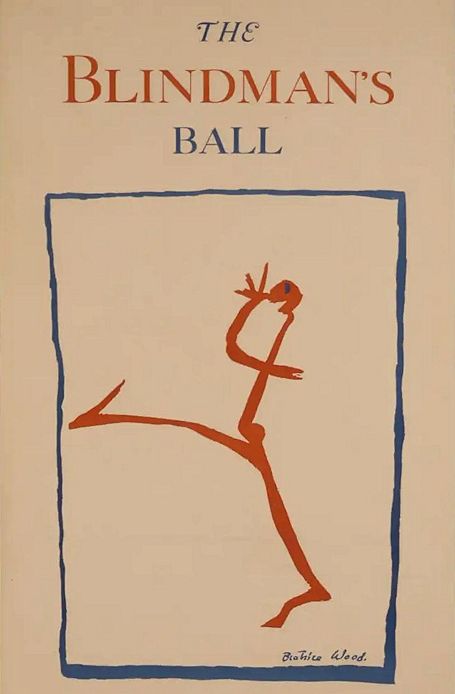
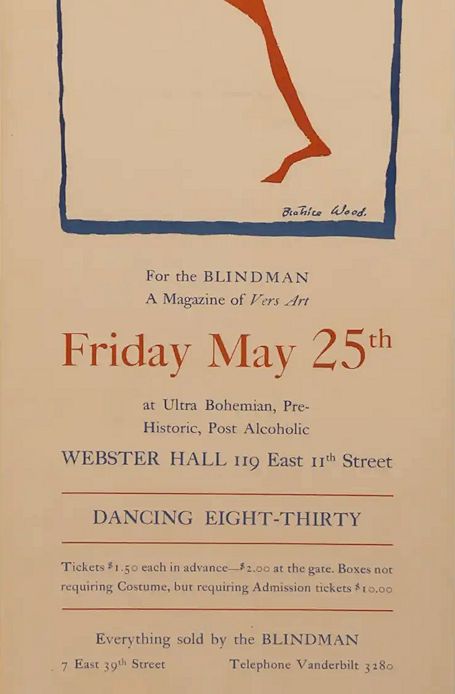
At his studio at 33 West 67th Street, Marcel installs Beatrice Woods on an upright chair in the middle of the room to make a drawing for the poster announcing the Blind Man's Ball on 25 May. When she has finished all her sketches, Marcel spreads them out over the floor and to Bea's surprise he chooses a high-stepping stick figure thumbing his nose, which she executed in just a few deft strokes.
At four o'clock, Roché arrives and finds the poster "beautiful". After visiting Isadora Duncan's studio, Roché, Marcel and Bea have supper together, and later at the Arensbergs' they see Allen Norton and Mina Loy.
Ephemerides
Architectural Digest ?!?
Last night, while continuing to read Alexandra Drexelius's "Chronology" within the 2026 Marcel Duchamp exhibition catalogue, I came across an unfortunate, yet somewhat humorous, mistake: "1937 . . . An essay by the architect and artist Frederick Kiesler on The Large Glass is published in the May issue of Architectural Digest"--Kiesler's essay was published in the May 1937 issue of Architectural Record.

Architectural Record and Architectural Digest are two very different magazines, and while I've, over the years, subscribed to Architectural Record a couple of times, I've only once purchased an issue of Architectural Digest (and that was because I told one the friends I was vacationing with, in Wildwood N.J. late summer 1976, that I wanted to subscribe to the British magazine Architectural Design, and he told me he saw that magazine at the shop where he just bought some beer; although it didn't seem possible, I went to check anyway, but what Charlie really saw was the September/October 1976 issue of Architectural Digest, thus, to not be completely dismayed, I bought the magazine anyway). I had no idea then, however, that almost exactly 10 years later and even while on vacation, I'd be smoking some gratis Dunhill green cigarettes while sitting in one of the pale orange chairs that were pictured in the very same Architectural Digest magazine.
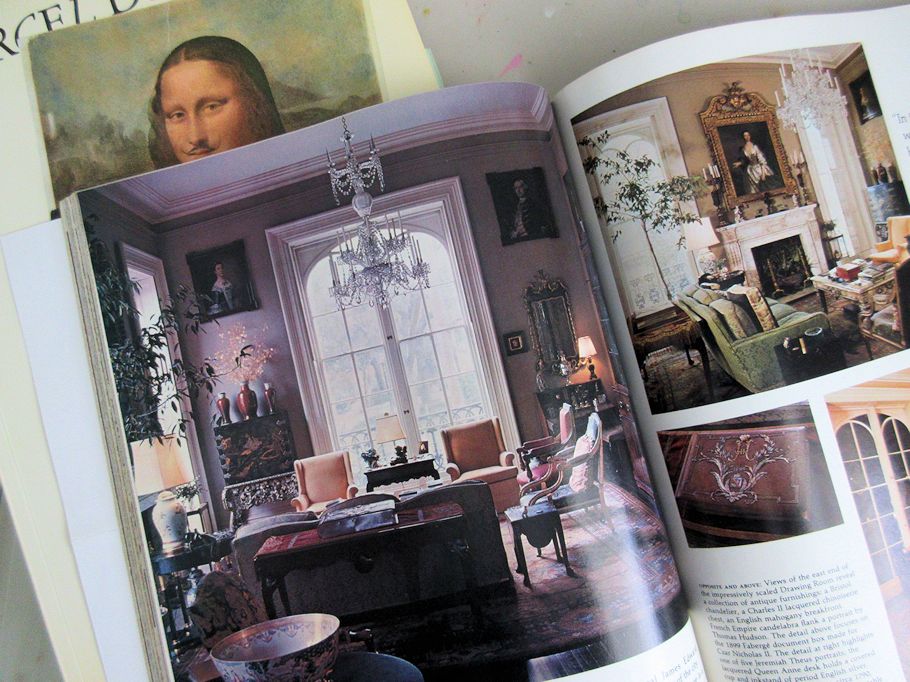
James A. Williams Mercer House Savannah, Georgia
2025.05.25
working at home
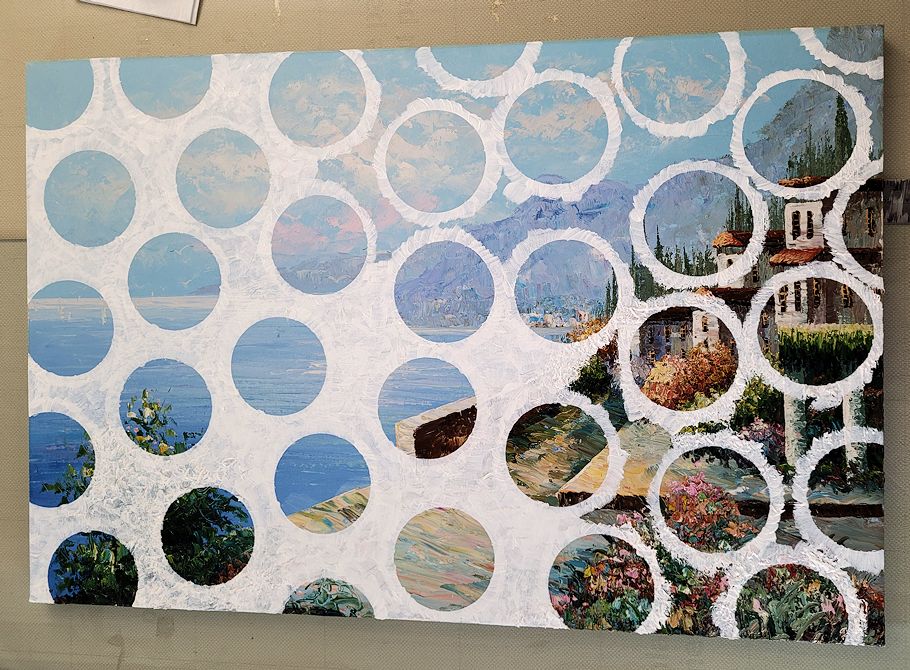
15:32:43
451 Rhawn Gallery

Stephen Lauf Affectionately Entitled Barns and No Bell 50000 USD tax included

20:20:36
a look inside Crack Noise
   
2024.05.25
art that doesn't often see the light of day
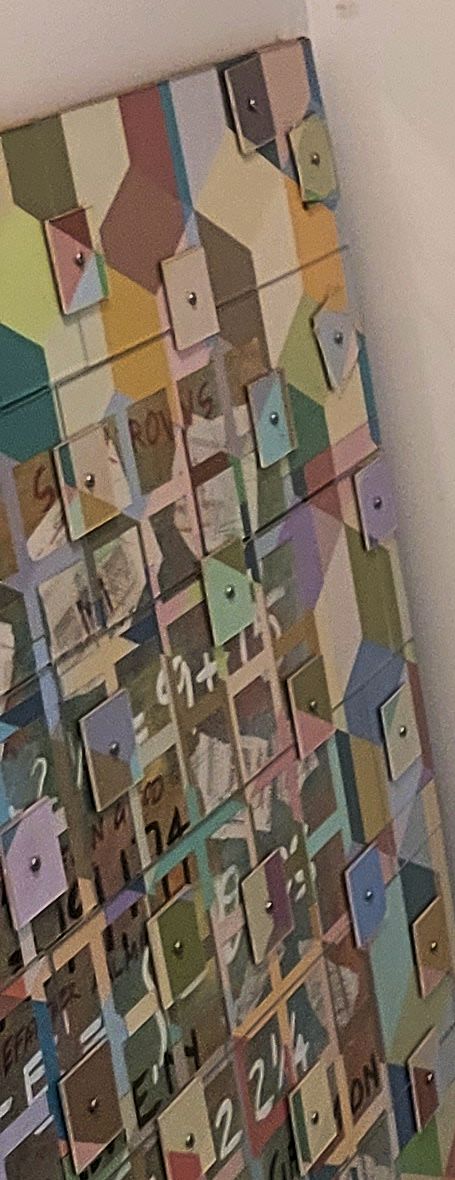 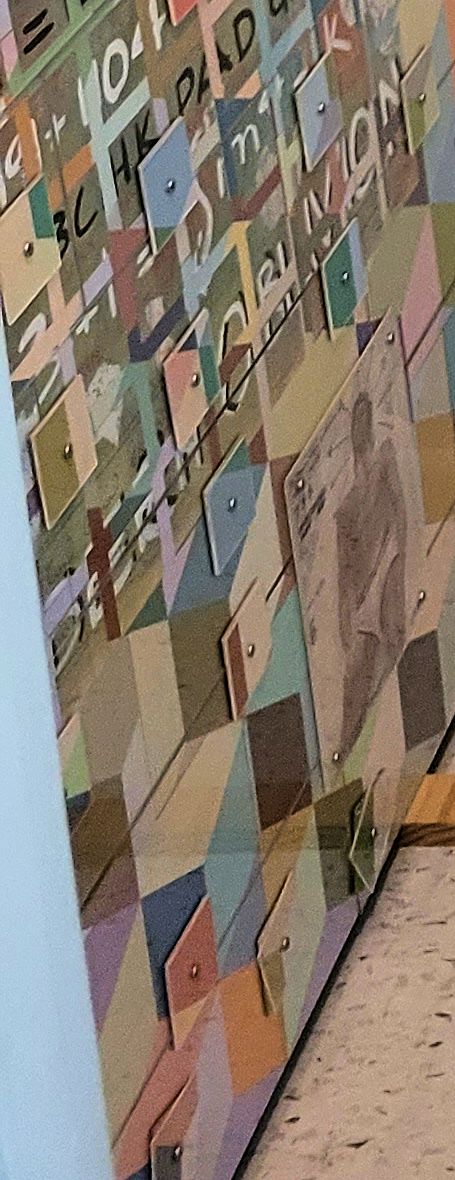
details of Modern Oblivion 1984.xx.xx - 1991.03.18
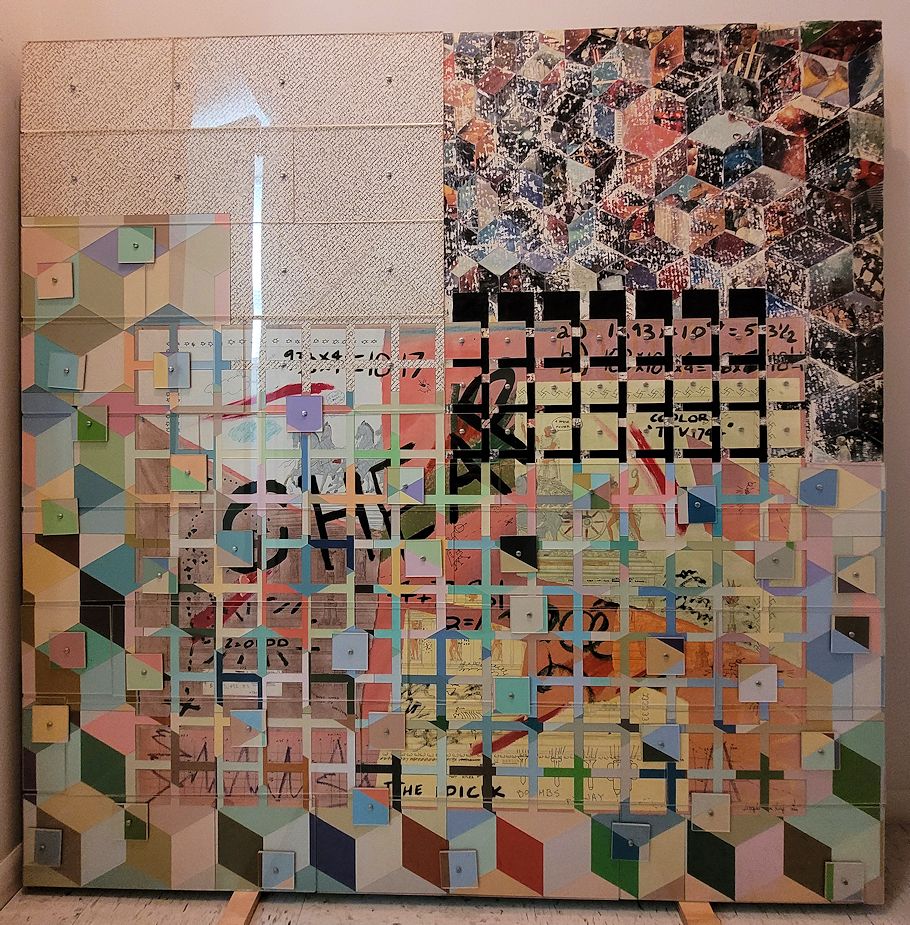
Size of the Horse's Balls 1984.01.13 - 1991.08.15
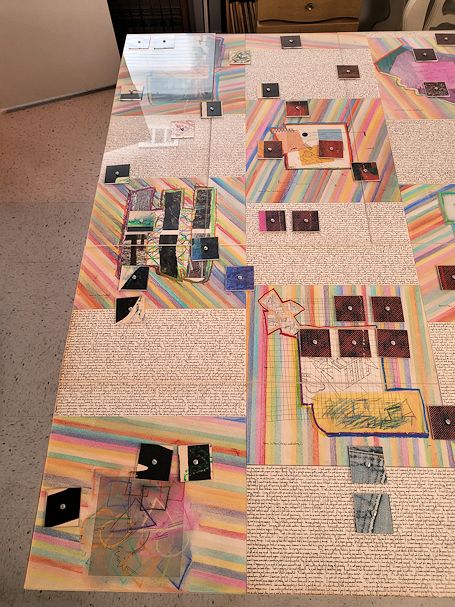 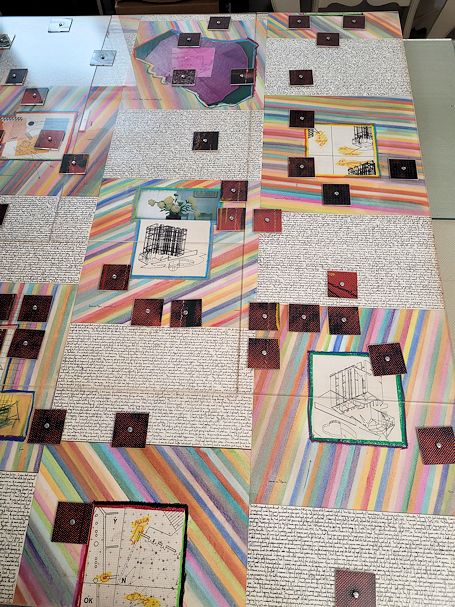
[as yet untitled] 1991.xx.xx
2020.05.25

Mary Boone's 180 hours of community service hours 82 83 84 85 86 87
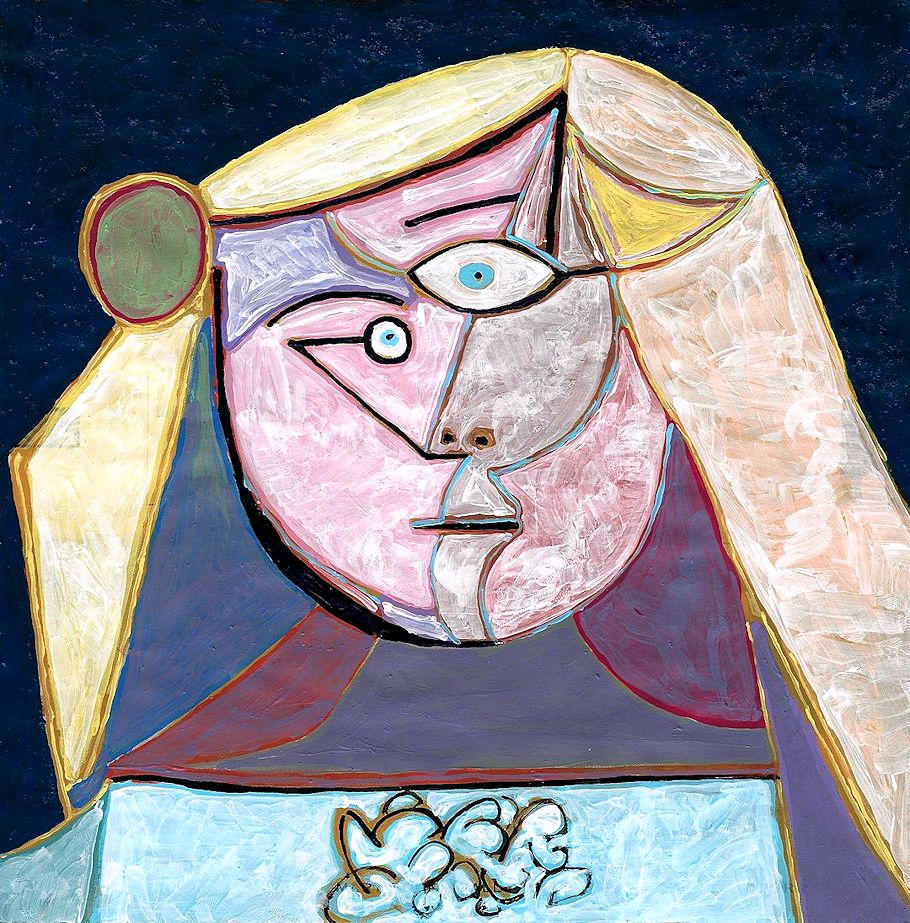
Mary Boone's 180 hours of community service hours 88 89
2004.05.25
 
Art that is Otto and Einstein at Princeton 5 March 2000 67
 
Art that is Otto and Einstein at Princeton 5 March 2000 77
 
Art that is Otto and Einstein at Princeton 5 March 2000 84
2002.05.25
CQ MO
Since revisiting the Bernini double theater that I read about almost 25 years ago, I've come to greatly admire the creative fecundity of double theaters as both a means and an end within the creative process. There is something almost magical about working with a vehicle/medium where there are literally twice the possibilities and where inversion (of self, for example) and mirroring (again of self, for example) provide, again, double the possibilities. Or is it all just 'too much play(ing)' in what is really just a virtual place?
2000.05.25
3D CAD databases
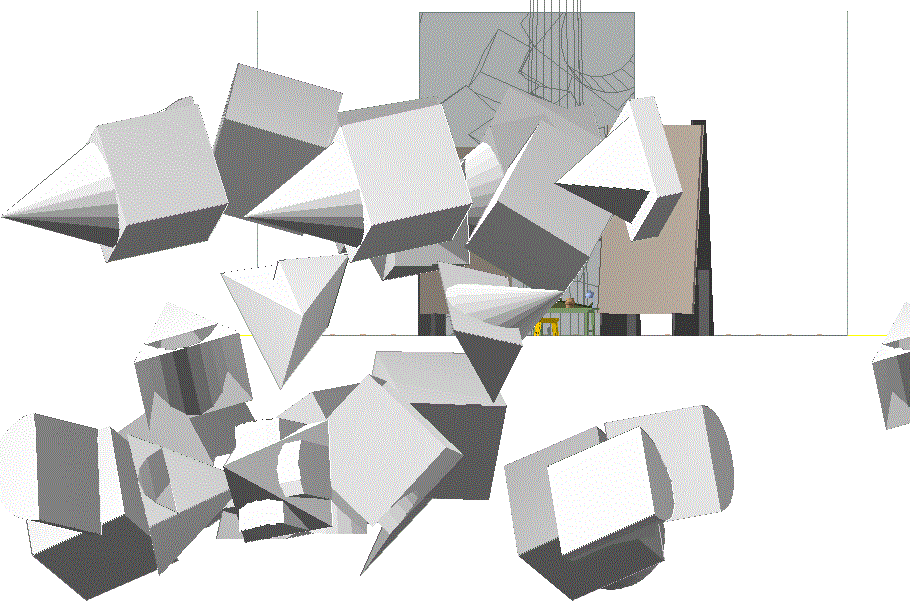
The above, 00052502.db, is a newer rendering of an older CAD database, 920217n1.db, below.
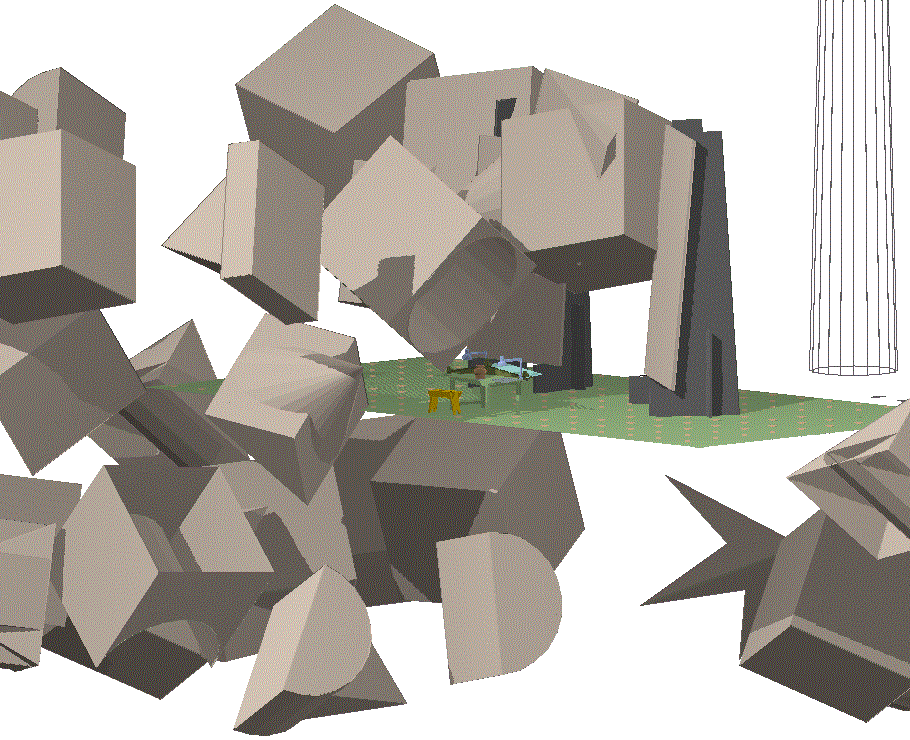
Upon seeing the top image again today, I was immediately reminded of the poster Duchamp designed for the Third French Chess Championship 1925, which I've recently become familiar with via repeated research within Schwarz's The Complete Work of Marcel Duchamp. "Is this a coincidence?", I wondered, "Or did I actually know of and try to emulate Duchamp's poster?" Since an image of Duchamp's 1925 poster is within the 1989 edition of the 1973 Marcel Duchamp exhibition catalogue, which is the first book on Duchamp I've come to own, I'm now of a mind that 920217n1.db is the first instance of Duchamp's work affecting my use of CAD.
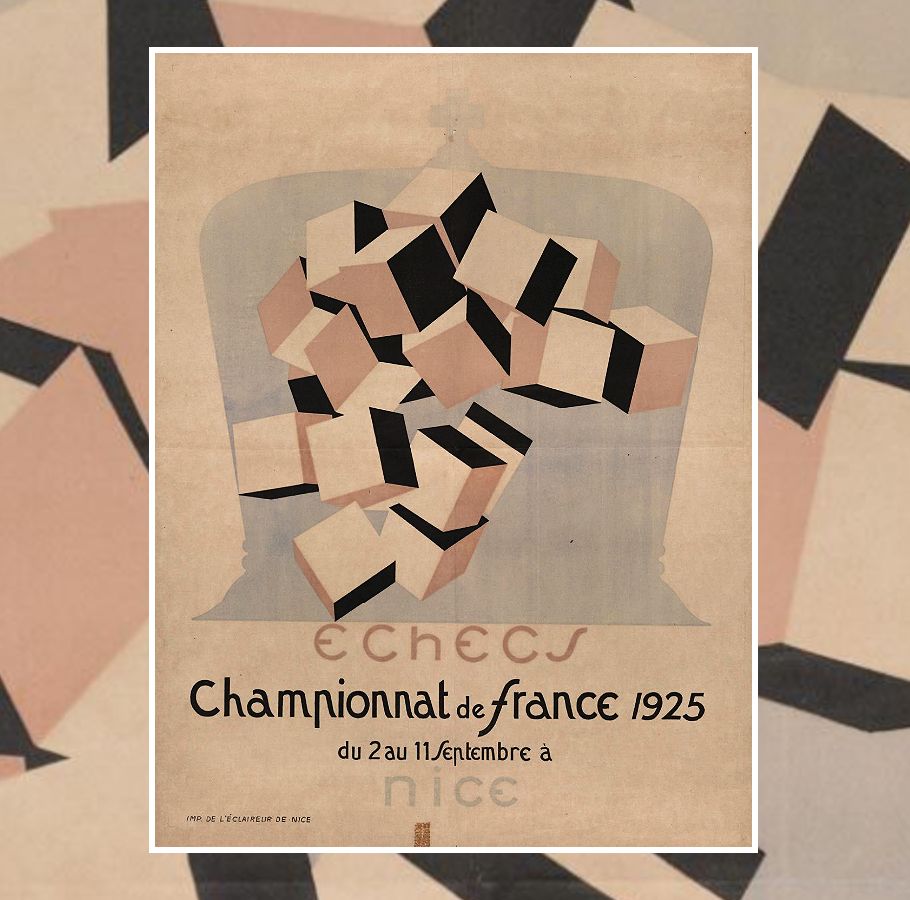
Marcel Duchamp Poster for the Third French Chess Championship (Nice, September 2 to 11, 1925) 1925
1947.05.25
1947. Sunday, New York City
Marcel again dines with the Kieslers.
Ephemerides
1917.05.25
1917. Friday, New York City
Readers of the second number of the Blind Man [5.5.1917] have been invited to support the magazine by attending a fancy dress ball, "a newfashioned hop, skip and jump" at the Ultra Bohemian, Prehistoric and Post Alcoholic Webster Hall, 119 East 11th Street. The publicity proclaims that the dance will not end until dawn... The Blind Man must see the sun. It points out that there is a difference between a tuxedo and a Turk and "guests not in costume must sit in bought-and-paid-for-boxes" costing $10 excluding advance admission of $1.50, and $2 at the door. The Poster is decorated with Beatrice Wood's drawing of a high-stepping man thumbing his nose [29.4.1917], and the ball is well attended.
At eight-thirty, watched buy the Arensbergs, Marcel, Roché, Aileen Dresser and the organizers of the ball from their central box on the balcony. Beatrice in a beautiful brocade costume executes the Russian dances she was taught by Ivan Clustine, Pavlova's ballet master. Later interrupting the "continuous syncopations" the Japanese dancer, Mishio Itow, also preforms for the revelers.
The night grows wilder. Just before midnight, bored by the conversation and with several cocktails too many inside him, Marcel decides to climb over the rail onto a wooden pole, planted at a rake of forty-five degrees from the balcony, which has a bunch of flags on its summit. Unable to dissuade him from his exploit, Roché watches as Marcel with his full length cape billowing out behind him, "like a lady-bird on a large stalk," crawls slowly up the flagpole. "It was feared that he would fall on the dancers, but his movements were steady and he soon became part of the décor. Sometimes he stopped and he was forgotten." Eventually when Marcel reaches the flags, there is a round of applause. He acknowledges it by raising his pink paper hat before sliding down rapidly down the mast and back to the safety of the box.
Ephemerides
|