2026.10.19
Spectators Completing art or not?
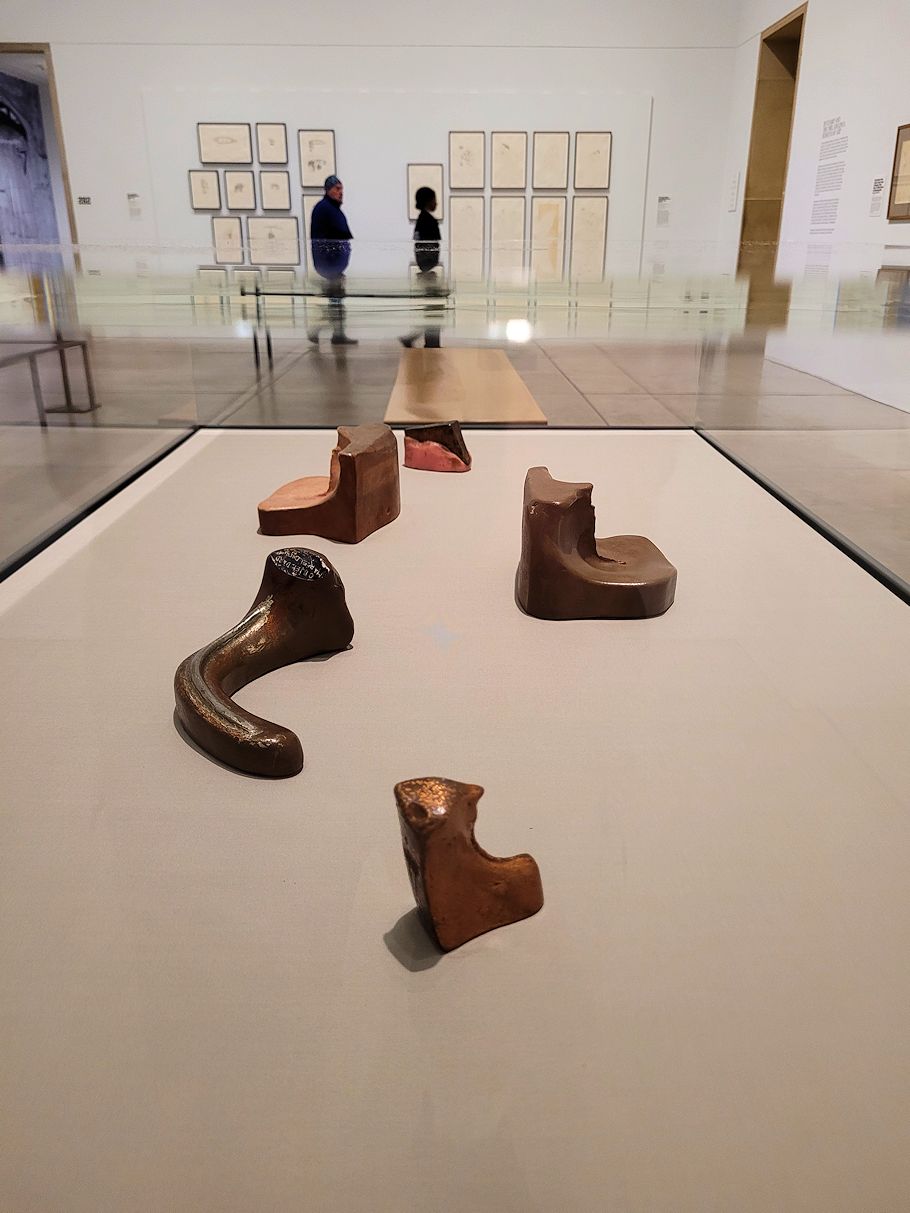
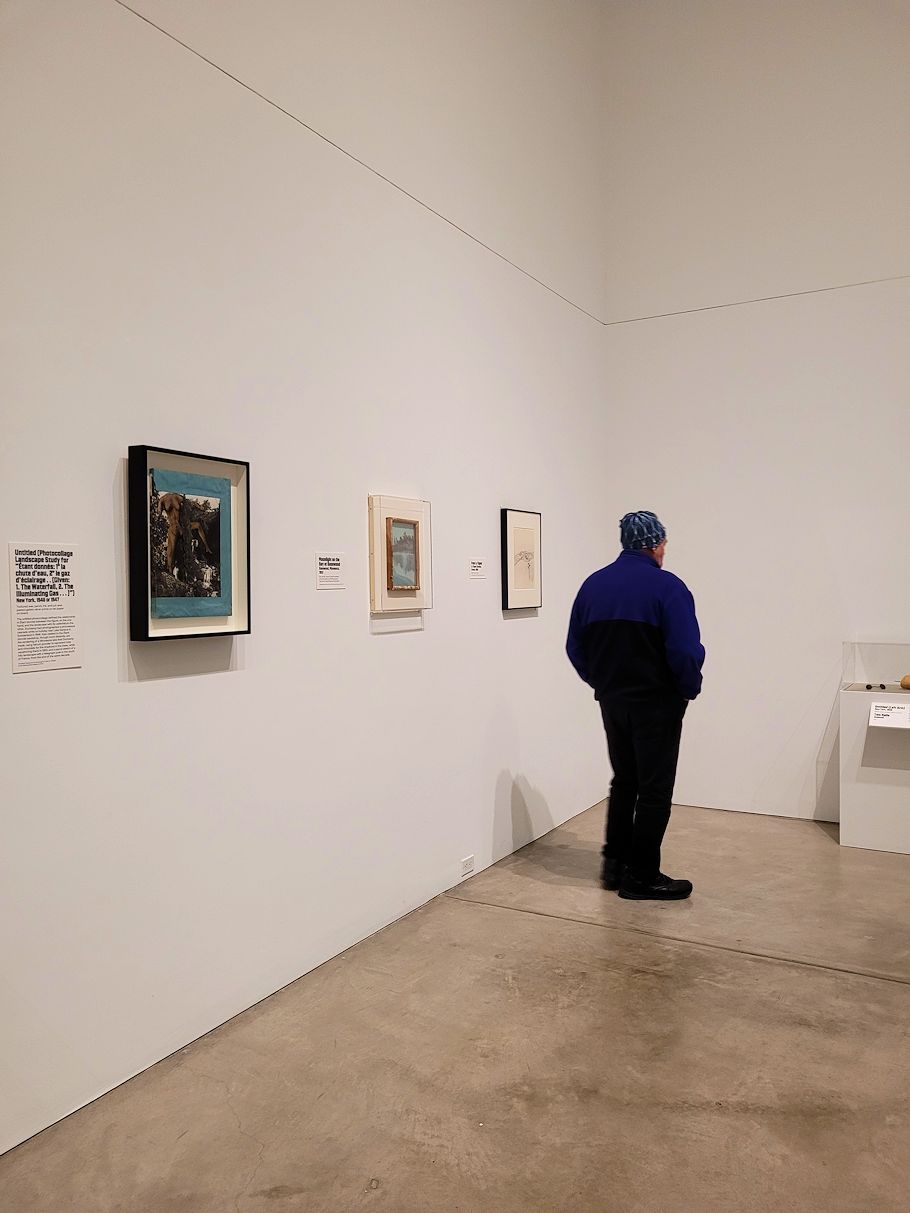
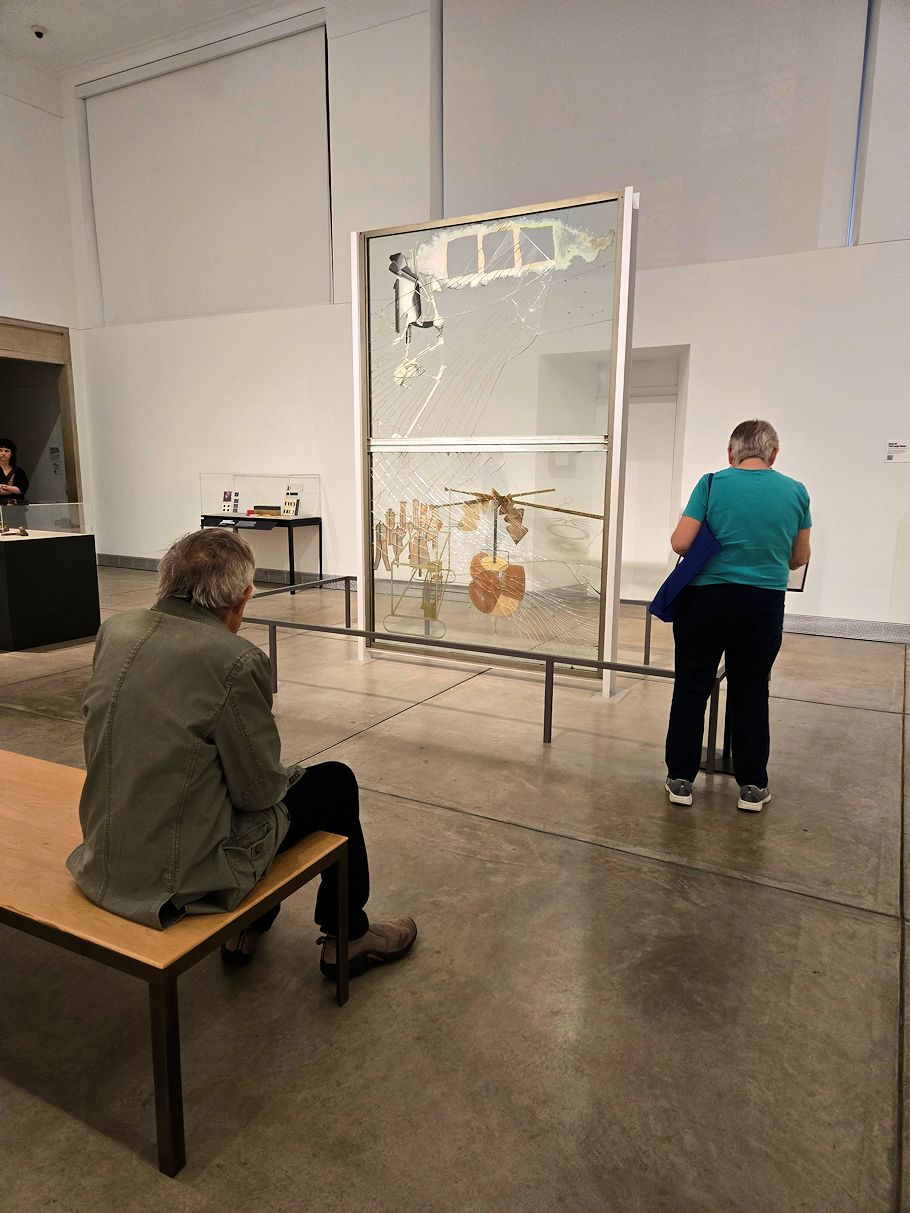
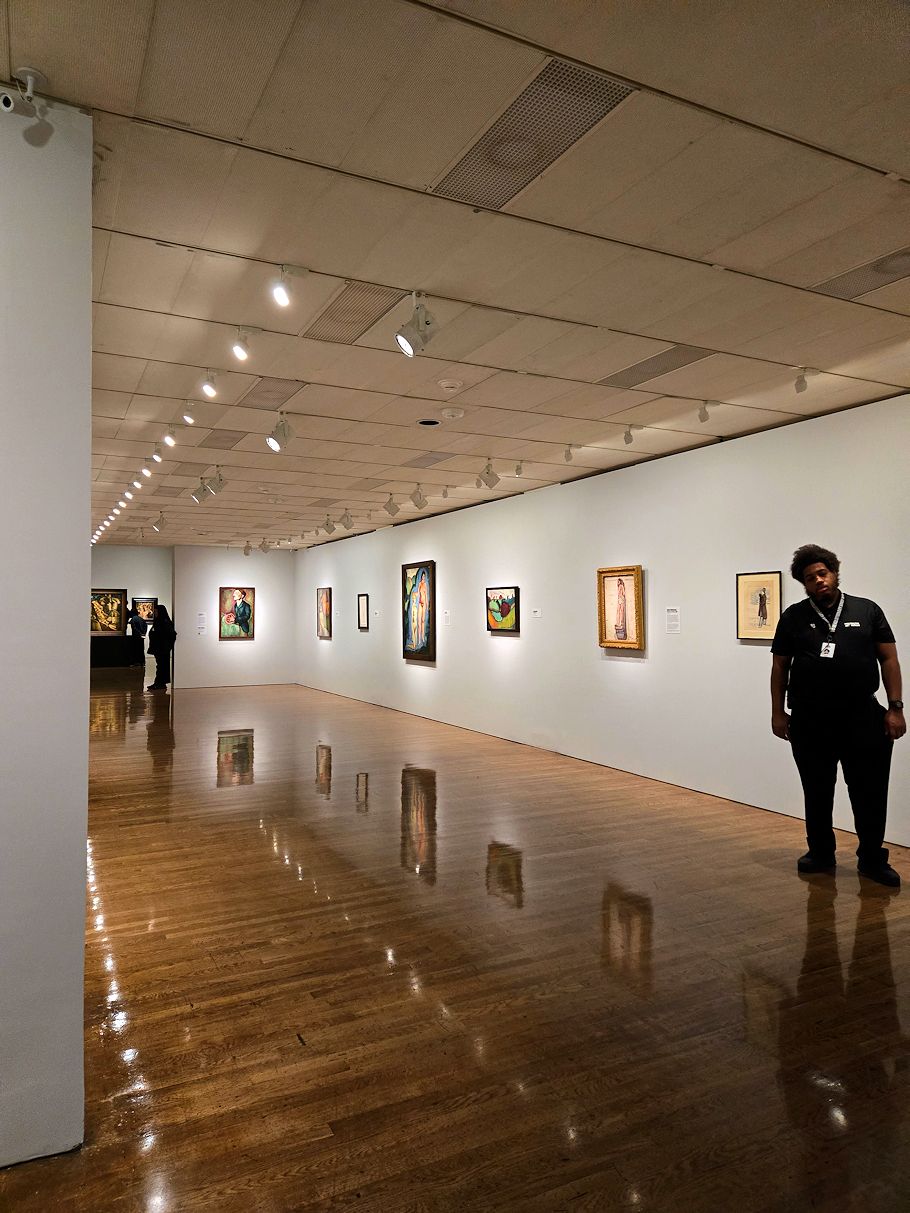
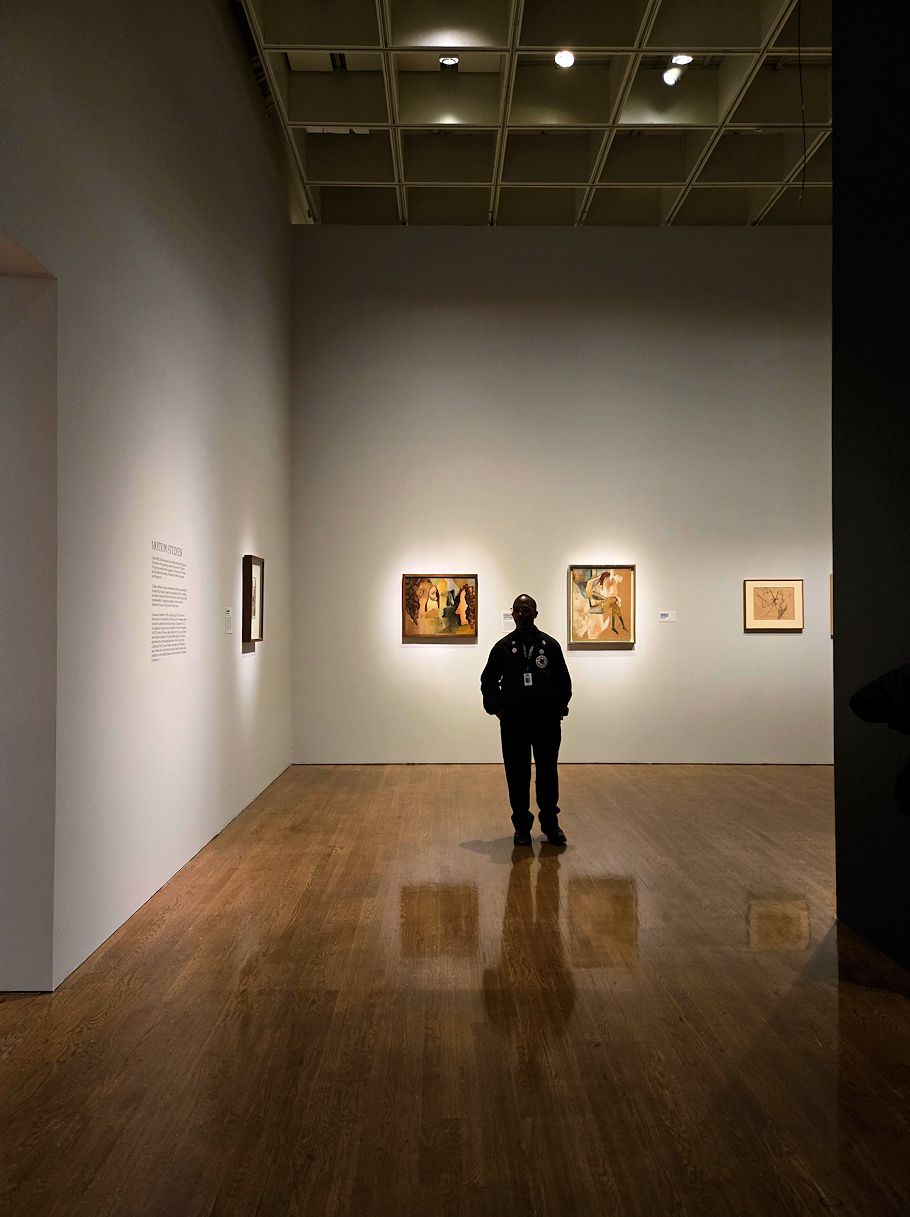
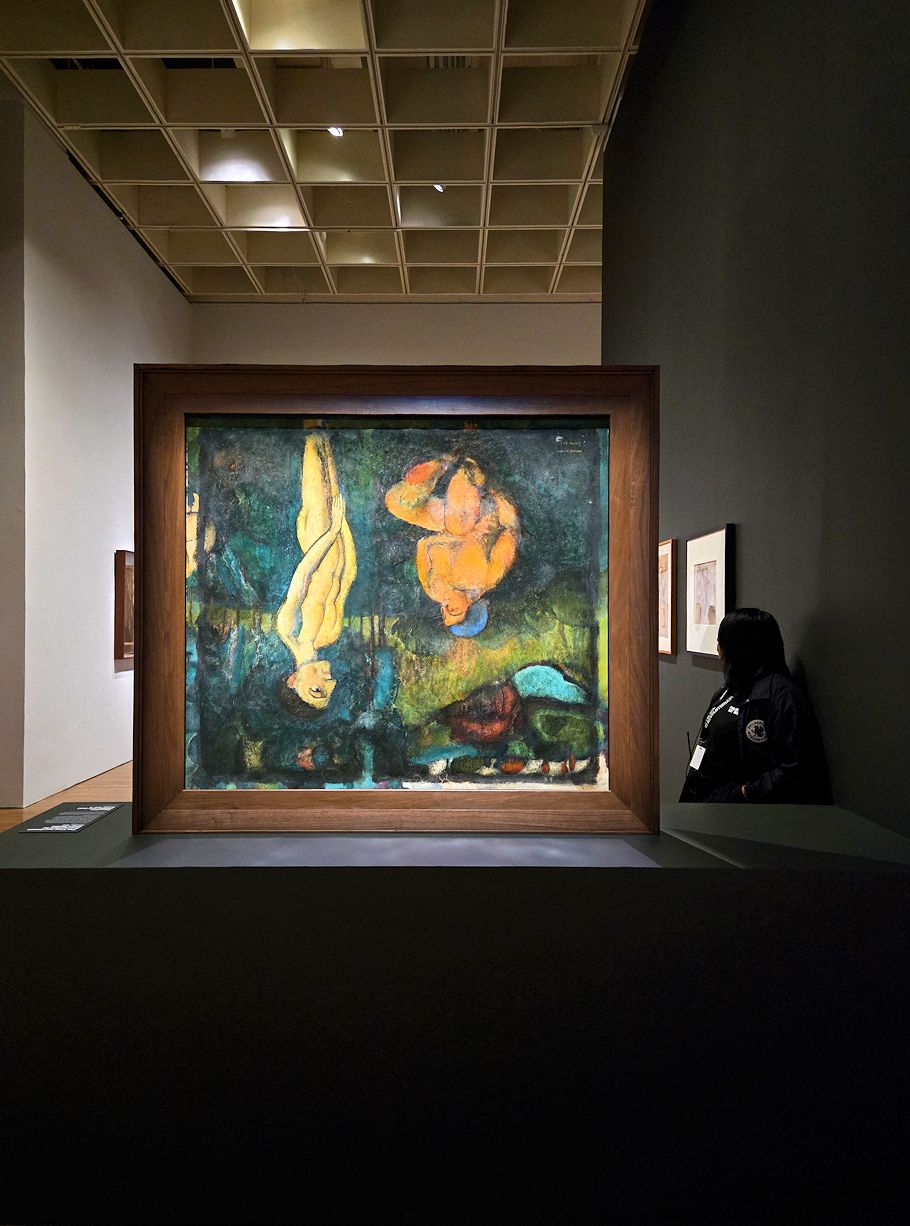
Philadelphia Museum of Art 2026.10.15
2025.10.19
Given: 1. freely, 2. much

2024.10.19
451 Rhawn Gallery


2023.10.19
GES-2 House of Culture, Moscow


The Timepiece of Humanity Gauge at Star Vengeance, GES-2 House of Culture, Moscow, 19 October 2023 - 21 January 2024
2002
Denis Diderot "Encyclopedia"
Diderot, Denis. "Encyclopedia." The Encyclopedia of Diderot & d'Alembert Collaborative Translation Project. Translated by Philip Stewart. Ann Arbor: Michigan Publishing, University of Michigan Library, 2002. http://hdl.handle.net/2027/spo.did2222.0000.004 (accessed 19 October 2026). Originally published as "Encyclopédie," Encyclopédie ou Dictionnaire raisonné des sciences, des arts et des métiers, 5:635–648A (Paris, 1755).
81/192
If I think there is a point beyond which it is dangerous to continue the argumentation, I also think one should not stop until one is sure it has been reached. Each science and each art has its metaphysics. This aspect is always abstract, lofty, and difficult. Yet that must be the principal aspect of a philosophical dictionary; and it could be said that as long as some such ground remains to be broken, there are unexplainable phenomena, and vice versa. Then the man of letters, the scientist, and the artist walk in darkness; if they make some progress, it is only thanks to chance; they arrive like a lost traveler who follows the right path without realizing it. It is therefore of the utmost importance to set forth the metaphysics of things, or their first and general reasons; the rest will be the more luminous for it and better assured in the mind. All the supposed mysteries for which some sciences are so criticized, and which some others so often cite to mitigate their own, when discussed metaphysically vanish like phantoms of the night on the approach of dawn. Art enlightened from the start will advance surely, rapidly, and always on the shortest path. We must thus take care to give the reasons of things, when there are some; assign the causes, when we know them; indicate the effects, when they are certain; resolve the conundrums through direct application of the principles; set forth truths; unmask errors; artfully discredit prejudices; teach men to doubt and wait; dispel ignorance; weigh the value of human knowledge; distinguish between true and false, true and plausible, plausible and miraculous or incredible, common phenomena from extraordinary phenomena, certain facts from doubtful facts, and those from facts absurd and counter to the natural order; become acquainted with the general course of events, and take each thing for what it is, and consequently inspire a desire for knowledge, a horror for lies and vice, and a love for virtue; for whatever has not happiness and virtue as its ultimate end is nought.
82/192
I cannot bear to see someone rely on the authority of authors in questions of reason; for what use is it in truth to look for the name of an author who is not infallible? Above all, no verse: it seems so feeble and paltry in the middle of a philosophical discussion. Pretty ornaments must be relegated to articles on literature; there I can approve of them, provided they are placed with taste, serve as examples, and either make the flaw that is being censured stand out, or brilliantly illustrate the that is being recommended.
83/192
In scientific treatises, it is the relations of ideas or phenomena which provide direction; as you advance, the subject matter develops, becoming either more general or more particular, according to the method chosen. The same will be true with respect to the general form of an article for the Encyclopedia article, except that the dictionary or coordinated articles have advantages which in a scientific treatise can be achieved only at the expense of some quality; and it will owe these advantages to the references, the most important aspect of encyclopedic ordering.
84/192
I distinguish two types of references: material and verbal. Material references illuminate the object, indicate its closest connections to others immediately related to it, and its distant connections with others that might have seemed remote from it; recall to mind common notions and analogous principles; strengthen consequences; bind the branch to the trunk, and lend to the whole the unity that so favors the establishment of truth and persuasion. But when required, they will have the opposite effect: they will counter notions; bring principles into contrast; covertly attack, unsettle, or overturn some ridiculous opinions which one would not venture to disparage openly. If the author is impartial, they will always have the double function of confirming and refuting, disrupting and reconciling.
85/192
There would be much art and a considerable advantage in these latter references. The entire opus would gain from them internal force and unseen utility, the silent effects of which would necessarily be perceptible over time. Whenever a national prejudice commands respect, for example, that particular article ought to set it forth respectfully, and with its whole retinue of plausibility and persuasion; but at the same time it ought to overturn an edifice of muck, dispel a vain pile of dust, by referring to articles in which solid principles form a basis for contrary truths. This means of undeceiving men acts very quickly on good minds, and ineluctably and without any disagreeable consequence, silently and without scandal, on all minds. It is the art of tacitly deducing the boldest consequences. If such confirming and refuting references are foreseen well in advance, and skillfully prepared, they will give an encyclopedia the character which a good dictionary ought to possess: that of changing the common mode of thinking. The opus which will produce this great general effect will have defects of execution; that I concede. But its plan and fundament will be excellent. The work which has no such action will be poor. Whatever good may otherwise be said of it, the praise will fade away, and the work will be forgotten.
86/192
The verbal references are most useful. Every science and every art has its language. Where would we be, if every time the term proper to an art is used, we were compelled for the sake of clarity to repeat its definition? What repetition! And can we doubt that so many digressions and parentheses and such tedium would make things obscure? It is as common to be verbose and obscure as obscure and dense; and if one of these is sometimes tiresome, the other is always tedious. What we must do, when we use such words without explaining them, is to be extremely careful to refer to the locations that deal with them, to which one would be steered only by analogy, a kind of thread that not everyone can follow. In a universal dictionary of the sciences and arts, we may be constrained in numerous circumstances to presuppose judgment, cleverness, and insight; but there are none in which we should presuppose knowledge. Let the man without intelligence complain, if he so wishes, of the unyieldingness of nature, or of the difficulty of the subject matter, but not of the author, if everything he needs in order to understand has been provided, from either the material or verbal point of view.
87/192
There is a third sort of references which must be neither over-used nor excluded: those which by juxtaposing certain relationships in the sciences, analogous qualities in natural substances, or similar operations in the arts, would lead either to new, speculative truths, or to the perfecting of the known arts, or to the invention of new ones, or to the restitution of ancient, lost arts. Such references are the work of a man of genius. Happy is he who is able to spot them. He possesses the spirit of combination, the instinct which I have defined in some of my Pensées sur l'interprétation de la nature. But it is still better to risk fanciful conjectures than to allow useful ones to be lost. And for this reason I make bold to propose those that now follow.
88/192
Might one not suspect, on the basis of the inclination and declination of the magnetized needle, that its extremity in its complex motion describes a small ellipse similar to that described by the extremity of the Earth's axis?
89/192
On the basis of the very rare instances where nature offers us isolated phenomena that are permanent, such as the ring of Saturn, might one not recover them for the general and common law, by considering that ring, not as a continuous body, but as a certain number of satellites moving in the same plane, at a speed which can cause our eyes to perceive a permanent, uninterrupted sensation of shadow and light? I leave these conjectures to the appreciation of my colleague M. d'Alembert.
90/192
Or, to come to objects closer to hand, and having a more certain practical value: why should we not design figures of plants, birds, animals and men, in other words tableaux, on the looms of silk weavers, where already such perfectly shaded flowers and leaves are being designed?
2001.10.19
Re: building text
It's interesting to 'see' what new imaginings manifest once one begins to think of architecture as the delivery of content.
Philadelphia Museum of Art
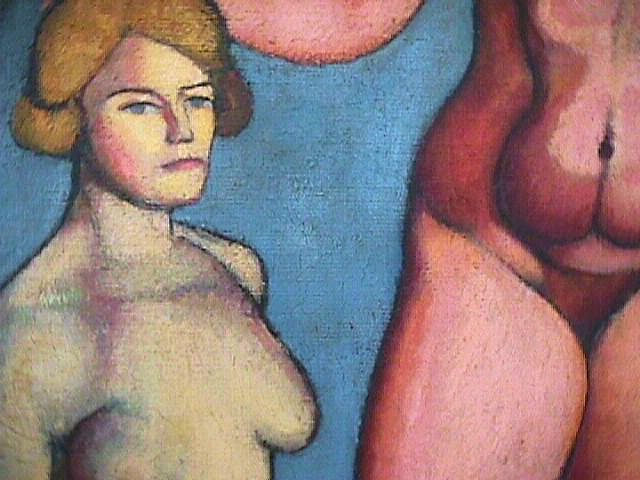

1993.10.19

Picasso Sketching
1984.10.19
Pharaoh is a Dope
1951.10.19
1951. Friday, New York City
Before going to Central Park to be photographed, Duchamp takes Monique Fong shopping in Madison Avenue.
Ephemerides
|