2025.11.26
"This was the first public showing of Duchamp's masterpiece, and it was also the last time anyone would see it in its original, intact state. Katherine Dreier had given instructions that it was to be put in storage when the Brooklyn Museum exhibition closed. The two glass panes were placed, one on top of the other, in a single crate and transported by truck to the Lincoln Warehouse, with disastrous results that would not be discovered until nearly five years later." (Tomkins, 273-4)
"Dreier came to Europe again in the spring of 1931. ... She had some very bad news, which she waited to tell him until several days after her arrival, when they were having lunch alone together in a restaurant in Lille. Two months earlier the crate containing The Large Glass--in storage since the closing of the Brooklyn Museum exhibition in early 1927--had been shipped from the Lincoln Warehouse to "The Haven," Dreier's country home in West Redding, Connecticut, where she planned to have it permanently installed. On opening the crate, however, the workmen had discovered that the two heavy glass panels, packed one on top of the other with very little in between, were shattered from top to bottom." (Tomkins, 288)
My guess would be that the up-side-down bride was packed face-down on top of the right-side-up and face-up bachelors.
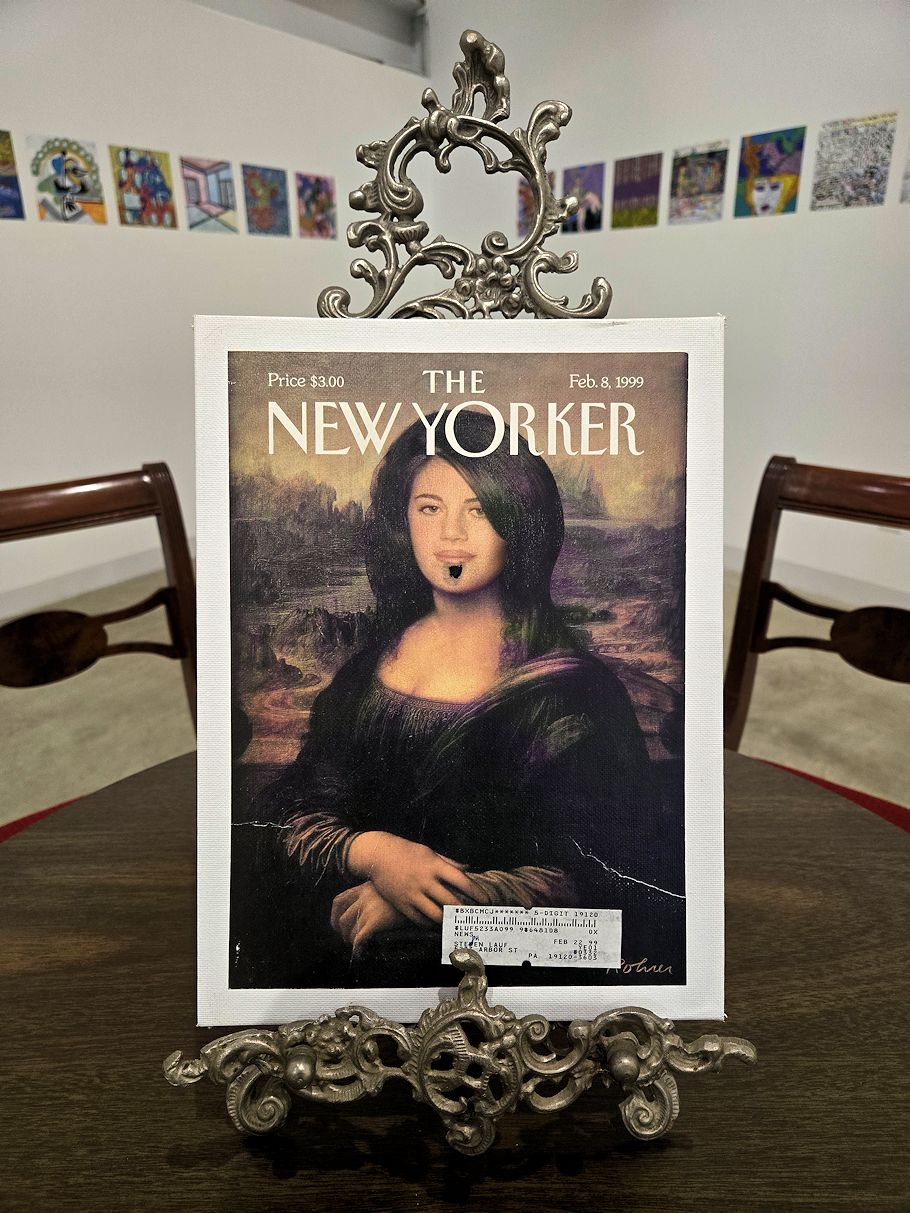
After reading "Duchamp's most notorious work from the Dada Paris period is L.H.O.O.Q. (1919). Using a pencil, he altered a reproduction[--"a cheap chromo 8 x 5"--]of Leonardo's Mona Lisa through the graffiti-like gesture of adding a moustache and goatee to the picture and an enigmatic, Latin-looking inscription, "L.H.O.O.Q.," below it." (Judovitz, 8-9), I immediately started thinking about my own Sloppy Seconds.
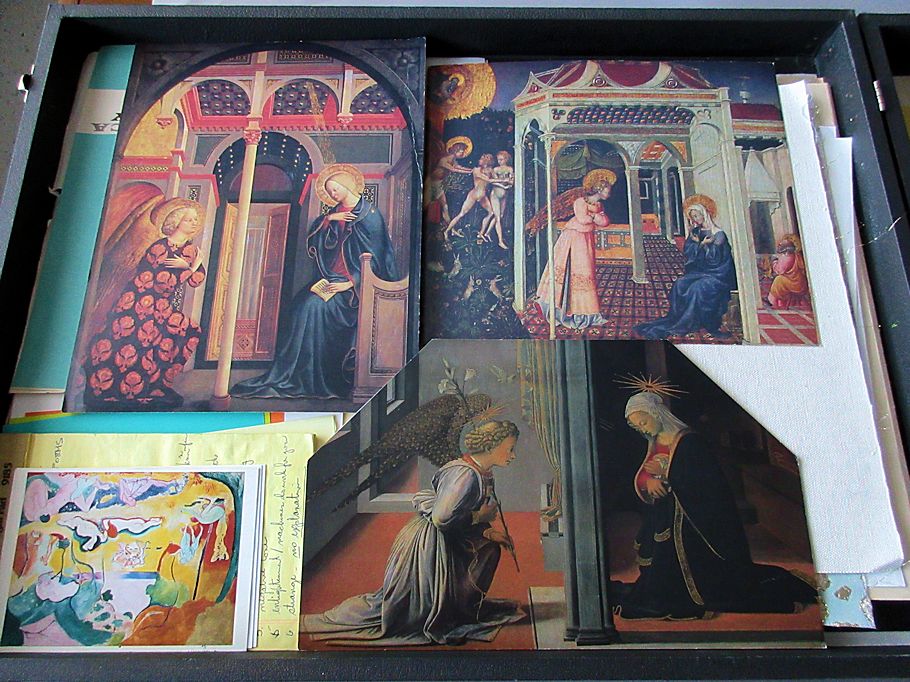
Yet, no sooner was I thinking about Sloppy Seconds, that my mind then switched to thinking about the three "cheap" reproductions of Italian Renaissance Annunciation paintings that I purchased at the National Gallery in Washington D.C. the summer of 1981. It was these paintings that inspired and jump-started The Timepiece of Humanity, the theory of chronosomatics.
And, ultimately, I began to envision these uncanny connections between the origins of the theory of chronosomatics and Duchamp's "delay in glass."
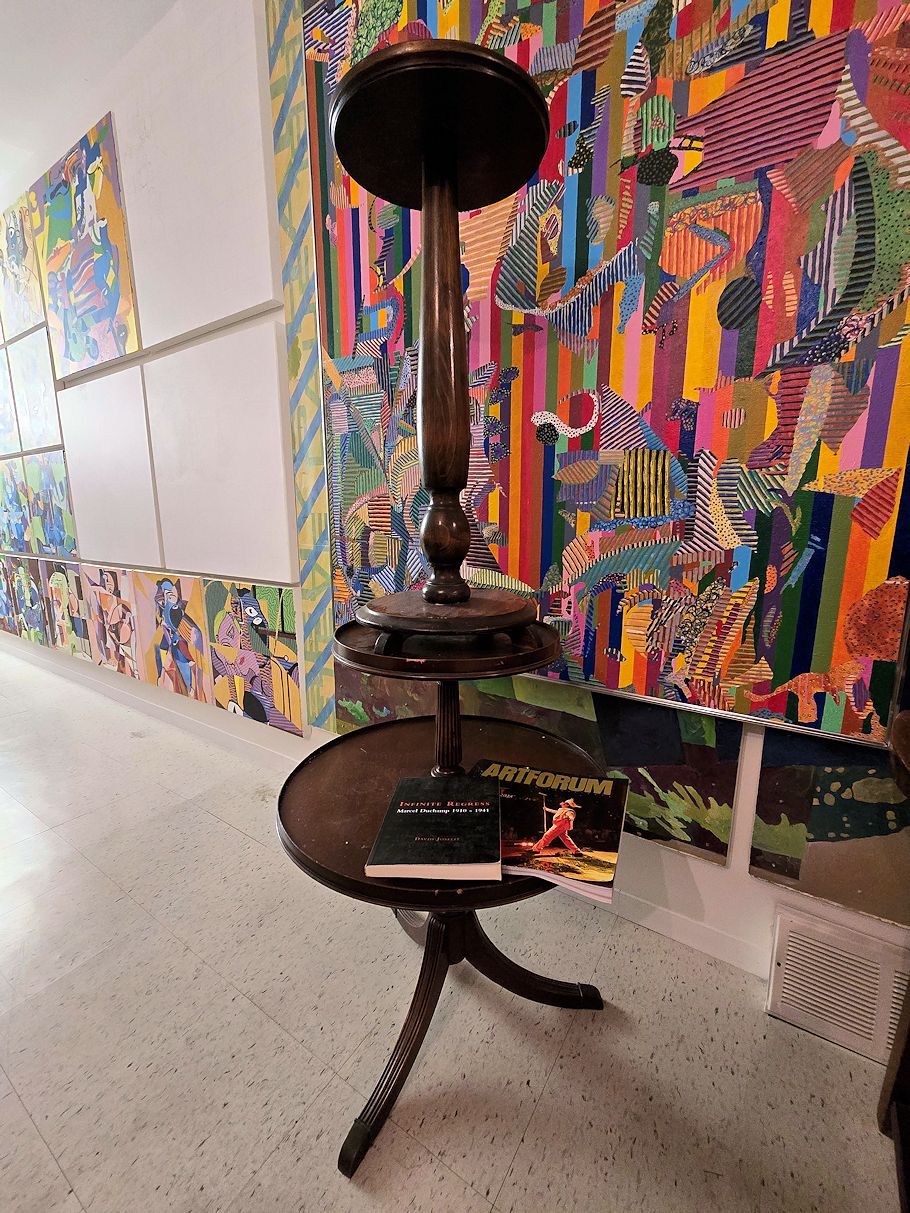
a new readymade in progress
2024.11.26
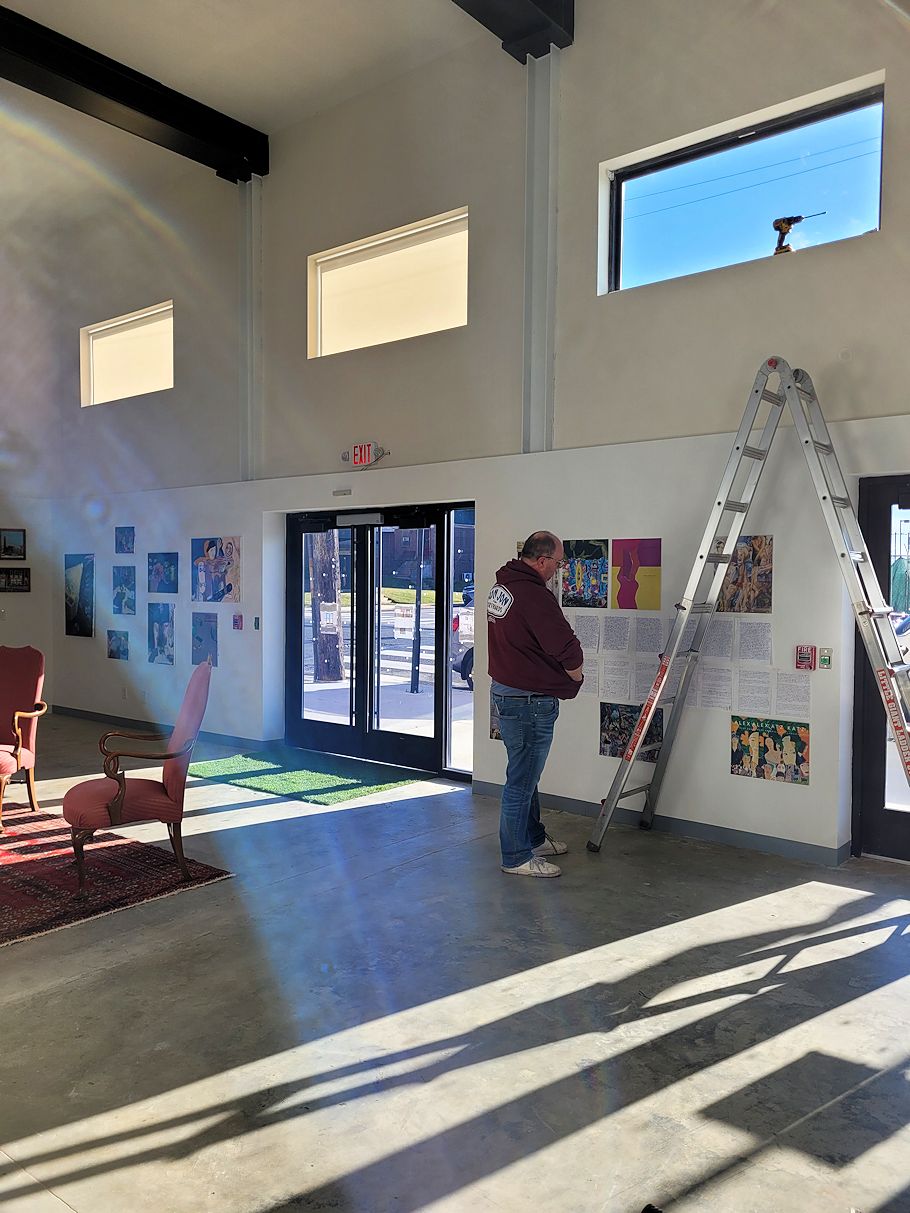
451 Rhawn Gallery
2023.11.26
Just as I started to go upstairs to go to bed, the idea of an exhibit at museumpeace.com came to mind: Art that can be construed to be in support of LGBTQ+ rights.
2006.11.26
the best art 20 years from now
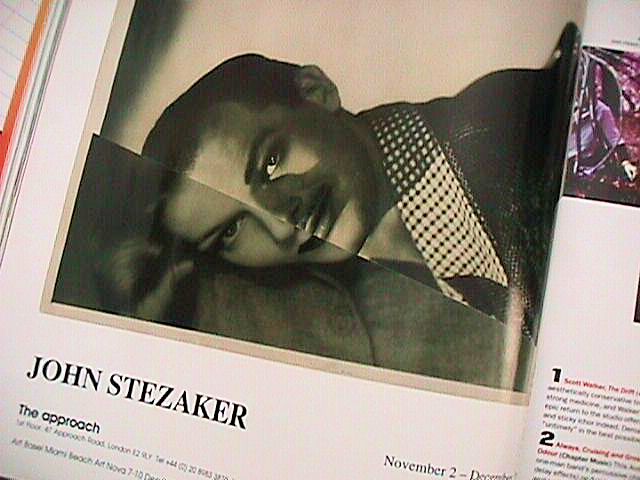
My first acquaintance with the work of John Stezaker occurred yesterday as I perused the December 2006 issue of Artforum, "Best of 2006". Initially it was the advertisement on page 72,
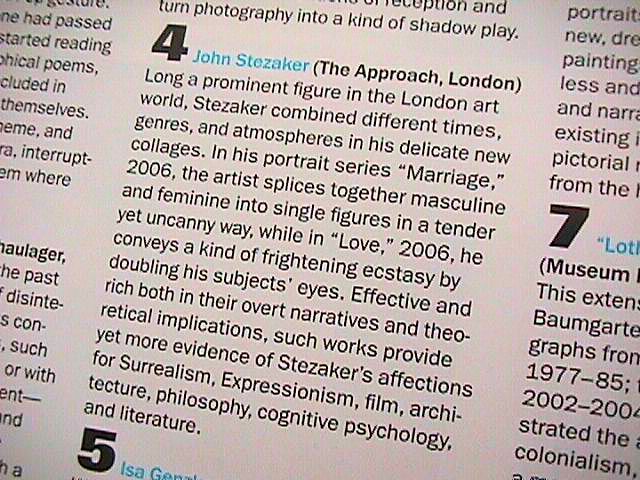
and then again within the "best of 2006" picks of Rita Kersting on page 298.
Ah, the framing of art via advertising.
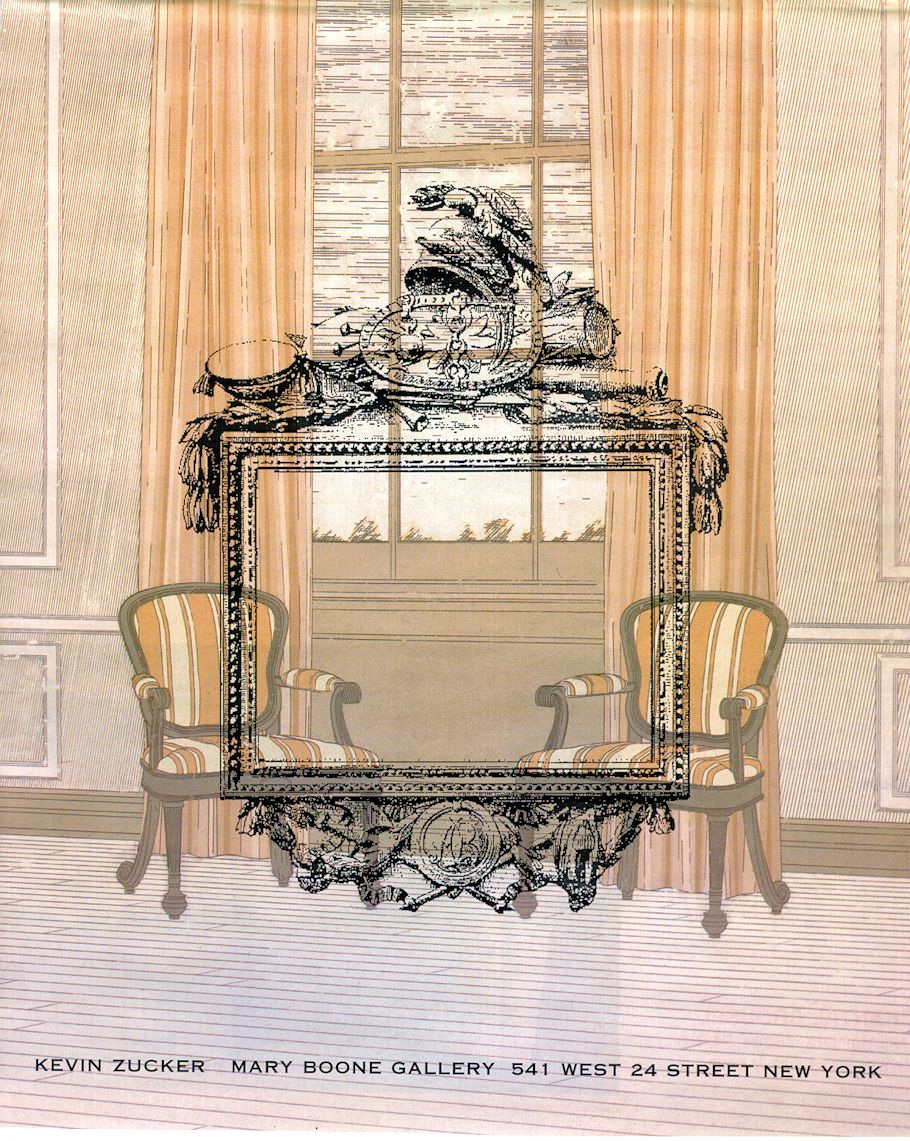
The Advertising of Art 001
On 4 February 2004 at artforum/talkback I wrote:
"Oh goodie. Now I know what I'm doing today. Finally my Dark Shadows Series of 1985 will be
documented at Museumpeace. "Angelique's coffin is at stake," and just wait till you see the phantom opera buffs."
And then on 8 February 2004 I provided links to the works:
Dark Shadows series 1985
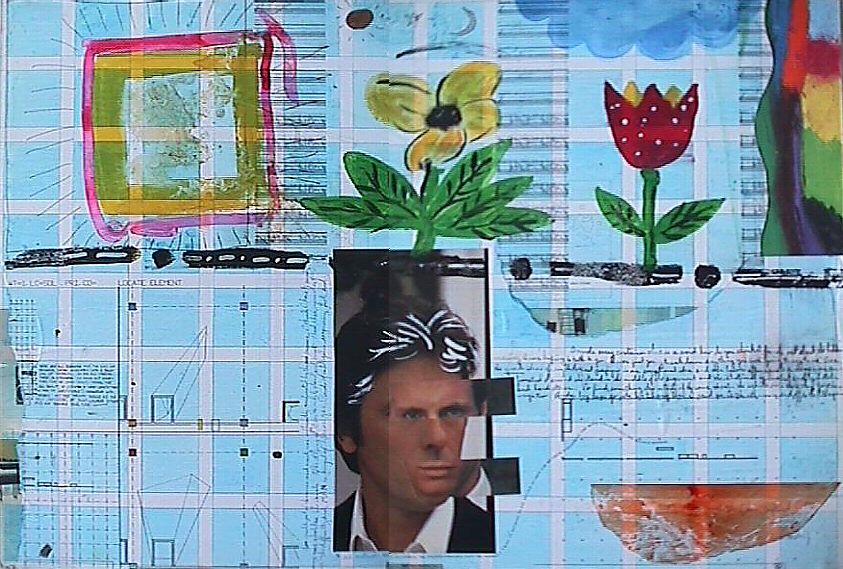
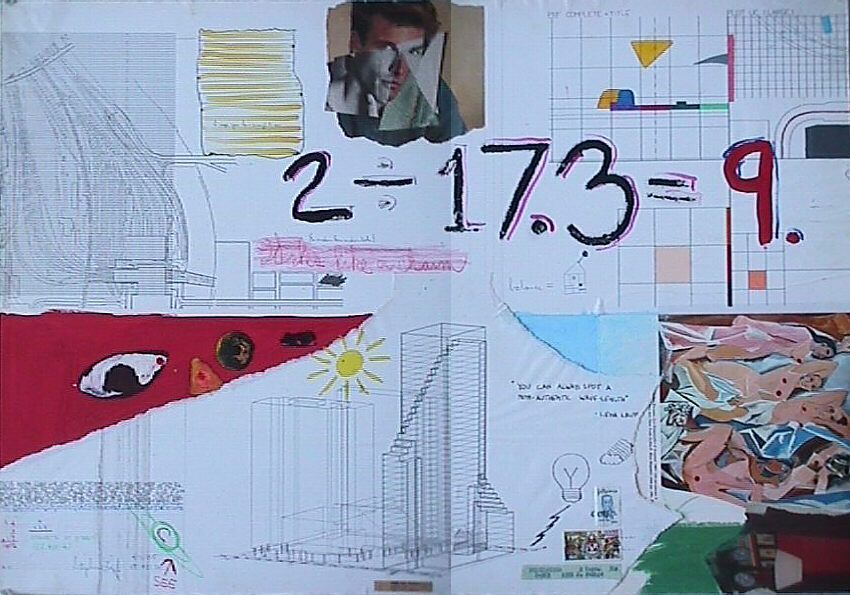
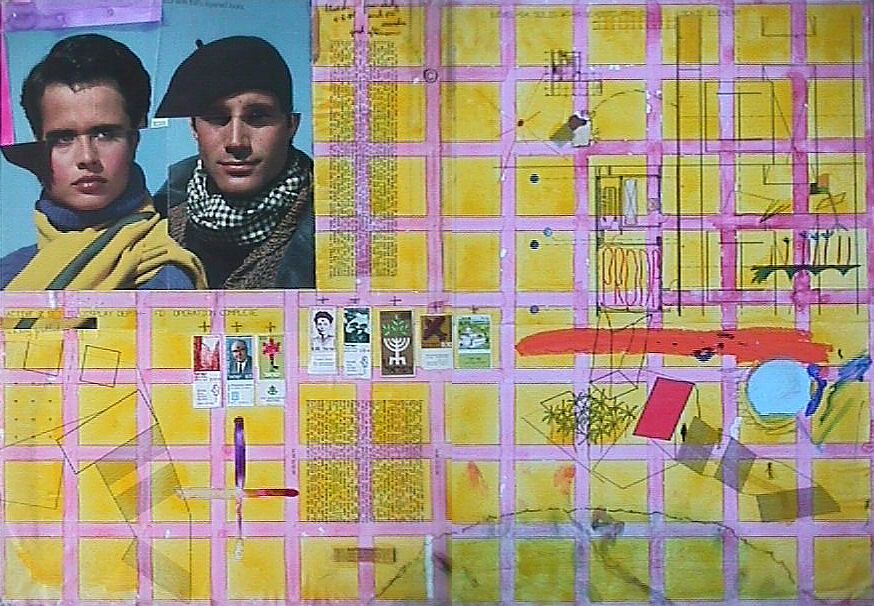
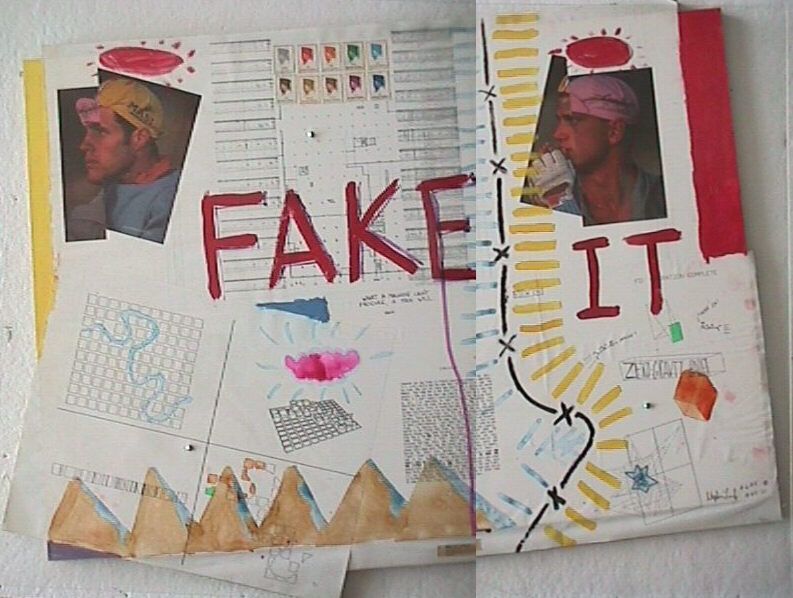
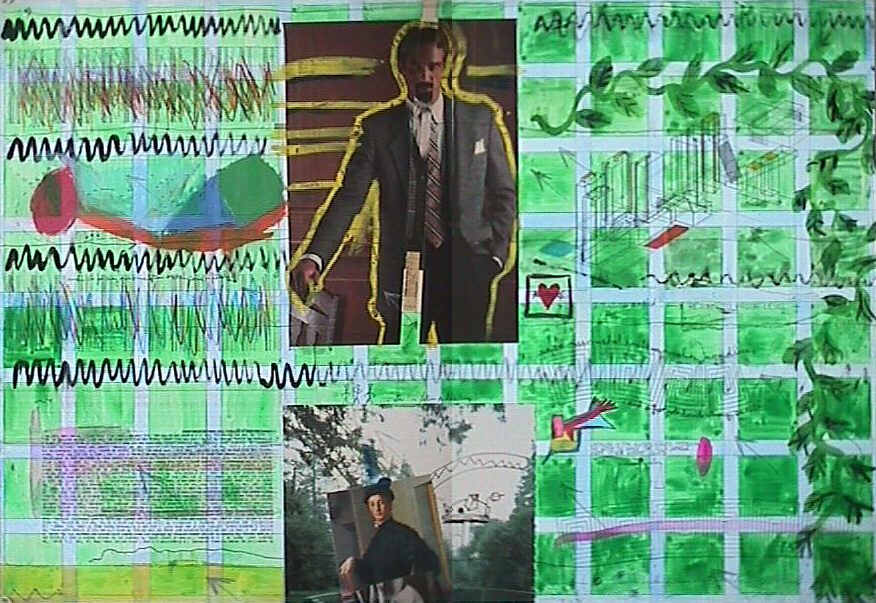
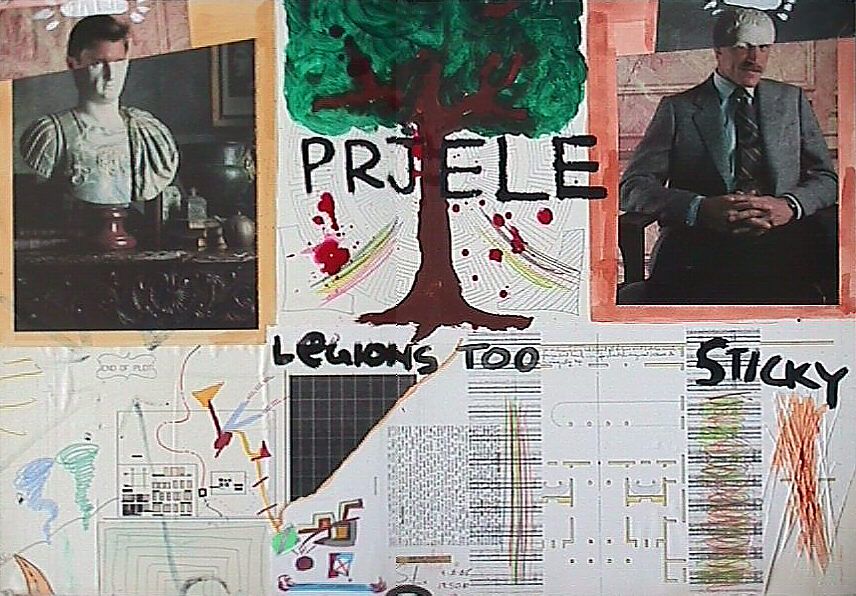
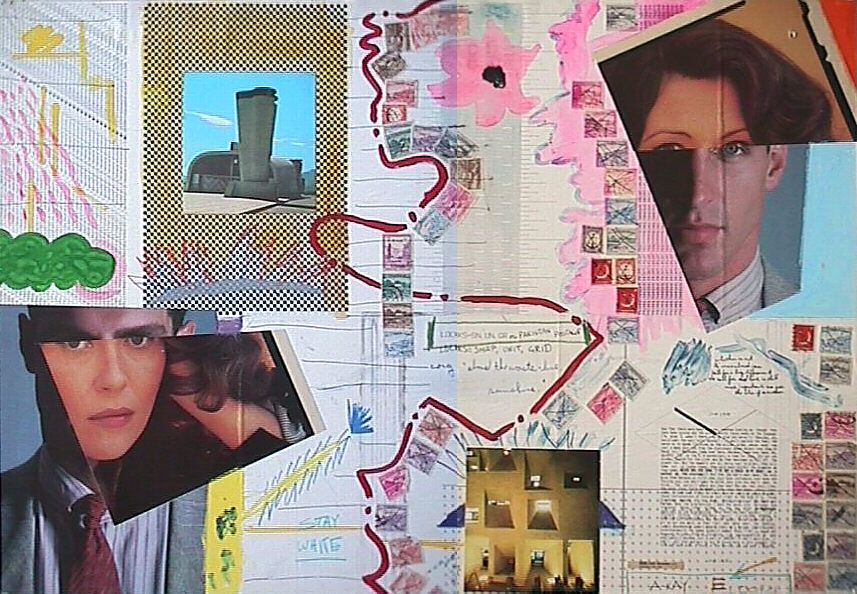
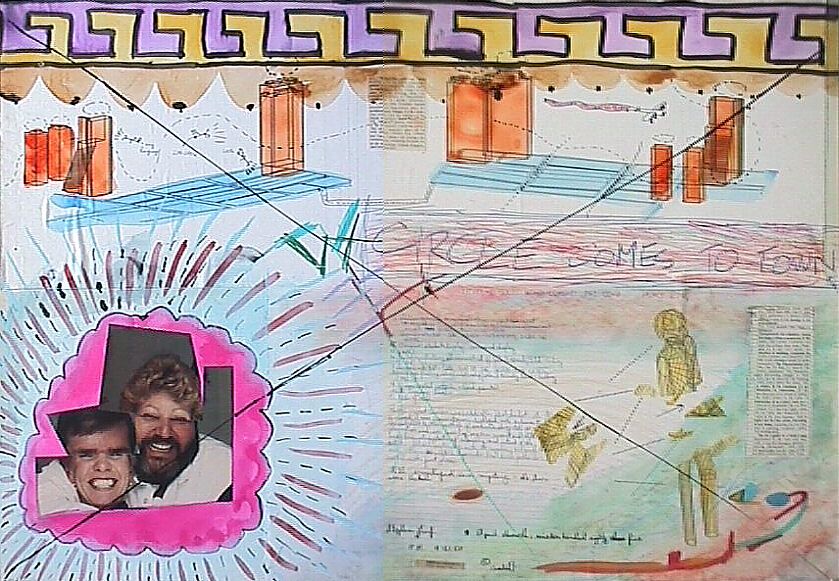
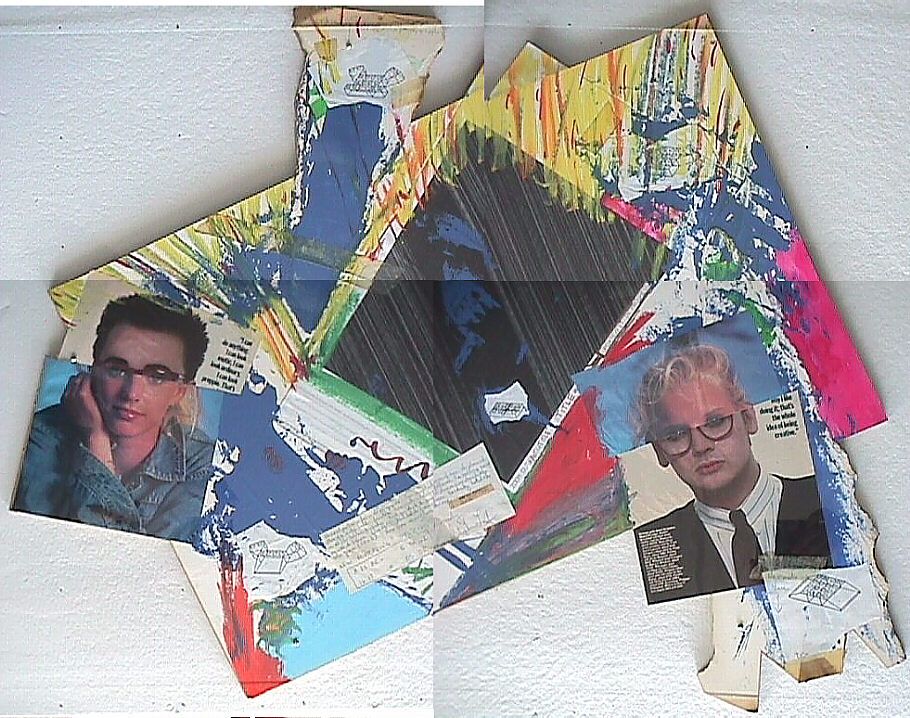
The similarities of Stezaker's recent work and the collages of the Dark Shadows Series are self evident.
So, what is the best art 20 years from now? Very likely something reenactionary.
Oh, and speaking of "Marriage"
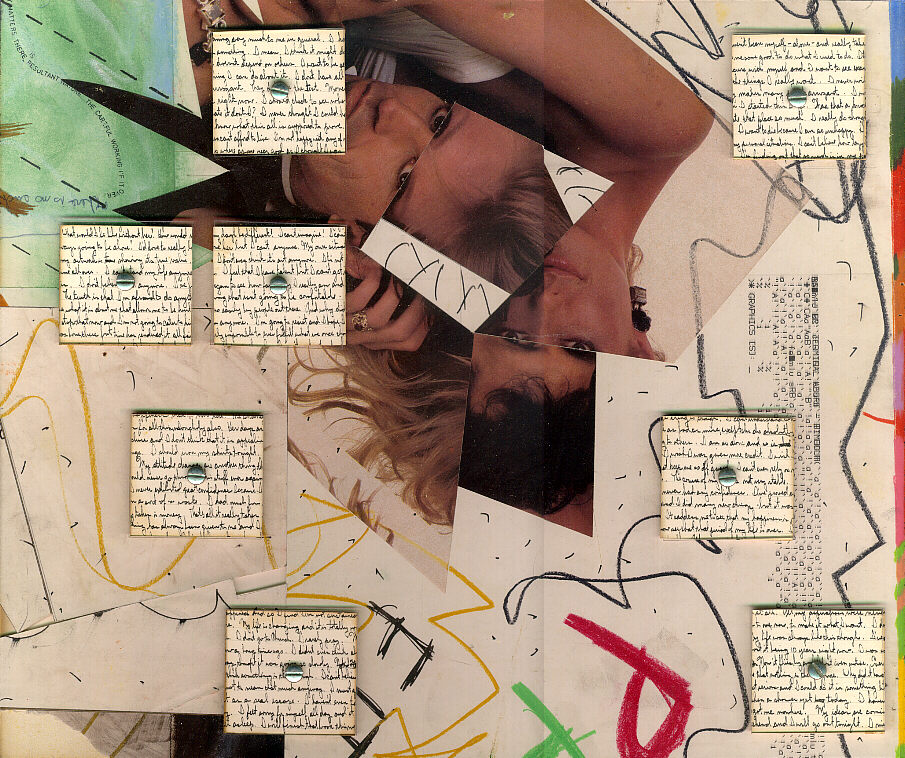
Keith Richards and wife
2001.11.16
Two Balls
Basically, the older I get, the lazier an artist I become. Museumpeace is perhaps the laziest artwork I've ever done (and continued laziness is definitely why I'm leaving it just the way it is now). Nonetheless, it is also the most iconoclastic of my works. Laziness and iconoclasm, maybe I'm saying something.
2001.01.02
|