2026.01.09
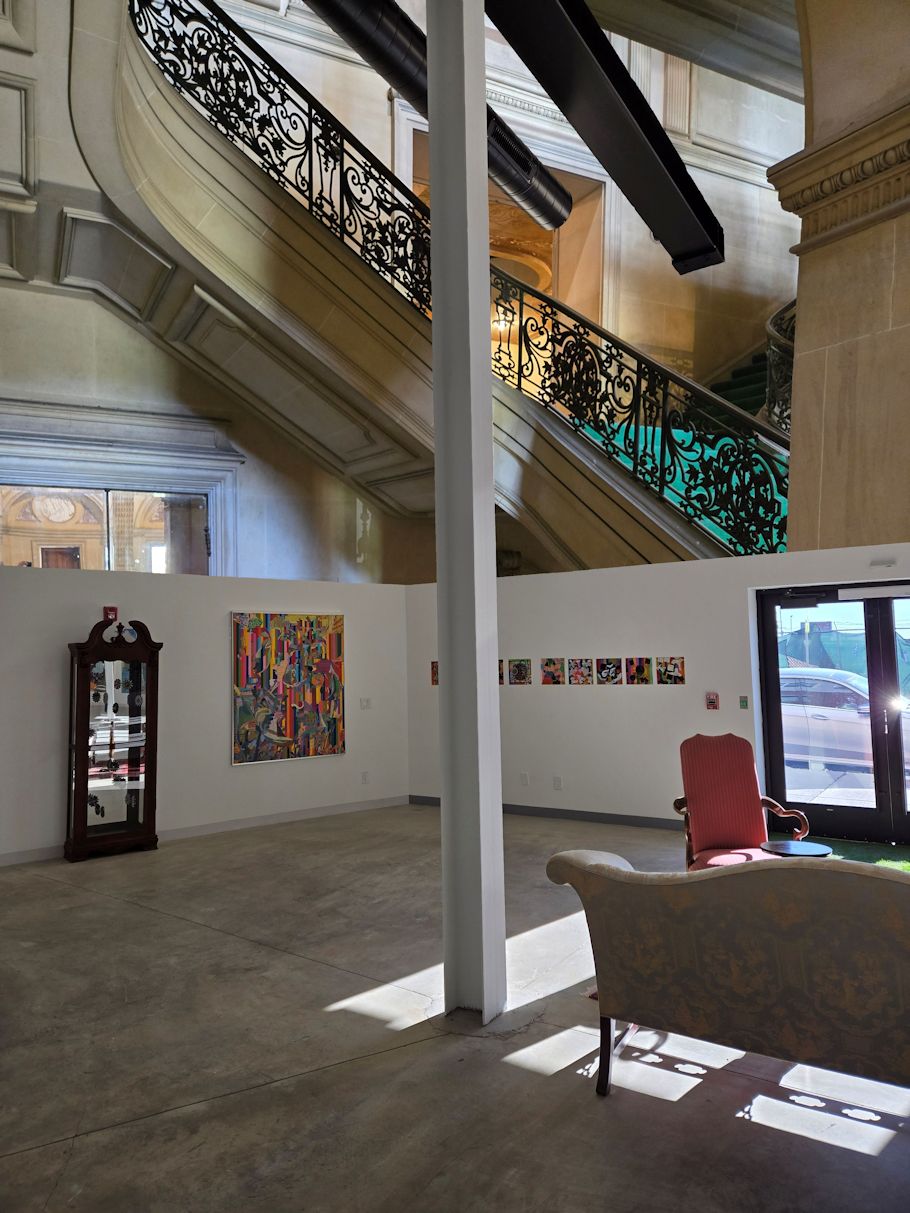
Change of Venue 009
2025.01.09
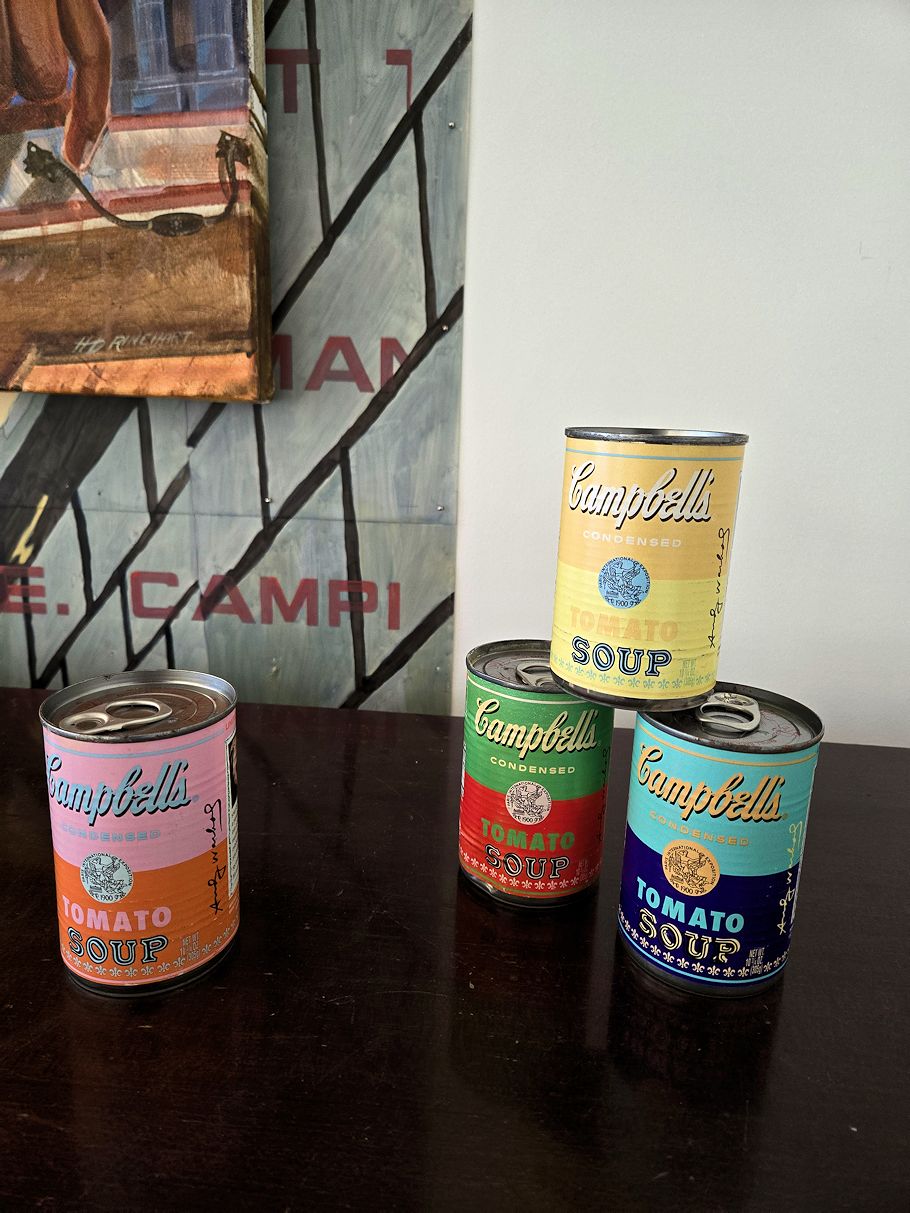
451 Rhawn Gallery
2021.01.09
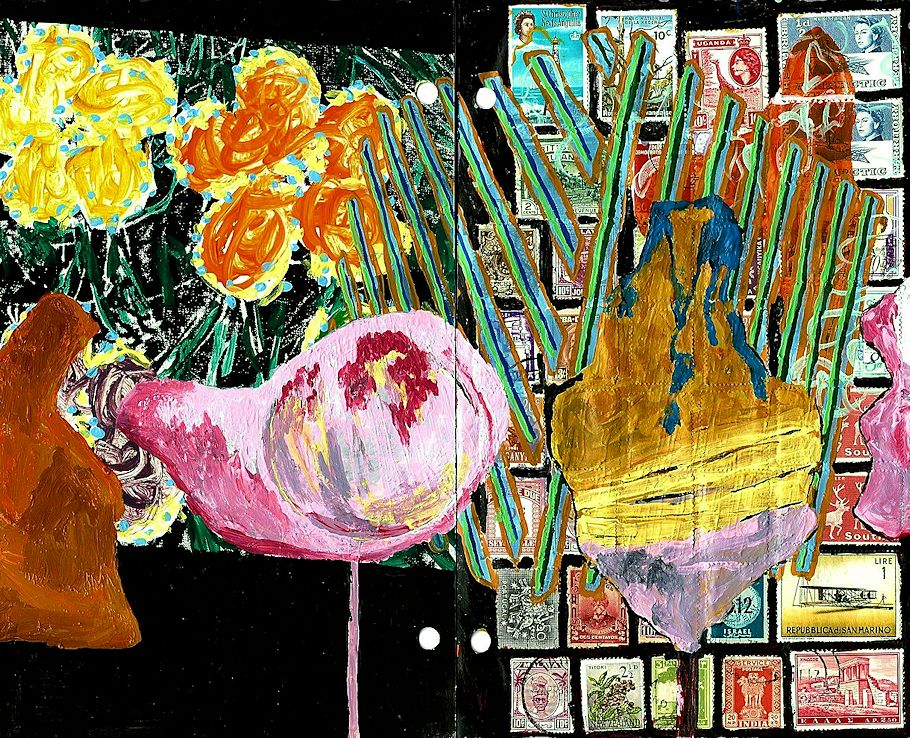
book spread painting 012
2018.01.09
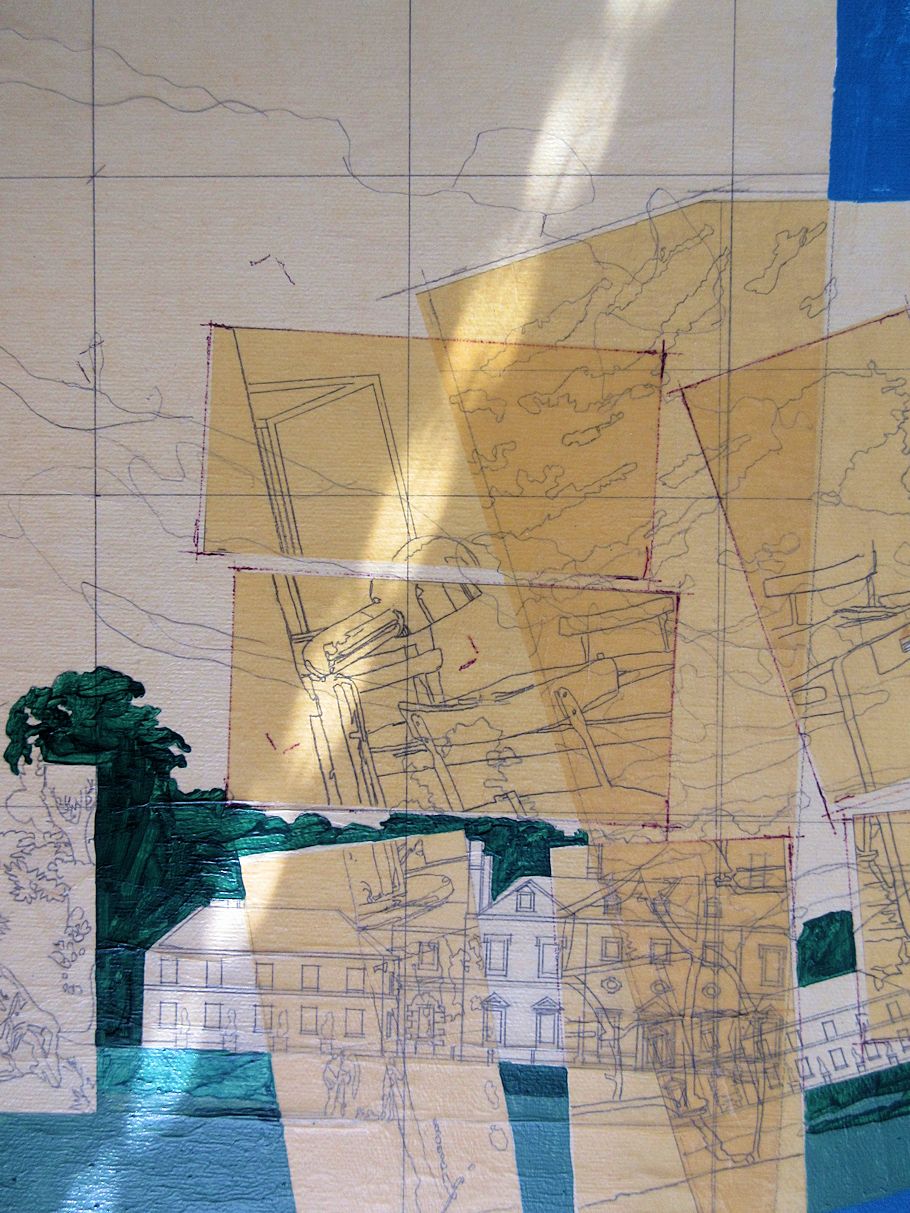
11:47
2014.01.09
WHERE IS THE DAMN EMOTION???
House for a Mood Ring Millionaire:
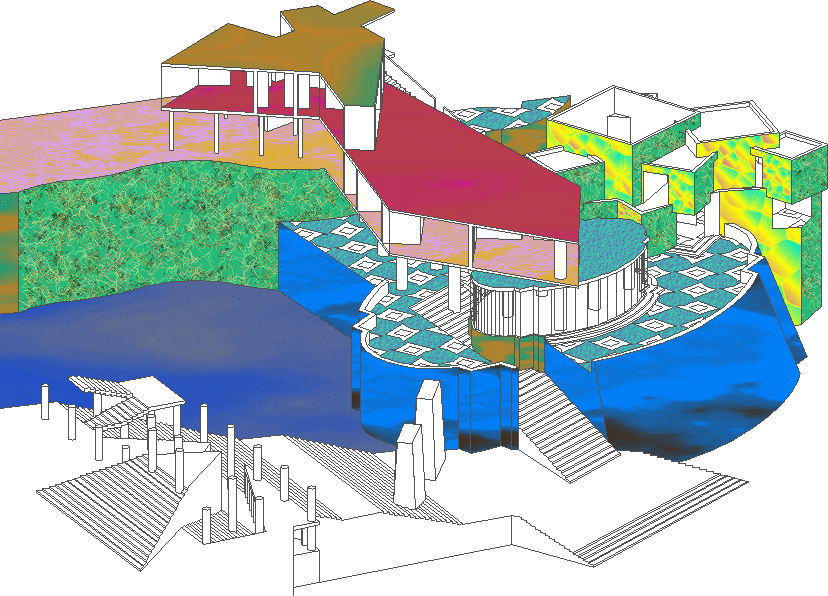
2003.01.09
gehry/scharoun
I think there is an interesting correlation between the evolution of Frank Gehry's architecture and the evolution of Frank Stella's art. Neither does things just to be different. Rather, whatever 'style' is current is also a next step relative to what 'style' came before. Both artists have taken progressive steps with their works, steps that lead to ever freer use of form(s). Thus their 'expressionism' is not at all a free-for-all.
Judging from my own art/design experience/work, one has to know/do-it-by the rules in order to begin moving beyond the rules. And once you've gotten beyond the 'rules, then you work to understand the 'new rules' in order to begin understanding how to go beyond them. And on and on it goes.
learning from CAD and Stella
When I was CAD system at the University of Pennsylvania's Graduate School of Fine Art, I became acquainted with many of the landscape architect students, as they were the only students seriously learning CAD at the time, while most of the architecture students, or their teachers at least, saw very little use for CAD. The landscape students didn't use CAD so much for design, however, rather they utilized CAD for mapping integrated with data. Nonetheless, I remember when many of the landscape architect students were also busy working on a landscape design project for Battery Park City in New York. It was a challenging design project, and many of the students were having difficulties coming up with satisfactory solutions. I decided to quickly draw up my own design, which I did by hand in about two minutes, and hung the result on one of the computer room walls where I was sure the landscape architect students would see it. One of the students subsequently left a note on the drawing/design: "I fear computers have made us think we are more creative than we actually are!"
In retrospect, it was indeed CAD that made me more creative, or at least freer with form. It was also in the mid-1980s that I began to become aware of Frank Stella's work current at that time, particularly his 'Circuit' and 'Cones and Pillars' series.
As far as my design is concerned, it was the centerpiece sculpture that the landscape students most liked, i.e., a rectangular platform the size of the largest public elevator within the World Trade Center towers, and on this platform were as many life-size nude sculptures as it would take to fill it, like a crowded elevator, and trailing from this platform was a line of single nude sculptures meandering through the site and on into the Hudson River beyond.
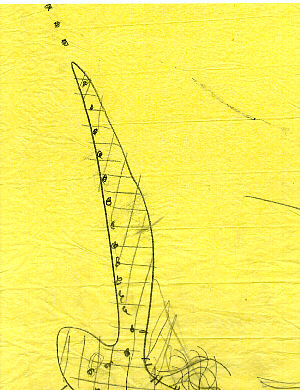 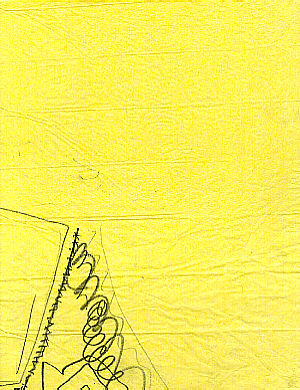 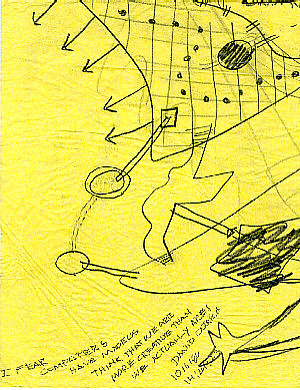 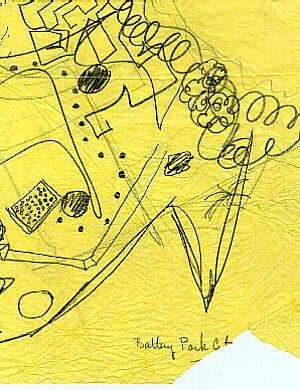
Stephen Lauf, Battery Park City (pencil on yellow trace paper, 1986.10.06), schematic site plan.
2002.01.09
Re: ancient details?
The detail of Diana's funeral that most reenacted ancient Rome's Triumphal Way was also the detail that could not really be planned, namely the thousands and thousands of Londoners (and the millions worldwide) that lined the streets of the "way" to witness the event.
Re: morbidity of the spectators
The multitude of spectators of Diana's funeral is the most reenactionary (of many reenactionary) details between the funeral and the Triumphal Way. I singled this aspect out because without the crowds Diana's funeral would have just been a very good carrying-out of a centuries old design for a procession. With the crowds, however, Diana's funeral manifested the same magnitude of civic involvement that the ancient Triumphs manifested, thus making Diana's funeral a more real reenactment of the events in ancient times.
2001.01.09
the first Agonalia, etc.
Today is the first Agonalia, and it brings to mind, actually highlights my recent thinking regarding the Christian transformation/inversion of Pagan feasts. I first wrote about the Agonalia on 21 May 1999, and noted then (found out actually) that the Greek Orthodox Church then celebrates the dual feasts of Constantine and Helena. The correlation of a feast in honor of Janus, a god with two faces, with the dual figures of Constantine and Helena seems poignant, and indeed intentional. On 9 January, the Roman Catholic Church celebrates the feast of Julian and Basillicana(sp?), a legendary chaste husband and wife from the early fourth century(?) from Egypt. They were martyrs as well. While the connection to Janus is not explicit, it is nonetheless worth noting the commemoration of dual saints, plus a somewhat odd possible connection between the chaste husband and wife and the mother-son relationship of Helena and Constantine. This raises the question whether the legend of Julian and Basillicana is somehow based on or derived from the story of Constantine and Helena. Further, there is the odd name of Basillicana, which immediately makes me think of basilicas, for which, incidentally, Helena is well known for having built many.
I now see the Christian inversion of Pagan feasts as very indicative of a "metabolic aesthetic", that is, a design activity that is equally creative and destructive (specifically creative of the Christian "mythos" while destructive of the Pagan "mythos"--"mythos" can be exchanged with "ritual". Furthermore, the Pagan-Christian inversion follows a pattern of reenactment in that the nature of Pagan feasts is replaced by Christian feasts that have a (strikingly) similar nature. For example, the two feasts of Janus celebrate dual sainthoods in the Christian calendar, and specifically dual saints of extremely close male and female relations.
1946.01.08
1946. Wednesday, New York City
At noon, Duchamp is due to call at the Museum of Modern Art to collect copies of two letters concerning his American visa. As it appears that renewal of the visa is unlikely, Nelson A. Rockefeller, the first vice-president of the Board of Trustees of the museum, has written to the Service of the U.S. Department of Justice, Immigration and Naturalization at 70 Columbus Avenue informing the district director that as Duchamp is supervising the forthcoming Florine Stettheimer exhibition [13.10.1944] he hopes it will be possible "to extend Mr Duchamp's visa until his services to the Museum can be completed".
Ephemerides
|